:
The green transition equals more secure and more affordable energy.
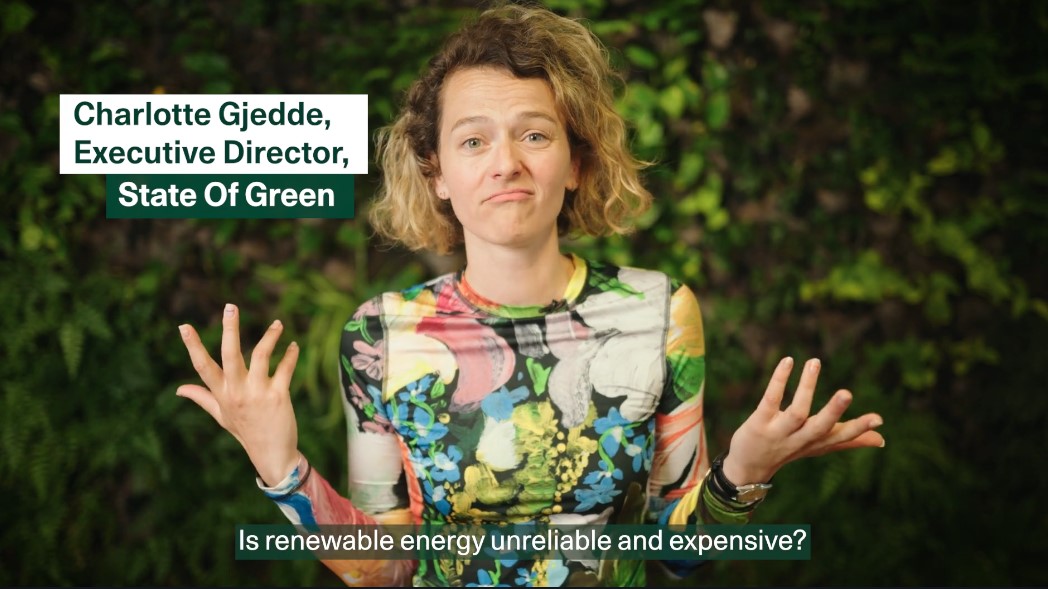
For too long, the story has been that going green means giving something up. That renewable energy is the unreliable, expensive choice.
But the opposite is true.
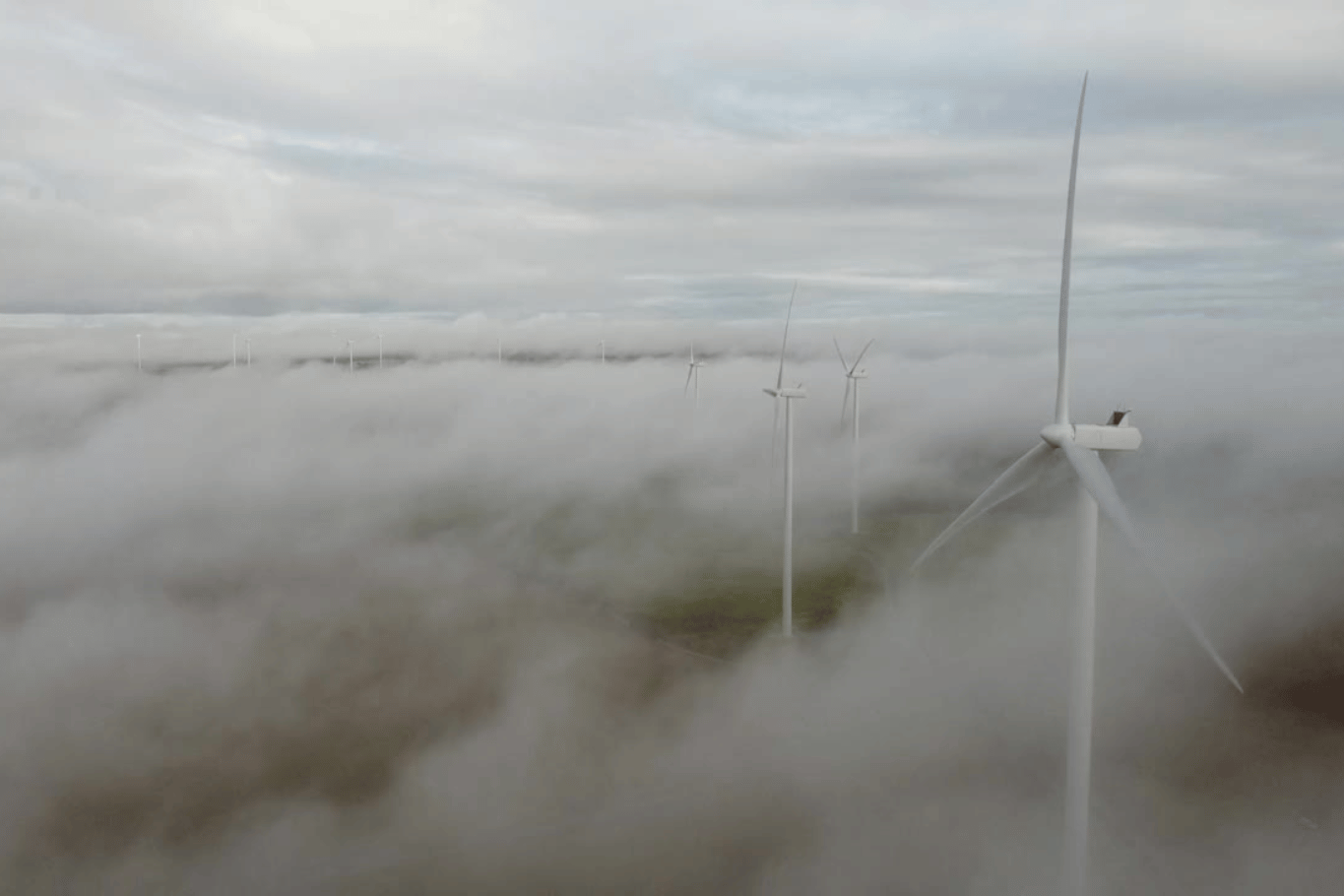
Locally produced renewables, smart grids and connected energy systems don’t compete with security of supply; they are what build it. More renewables means a more stable, more independent and more affordable system.
It’s not a trade-off. It’s the pay-off.
Don’t just take our word for it; here is what the data actually show.
Is renewable energy unreliable?
The short answer is no. And Denmark has the numbers to prove it:
0
%
%
of Denmark’s electricity comes from renewable energy
0
%
%
of the time, the lights stay on
Source: Based on data from the Danish Energy Agency and Energinet.
Despite generating more than 88% of its electricity from renewables, with a high share of wind and solar, Denmark maintains a security of electricity supply of 99.99%.
The wind doesn't always blow and the sun doesn't always shine, yet the lights stay on 99.99% of the time - equivalent to roughly 20 minutes of outage per year. In fact, Denmark has never experienced a power failure caused by a shortage of generation capacity.
The reason isn't luck. It's design. By drawing on all available renewable sources and building a flexible, well-connected system to balance supply and demand, Denmark has shown that high renewable shares and high reliability go hand in hand.
How Denmark produces its electricity:
Source: Danish Energy Agency, Energistatistik 2024 (Tabel 4 & Figur 17). Shares of total domestic electricity supply incl. net imports; renewables make up 81.5% of supply and 88% of net generation.
Is renewable energy expensive?
No. Quite frankly, the opposite is true. In Denmark, by powering homes and cars with green electricity instead of fossil fuels, the average household saves more than €2,800 every year.
€
0
0
By powering homes and cars with green electricity instead of fossil fuels, the average Danish household saves more than 2,800€ each year.
Source: Based on data from Green Power Denmark.
Homegrown renewable energy isn't tied to volatile global gas and oil markets, so prices stay more stable and less exposed to geopolitical shocks.
During the most recent energy crisis, filling up a diesel car in Denmark got more expensive. Charging an electric one actually got cheaper. That's what homegrown wind and solar do: they keep your prices stable.
€2,810
2025
€3,650
2035
Annual savings from a heat pump
Annual savings from an electric car
Source: Based on data from Green Power Denmark. Converted from DKK at the fixed rate of 7.46038.

Publications: Security of supply
Download our white papers with valuable security of supply insights into methods, tools and state-of-the art solutions across different green sectors in Denmark and around the world.
How the green transition strengthens security of supply
Security of supply is no longer only about safeguarding systems against disruption. It is about building energy and water systems that are flexible, efficient and resilient by design – and societies that are less dependent on scarce and imported resources.
Across Europe and globally, the green transition is emerging as a strategic response to a changing geopolitical and climatic reality. By investing in home-grown renewable energy, smart infrastructure and efficient use of resources, countries can strengthen their independence while improving the stability and robustness of their energy and water supply.
Green solutions across sectors – from wind and solar power, electrification and sector coupling to district energy, power grids, water efficiency and wastewater management – form the backbone of this transition. When energy and water systems are planned holistically and connected intelligently, they become more flexible, better able to balance demand and supply, and more resilient to external shocks.
Security of supply across sectors

Renewable energy
Renewable energy is the key catalyst for ensuring security of supply, as it is the backbone of electrification.
Discover renewable energy

Green hydrogen
The production of green hydrogen is a way to both store surplus renewable energy and replace fossil fuels in sectors that are difficult to electrify.
Discover green hydrogen

Water supply and water management
Water is fundamental to security of supply. It underpins virtually every value chain – from agriculture and food production to advanced manufacturing and data centres.
Discover water supply and management

District energy
District energy strengthens security of supply through fuel flexibility: systems can rapidly shift between green electricity, biomass, waste heat, geothermal, and other sources.
Discover district energy

Energy efficiency
Energy efficiency is key when it comes to security of supply. By reducing the collective energy use, ensuring stable renewable energy becomes easier.
Discover district energy

Sector coupling
Sector coupling diversifies energy supply. By linking electricity, heat, gas, fuels, water and storage, sector coupling reduces dependence on any single energy source and lowers exposure to fuel price shocks and import risks.
Discover sector coupling
Proof-points and strongholds across sectors
Renewable energy is the key catalyst for ensuring security of supply, as it is the backbone of electrification.
Electrification enables the phase-out of fossil fuels and, in turn, reduces dependence on energy imports from other countries. Renewable energy is inherently locally produced, reducing import dependence and vulnerability to external shocks caused by wars, sanctions, trade disputes, and similar disruptions. By investing in domestically produced renewables, countries strengthen their strategic autonomy while simultaneously reducing CO₂ emissions.
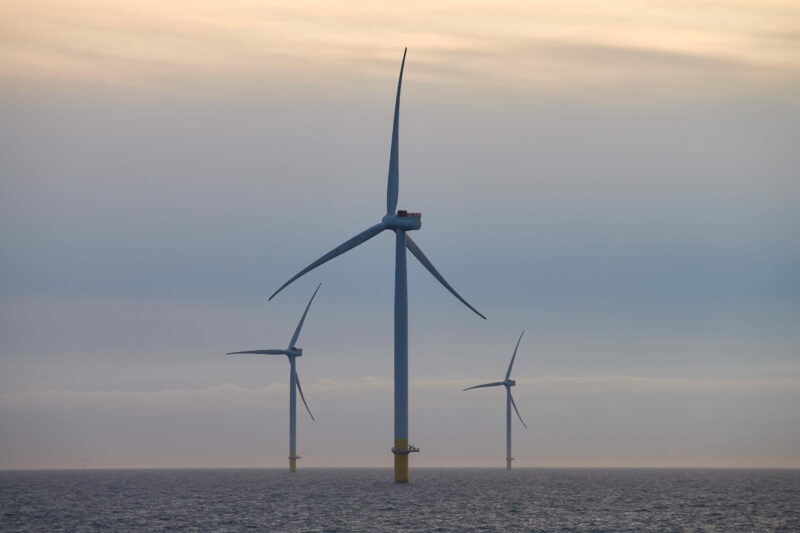
- Denmark is among the countries with the highest integration of renewable energy in its power system. Wind and solar covered 64 percent of the Danish energy use in 2024, with wind covering 54 percent and solar about 10 percent.
- Denmark has integrated large amounts of renewable energy into the grid while maintaining a 99.99 percent security of electricity supply.
The production of green hydrogen is a way to both store surplus renewable energy and replace fossil fuels in sectors that are difficult to electrify. Green hydrogen can be produced in countries with access to abundant renewable energy, thereby supporting energy security in a country such as Denmark. It also supports a flexible energy system by storing energy during sunny and windy periods and supplying energy when conditions are calm and overcast.
- Denmark’s collective green hydrogen production has reached a capacity of more than 100 MW
- Denmark is leading the way on regulatory frameworks and support for the development of green hydrogen infrastructure through the “green hydrogen backbone 1”, transporting hydrogen from Denmark to Germany.
- EUR 1.3 billion is earmarked by the German Government to support the import of green hydrogen through the German-Danish pipeline, while EUR 2.3 billion have been set aside to support building a hydrogen pipeline from Denmark to Germany.
Water is fundamental to security of supply. It underpins virtually every value chain – from agriculture and food production to advanced manufacturing and data centres. Without secure access to water, production, competitiveness and societal resilience are directly affected.
From a European perspective, securing sufficient water resources is critical to maintaining production within our own markets. This is not only about competitiveness; it is about safeguarding access to essential goods such as microchips and semiconductors. When production depends on external markets, supply is shaped by global demand rather than strategic priorities. Strengthening water security, therefore contributes directly to European resilience and strategic independence.
Two areas are particularly central from a security of supply perspective: efficient water distribution and advanced wastewater management.
- Danish utilities operate with water loss levels of 7.5 percent – some of the lowest water loss levels in the world.
- Reducing urban water losses can enable up to 30 percent more inhabitants to be served from existing water resources by improving distribution efficiency.
- Approximately 99 percent of wastewater in Denmark is collected and treated.
- Danish wastewater utilities are transitioning from energy consumers to energy producers through energy recovery and biogas production.
District energy strengthens security of supply through fuel flexibility: systems can rapidly shift between green electricity, biomass, waste heat, geothermal, and other sources. Fuel diversification also increases societal resilience by reducing dependence on imports and exposure to volatile fuel markets and geopolitical uncertainties.
- Danish district heating kept household heat prices stable during recent energy crises, while many European house-holds experienced sharp price increases. This is used as evidence of district heating’s role in shielding consumers from fuel price volatility and supply shocks.
- With more than two-thirds of Danish households connected, the Danish case proves that district heating can act as a backbone infrastructure rather than a niche solution — underpinning national heat security.
- District heating is driving electrification in Denmark: Electrification has progressed so rapidly that, between 2019 and 2024, the district heating sector accounted for 61 percent of the increase in electrification in Denmark. While overall electricity consumption in Denmark increased by “only” 9.3 percent, the district heating sector quintupled its electricity consumption over the same period.
Energy efficiency is key when it comes to security of supply. By reducing the collective energy use, ensuring stable renewable energy becomes easier. Improving efficiency in buildings and in the industry reduces reliance on fossil fuels. Lower energy demand reduces vulnerability to supply disruptions and geopolitical crises.
Efficiency measures make the transition to renewable sources such as wind and solar faster and more cost-effective, forming the backbone of future energy supply. At the same time, flexible electricity consumption (demand-side management) helps balance the energy grid when solar and wind energy are not being produced. Energy efficiency eases pressure on the electricity grid, especially during peak demand, reducing the risk of power outages. Intelligent demand management (e.g. shifting electricity use to periods of high wind power generation) ensures a better balance between supply and demand.
- Increased efficiency efforts could deliver socio-economic benefits of up to DKK 13 billion annually by 2030 in Denmark alone. (DI)
- Energy consumption for residential use was reduced by nearly 30 percent from 1990 to 2023.
Sector coupling diversifies energy supply. By linking electricity, heat, gas, fuels, water and storage, sector coupling reduces dependence on any single energy source and lowers exposure to fuel price shocks and import risks. Furthermore, sector coupling turns variability into flexibility as well as having the benefits of balancing energy systems in real time with digitalised coupling of demand and supply across sectors.
- High renewable integration requires breaking down traditional silos between different energy system. So, to reach our future targets of 100% renewable electricity by 2030, sector coupling is not just nice to have – it’s necessary to pursue.
- Denmark has a long history of integrating energy and heating systems. This vital base of experience is essential to achieve successful sector coupling.
- As one of the most digitalised countries in the world, Denmark has strong foundation when integrating energy systems across sectors.
Discover cases and solutions

Connect with solution providers


Solution Provider
Electricity grid
+3
NKT
11 August 2022NKT connects a greener world with high-quality power cable technology and takes centre stage as the world moves towards green energy. NKT designs, manufactures, and installs low, medium and high voltage power cable solutions enabling sustainable energy transmission.

Solution Provider
Combined heat and power production
+20
Ørsted
25 January 2009Ørsted is a global leader in developing, constructing, and operating offshore wind farms, with a core focus on Europe. Backed by more than 30 years of experience in offshore wind, Ørsted has 10.2 GW of installed offshore capacity and 8.1 GW under construction.


Solution Provider
Air pollution from industry production
+68
Ramboll
30 January 2009Ramboll is a leading international architecture, engineering, and consultancy company, owned by the Ramboll Foundation.

Solution Provider
Air pollution from industry production
+52
COWI
28 January 2009COWI is a global consulting group headquartered in Denmark. Our services cover engineering, architecture, renewable energy, environmental services, and more.
Explore renewable energy and security of supply is not a trade-off. it’s a payoff.
Creation date: Latest first
Security of supply