Skip to content

News

Carbon capture, storage and utilisation

New white paper on carbon capture, utilisation and storage (CCUS)

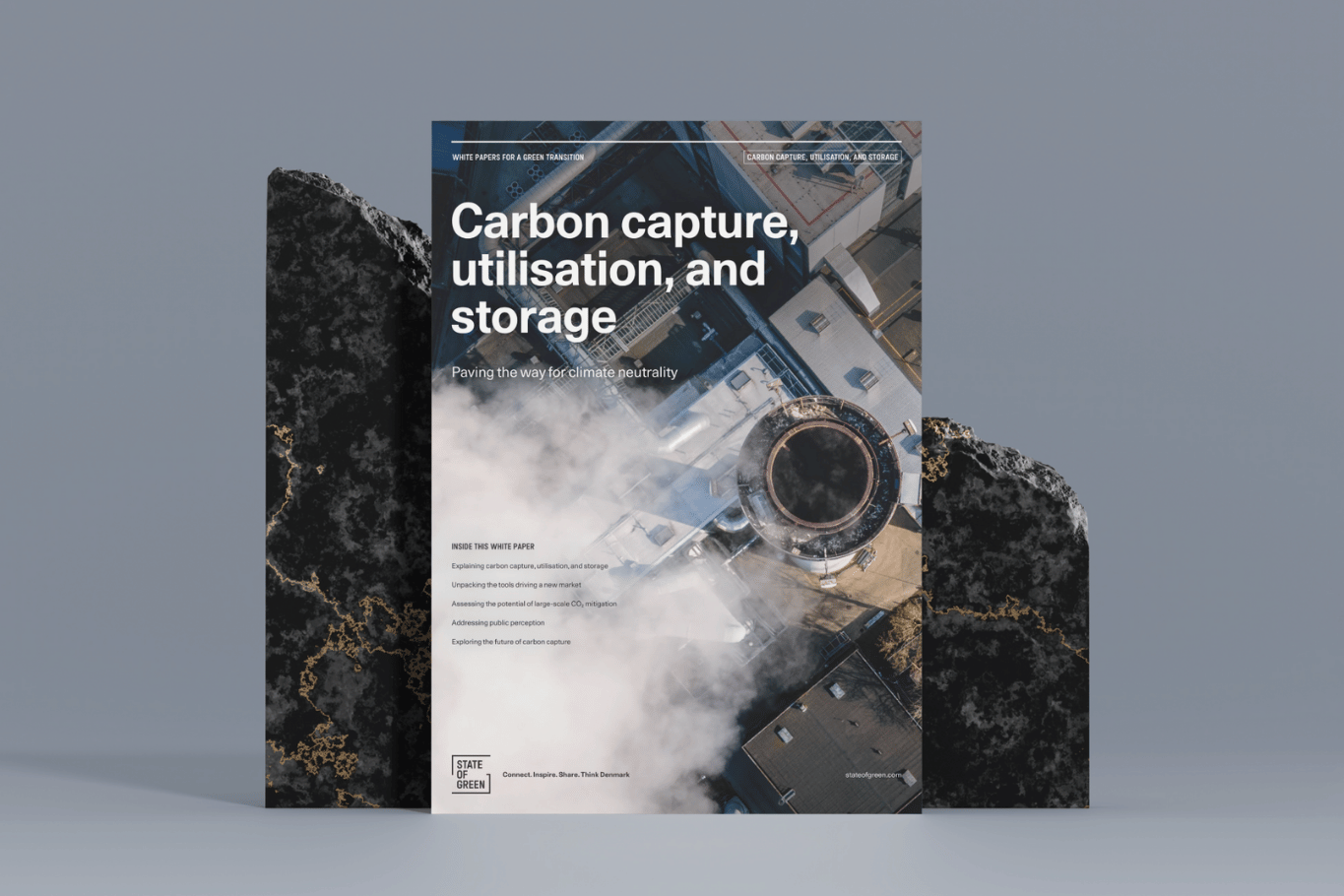
As the need for rapid decarbonisation intensifies, carbon capture, utilisation, and storage (CCUS) has emerged as a tool for reaching climate neutrality. In our new white paper, we explore how a complete value chain is taking shape in Denmark, turning political ambition into scalable solutions for global green transition.
image
11 February 2026

Download the publication on carbon capture, storage and utilisation

Discover how Denmark is turning climate ambition into a scalable reality by downloading the publication to explore the partnerships, policies, and projects shaping a complete CCUS value chain.

Download the publication

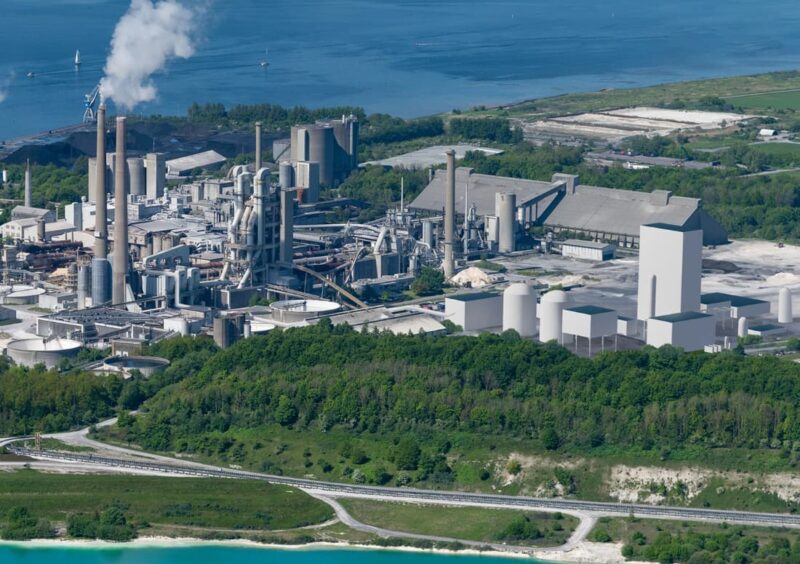
Last week, Denmark’s third national tender for carbon capture and storage concluded with a headline bid from cement producer Aalborg Portland. The company’s ACCSION project aims to deliver over half of the tender’s CO₂ reduction target — marking a significant step towards scaling carbon capture in one of the hardest sectors to abate.

While CCUS is not a silver bullet, it is becoming a critical tool in Denmark’s broader climate strategy. From enabling negative emissions to decarbonising cement and waste, the technology is now moving from policy to practice.

This is a transition explored in State of Green’s latest white paper on Carbon capture, storage and utilisation – Paving the way for climate neutrality.

CCUS: From concept to concrete action

Achieving climate neutrality by 2050 requires more than just renewables and efficiency. It also requires solutions that can tackle unavoidable emissions — and CCUS is increasingly seen as one of them.

In Denmark, development has moved fast. With broad political support and more than EUR 5 billion in dedicated public funding, the country is building a CCUS value chain covering capture, transport, utilisation, and storage.

The new white paper highlights how regulation, partnerships, and flagship projects are laying the foundation for a viable, long-term market.
Lifting the lid on the full CCUS value chain

The white paper “Carbon capture, utilisation, and storage – Paving the way for climate neutrality” offers a clear and accessible introduction to Denmark’s CCUS journey.

Key insights include:

  • Capture: From industrial flue gas to biogenic CO₂, capture projects are scaling up — led by companies like Ørsted and Aalborg Portland.

  • Transport: Infrastructure is expanding across modes, including pipelines, trucks, and ships — supported by new legislation and cross-border agreements.

  • Storage: Denmark’s subsoil, especially in the North Sea, offers abundant and secure capacity, now being activated through projects like Project Greensand.

  • Utilisation: Captured CO₂ is increasingly used in green fuel production, such as e-methanol and e-kerosene, supporting decarbonisation in shipping and aviation.

  • Public engagement and innovation: Transparent dialogue and continued R&D are essential to making CCUS both accepted and affordable.

Discover the publication

Denmark as a storage hub for Europe

With vast geological storage potential, Denmark is well positioned to become a regional CO₂ hub. Projects such as Greensand Future and Project Bifrost are repurposing depleted oil fields to serve as permanent storage, contributing to EU goals for net-zero while building new value chains.

International cooperation and public–private partnerships are central to this progress — as reflected in Denmark’s regulatory approach and investment pipeline.

The white paper explores how Denmark’s unique geology and maritime expertise are being utilised to create European CO2 storage hubs. From large-scale capture projects at power stations and cement plants to the development of infrastructure for CO2 transport, the publication highlights the policies and partnerships that are turning vision into reality.

About the white paper

State of Green is proud to launch the new white paper on Carbon capture, utilisation and storage together with technical editors The Danish Ministry of Climate, Energy and Utilities, Ministry of Foreign Affairs of Denmark, Green Power Denmark, and Danish Industry.

Readers will find inspiration and practical guidance on:

  • The full value chain: Understand the journey from capturing CO2 at the source to transporting, utilising, or permanently storing it.
  • Economic opportunities: Explore how CCUS can strengthen energy resilience and unlock new business opportunities in a low-carbon economy.
  • Enabling frameworks: Learn how stable regulation and public-private partnerships are creating a robust market for carbon management.
  • Sector coupling: Discover how captured CO2 can be utilised through Power-to-X to create sustainable fuels for shipping and aviation.
  • Cases and projects: Be inspired by real-world examples, including the world’s first CO2-neutral cement production and pioneering offshore storage projects.

You should consider reading

Carbon capture, storage and utilisation

Solution

Building design

+20

Renewables Focus with Port Development

2 April 2026
A European municipality sought to define a clear vision for transforming an industrial area into a hub for renewable energy manufacturing, while aligning stakeholders including municipal staff and elected officials.