Solution providers

case
Carbon capture, storage and utilisation
Add the case to your visit request and let us know that you are interested in visiting Denmark
The storage of carbon is considered as one of the most effective ways to decarbonise hard-to-abate sectors, making it a vital technology on the road to global net zero. According to the UN Intergovernmental Panel on Climate Change (IPCC), as the world transitions to a lower-carbon economy, global temperature changes cannot be kept at bay without capturing and storing CO2.
The European Commission has estimated that the European Union will need to establish a carbon storage capacity of 250 million tonnes of CO2 per year by 2040 to achieve the objectives of the Paris Agreement. CCS is also considered a key technology in reaching the Danish 2045 net-zero target. The establishment of critical storage capacity in Greensand will support both EU and Danish climate targets.
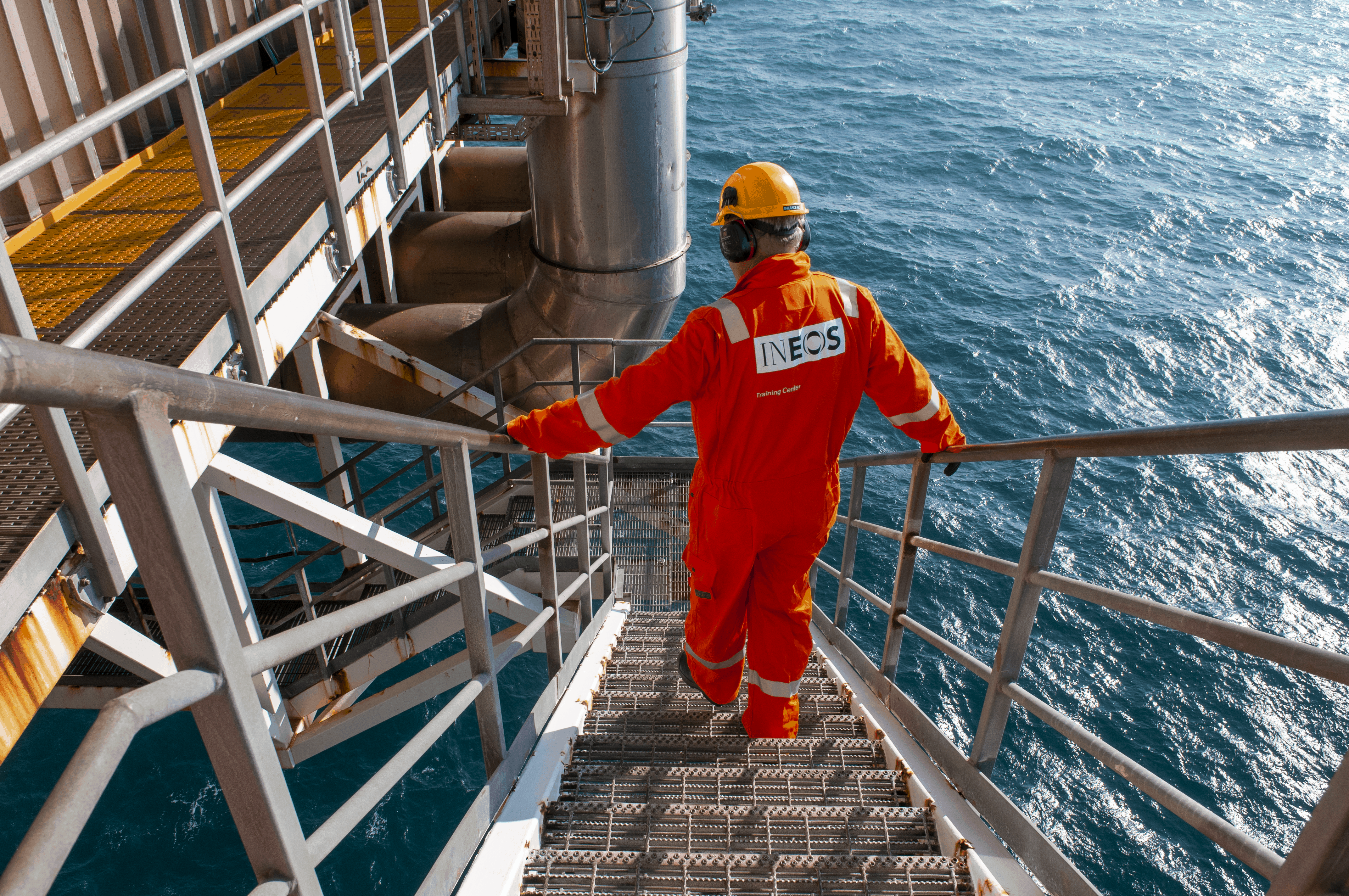
In its first phase, the Greensand Future project aims to permanently store 2.4 million tonnes of captured CO2. This will be done by injecting 0.3 million tonnes of CO2 annually, potentially more, for eight years into a depleted oilfield in the Danish North Sea.
On December 9, 2024, the partners behind Greensand Future (INEOS, Harbour Energy and Nordsøfonden) made the final investment decision for the first commercial phase.
Biogenic CO2 will in the first phase be sourced from Danish biomethane producers and transported to the port of Esbjerg for temporary storage. The CO2 terminal will be established through a partnership between Port of Esbjerg and INEOS and will be operated by INEOS.
From the Port of Esbjerg, the CO2 will be transported to the depleted oilfield Nini West for permanent storage. The CO2 will be transported by the world’s first dedicated offshore CO2 carrier called the Carbon Destroyer 1 and build by Royal Wagenborg.
Greensand Future plans to start CO₂ storage by early 2026, expecting to become the EU’s first operational CO2 storage facility for mitigating climate change.
From 2030, Greensand Future has the potential for safe and permanent storage of up to 2 million tonnes of CO₂ annually. This equals the yearly emissions of approximately 275,000 Danish residents.

The first phase of Greensand Future contributes to avoiding 2,251,599 tonnes of CO2 equivalent to the yearly emissions of approximately 330,000 Danish residents.
In its first phase, the project is expected to avoid 94% of greenhouse gas (GHG) emissions compared to the reference scenario where CO2 is released into the atmosphere.
Greensand Future is expected to be the first storage facility in operation within the EU, showing the way for safe and efficient CO2 storage. Building on experience gained from its pilot project, Greensand Future actively works on creating public acceptance and the development of a European market for carbon capture.