Skip to content

News

Non-revenue water

Security of supply

Urban water management

+4

New publication on how to reduce urban water losses

As climate change and growing cities put pressure on water systems, reducing non-revenue water is one of the most effective ways to strengthen security of supply, cut energy use and build resilience. Discover how holistic planning, smart technologies and Danish experience can help cities turn water efficiency into a strategic advantage for the future.
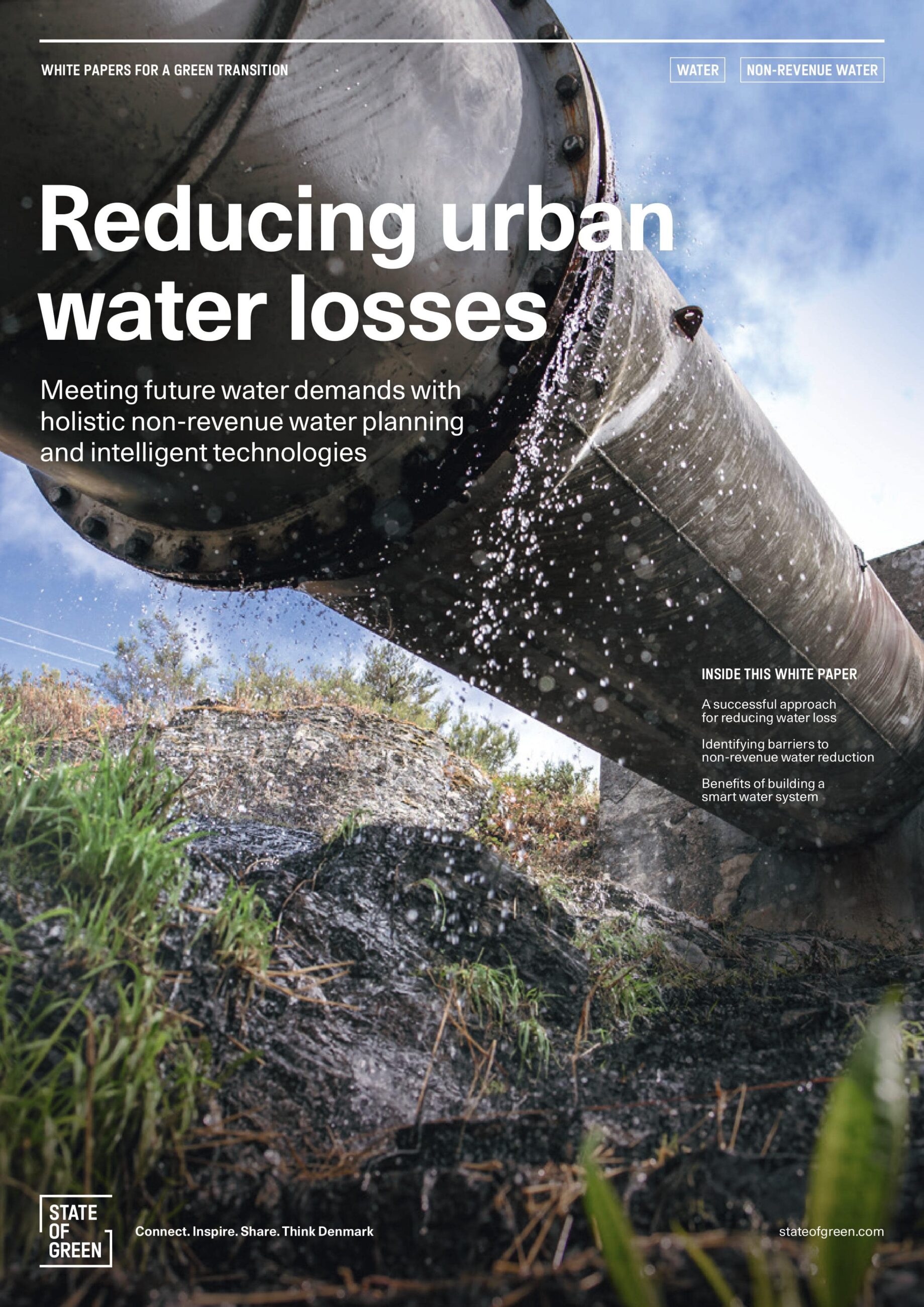
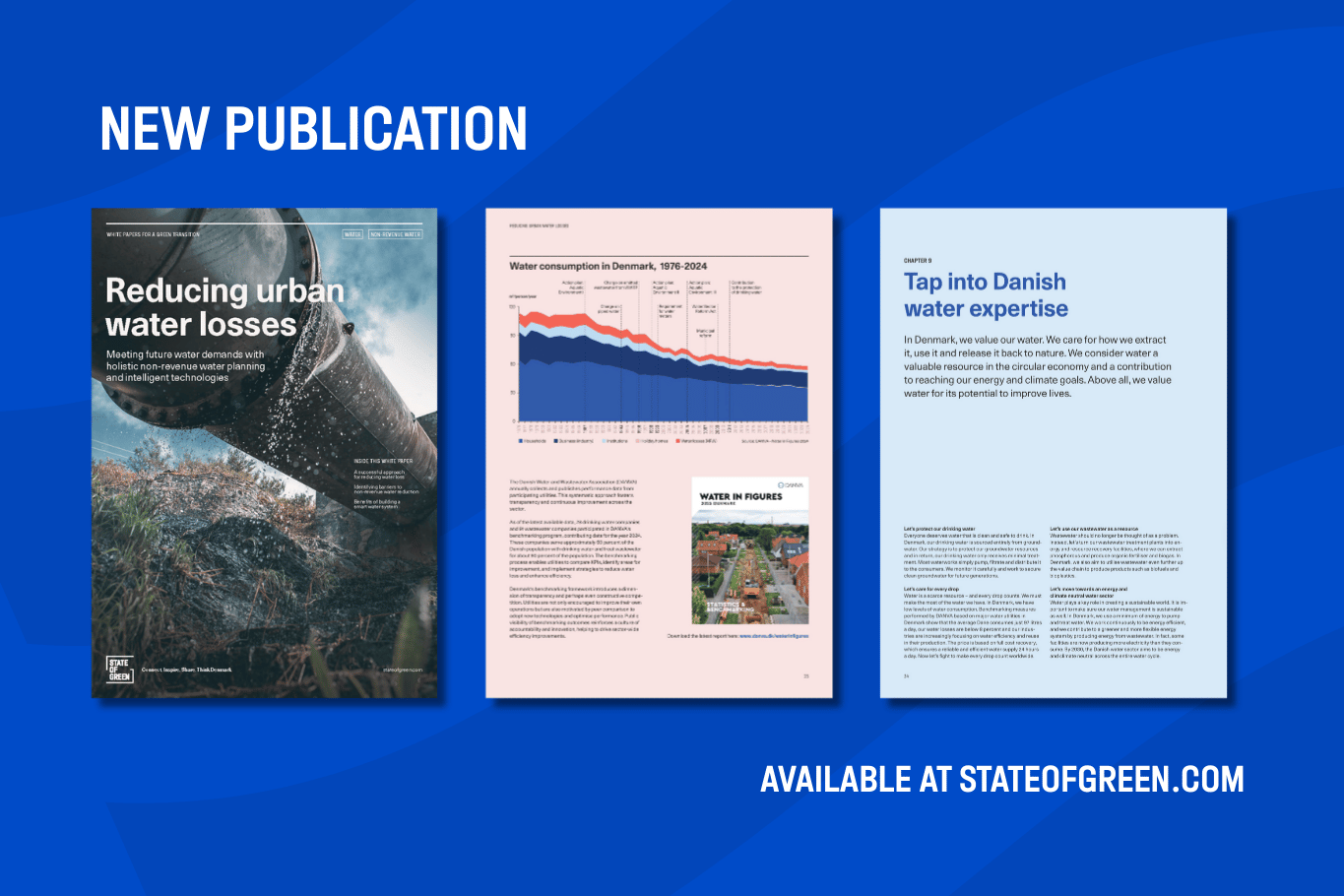
front page white paper reducing urban water losses

Reducing urban water losses

Explore how cities can reduce non-revenue water to strengthen water security, cut energy use and improve utility performance through smart regulation, digital technologies and long-term planning, drawing on Danish and international best practices.

Discover the publication

As cities face growing water stress, climate impacts and rising demand, securing reliable water supply has become a critical challenge. One of the most effective – and often overlooked – solutions lies in reducing non-revenue water.

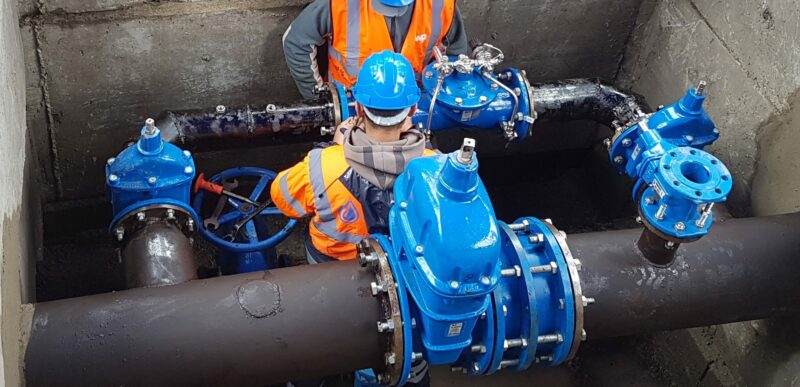
In many cities worldwide, between 25 and 50 percent of treated drinking water never reaches end users. Lost through leaks, pipe bursts or inaccurate metering, these losses undermine water security, increase energy use and weaken utility finances.

Yet non-revenue water is also one of the most solvable challenges facing urban water systems.

Turning efficiency into resilience

As climate change accelerates and urban populations grow, water utilities are under increasing pressure to deliver reliable services with fewer resources. Reducing water losses is no longer just an operational concern – it is a strategic measure to strengthen security of supply, cut emissions and improve system resilience.

Across the globe, utilities are beginning to recognise that efficiency gains in water distribution can delay costly infrastructure expansions, lower energy consumption and stabilise supply during droughts and peak demand. In this context, reducing non-revenue water represents a fast, cost-effective pathway to more resilient cities.

Reducing urban water losses

To support this transition, State of Green is proud to launch the new white paper Reducing urban water losses.

The publication explores how a holistic approach to non-revenue water – combining long-term planning, smart regulation and digital technologies – can significantly improve water supply security. Drawing on Danish experience and international cases, it demonstrates how utilities can move from fragmented interventions to integrated strategies that deliver measurable results.

Spanning themes such as system audits and NRW master planning, pressure management, district metering and smart water systems, the white paper offers concrete insights into how water loss reduction can be embedded into daily operations and long-term investment decisions.

Readers will find inspiration and practical guidance on:

  • Why reducing non-revenue water is critical for resilient and reliable water supply

  • How strategic planning and prioritisation improve return on investment

  • Ways to keep losses low through pressure management, district metering and high-quality assets

  • How digital tools and smart water systems enable faster leak detection and better decision-making

  • Real-world cases from Denmark and around the world demonstrating significant NRW reductions
Discover cases from the publication

You should consider reading

Non-revenue water
Security of supply
Urban water management
Water efficiency in industries
Water management
Water resource management
Water supply

Event

Water supply

+19

Danish Water Export Day 2026

3 June 2026
Water Export Day is being held this year on September 1st at Danish Industry, bringing together the Danish water industry with a focus on exports. Together, we will discuss how and what opportunities exist to strengthen the export of Danish water technology and know-how. The event will serve as a pl