Forewords by

Magnus Heunicke
Denmark's Minister for Environment and Gender Equality
Perspective
Non-revenue water
Security of supply
Water management
+2
Magnus Heunicke
Denmark's Minister for Environment and Gender Equality
As cities grow and climate change intensifies, drinking water is becoming an increasingly scarce resource.
The need to ensure resilient water supply systems is more critical than ever. Globally, as much as 30 to 60 percent of treated water is lost before reaching the consumer. These losses not only waste a vital resource but also the energy used in its production, putting pressure on utilities, public access to water, and the environment. With global freshwater demand predicted to exceed supply by 40 percent in 2030, reducing water loss is essential to securing a resilient drinking water supply.
With the right combination of technology, regulation, prioritisation, and long-term planning, we can protect our water resources and manage drinking water in the most effective and sustainable way.
In Denmark, we took early action to address non-revenue water. Since 1994, our regulatory framework has required water utilities with a water loss of more than 10 percent to pay a penalty fee to the state. This regulation has created a strong economic incentive to minimise non-revenue water and pushed innovation forward, placing Denmark at the forefront of managing water loss.
By systematically measuring and registering water loss data nationwide, it is possible to find even the smallest leaks in the distribution network.
Today, Danish utilities operate with some of the lowest water loss levels in the world – below 10 percent. This is made possible through strategic planning, digital monitoring, leak detection, and active pressure management. Reducing water loss is not only important for the economy and environment, but also key to securing our future water supply. In Denmark, the water sector has set an ambitious goal of becoming climate neutral by 2030 and keeping non-revenue water levels low plays a crucial role in that transition, as it reduces both emissions and energy use.
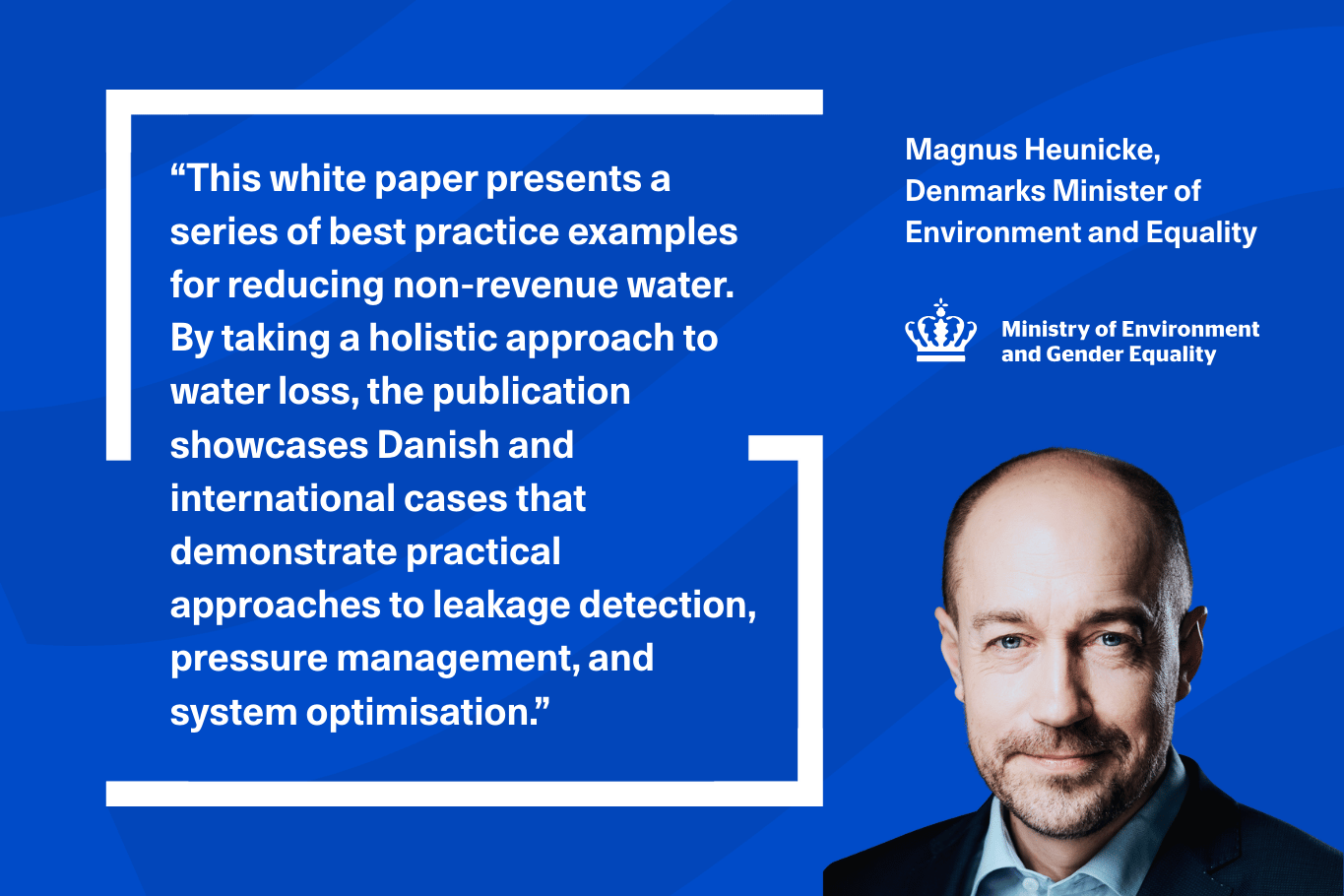
This white paper presents a series of best practice examples for reducing non-revenue water. By taking a holistic approach to water loss, the publication showcases Danish and international cases that demonstrate practical approaches to leakage detection, pressure management, and system optimisation. The insights and cases are applicable in a global context and aim to support improved water efficiency worldwide.
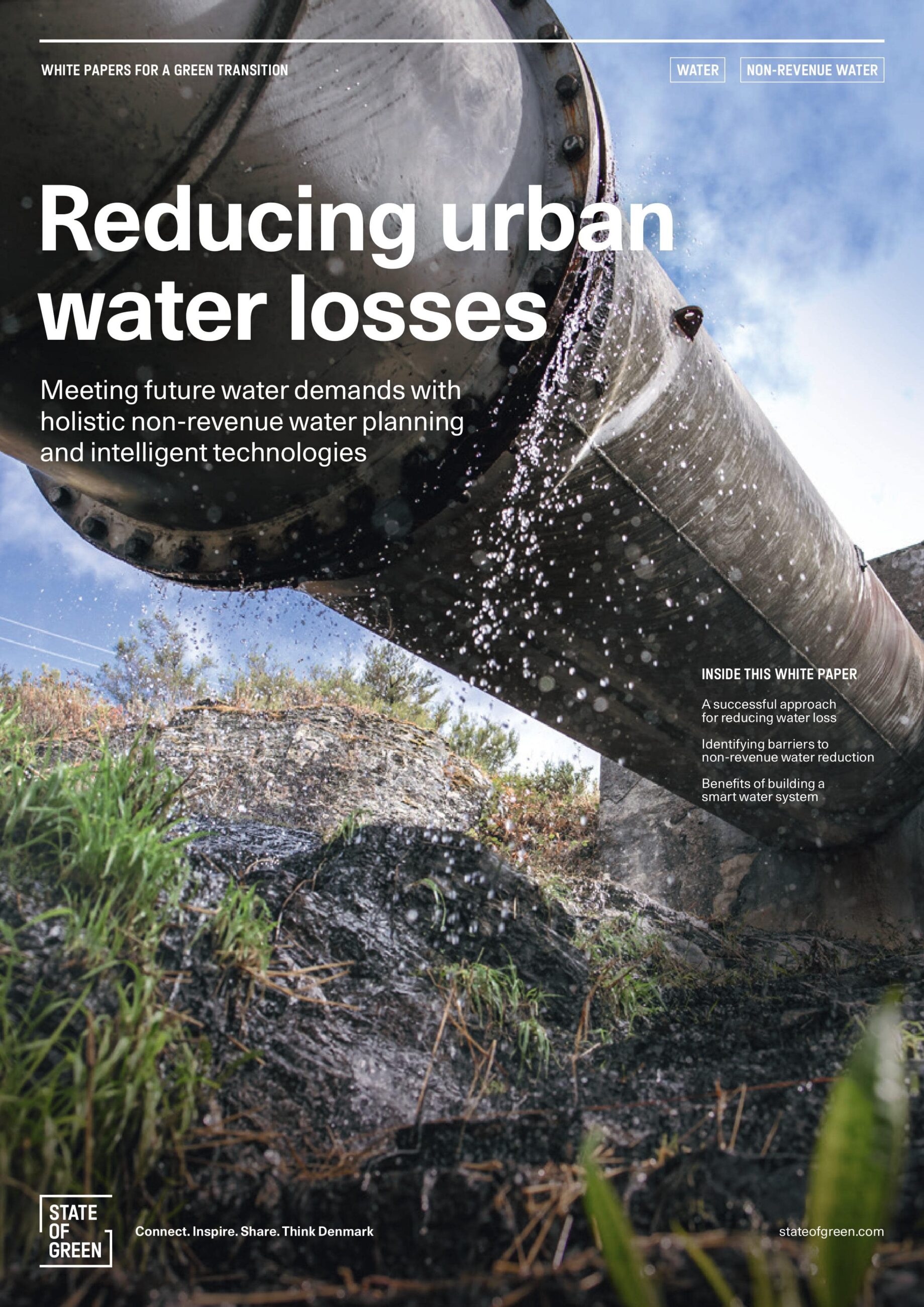
This article is part of our publication ‘Reducing urban water loss’. Packed with insights and cases from Danish water experts, the publication outlines how holistic planning, innovative technologies and integrated management can reduce urban water losses and build secure, resilient water systems for the future.
Explore the publication