News
Biogas
Biomass
New Biorefinery Process Saves 100.000 Tonnes of Straw

20 January 2014
Danish bioenergy project Maabjerg Energy Concept cuts 25% of raw materials to produce same amount of second generation bioethanol – 80 million litres.
New enzyme and fermentation types pave the way for an improved business case behind the Danish Maabjerg Energy Concept, which aims at creating a comprehensive, sustainable bioenergy solution, based on local and CO2-neutral raw materials, by using the latest technologies.
Construction price for what is set to become the largest second generation bioethanol plant in northern Europe has dropped from EUR 480 million to EUR 360 million, of which EUR 240 million is allocated to build the new bioethanol plant.
Partners behind the project are Dong Energy and Novozymes in collaboration with a consortium of local utility companies counting Vestforsyning A/S, Struer Forsyning A/S and Nomi I/S.
“The main reason behind the reduced construction and operating costs is the shift of technology to the so-called mixed fermentation, which reduces the yearly raw material needs from 400,000 to 300,000 tonnes straw to produce the same amount of second generation bioethanol – 80 million litres”, explained Jørgen Udby, Chairman of the Board at Maabjerg Energy Concept.
Reaching EUR 87 cents per litre
The new business case requires government support of EUR 105 million, which has been applied for through EU funding and the Danish Government:
“The operating aid corresponds to around EUR 13 cents per litre, which means that we can sell bioethanol at EUR 74 cents per litre. Production price is thus around EUR 87 cents per litre”, said Udby.
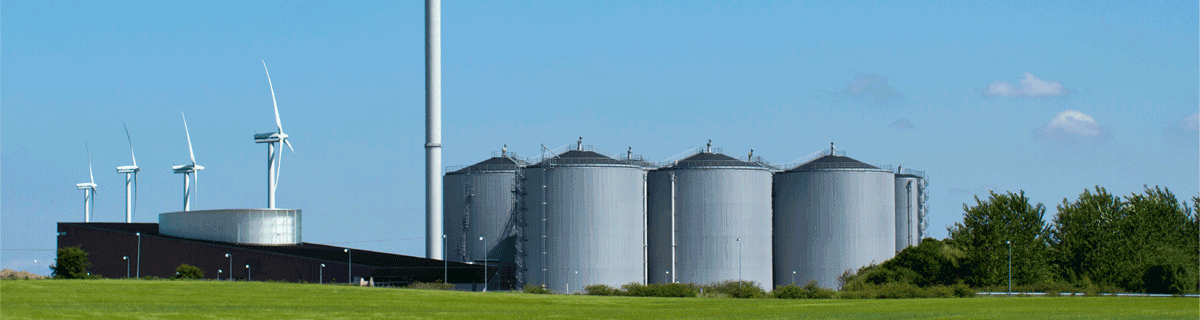
According to the business plan the biorefinery will be able to produce 80 million litres bioethanol, 50 million m3 biogas and electricity and heating for 25,000 households. The plant will also be able to deliver fertiliser and nutrients back to the agriculture sector. In addition to straw, the bioferinery will receive about 800,000 tonnes manure, biomass waste and wasterwater sludge as well as 100,000 tonnes trash. The residual products derived from production of the bioethanol is expected to replace the many tonnes waste, which today is imported from London for inceneration at a CHP plant in Holsterbro.
The bioethanol plant is expected to improve Denmark’s BNP with EUR 130 million a year and strengthen balance of payments with EUR 91 million a year, primarily because Denmark reduces the need for import of bioethanol.
You should consider reading
Biogas
Biomass
Solution
Bio-based circular solutions
+8
Biogas turns waste into value
20 August 2026Decarbonising energy systems requires solutions tailored to local conditions. While electrification is the preferred option for many applications, sectors such as high-temperature industrial processes still require renewable gaseous fuels. At the same time, agriculture produces large volumes of manu