Skip to content

Case

Biogas

Innovation

Waste-to-energy

Integrating power and gas systems through Power-to-Gas in Sønderborg

8 April 2026

Solution provider

ProjectZero

ProjectZero is Sønderborg’s cross-sector climate partnership, uniting citizens, businesses, utilities and the municipality to achieve a CO₂-neutral energy system by 2029 - and to serve as a living blueprint for cities around the world.

More from ProjectZero

Want to see this solution first hand?

Add the case to your visit request and let us know that you are interested in visiting Denmark

Photo credit: ProjectZero

Challenge

The growing share of electricity from wind and solar increases variability in energy supply. During periods of high production and low demand, renewable electricity cannot always be used, leading to curtailed wind turbines. At the same time, certain industries require stable, high-temperature energy that electricity alone cannot easily provide. This creates a mismatch between fluctuating power generation and continuous energy needs. In Sønderborg, addressing this imbalance is part of a broader ambition to phase out fossil fuels and transition to a fully renewable energy system by 2029.

Solution

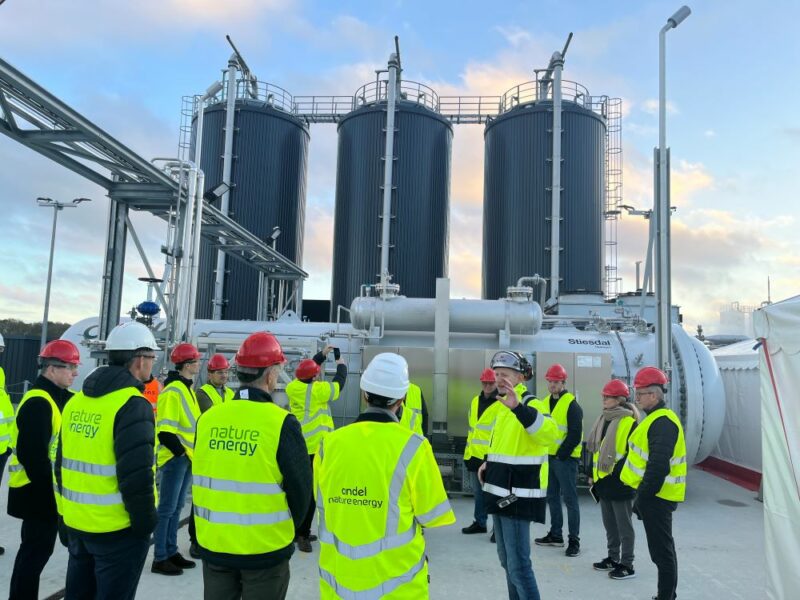
In 2023, a Power-to-Gas facility was integrated into the biogas plant in Glansager, owned by Shell. The system converts surplus electricity into hydrogen through electrolysis. The hydrogen is then combined with CO₂ from biogas in a biological methanation process. Using a trickle filter with naturally occurring microorganisms, the process produces methane (e-methane). Developed by Nature Energy and the University of Southern Denmark, the method enables cost-efficient conversion compared to chemical alternatives. The facility was initially designed to handle around 25 % of the plant’s biogas production.

Power-to-Gas

Result

The solution increases methane output by approximately 60 % from the same amount of biomass, including manure and industrial waste. This improves resource efficiency while utilising CO₂ as part of the process. By converting excess electricity into gas, the facility supports better integration between the power and gas grids and reduces renewable energy curtailment. The project contributes to Sønderborg’s goal of replacing natural gas, supplying industries with green gas while households transition to district heating and heat pumps.