Skip to content

News

Climate COP

Climate partnerships

Policy frameworks

COP30: Highlights from the Denmark Pavilion in Belém

COP30 in Belém is a wrap. From finance and carbon removal to global collaboration, the Denmark Pavilion served as a platform for climate dialogue, partnerships and green solutions amid a politically complex summit. Read more about some of the higlights from Denmark at COP.
image
24 November 2025

As COP30 concludes in Belém, Brazil, the sense of urgency and complexity surrounding global climate negotiations has rarely felt more palpable. With negotiations stretched to the final hours – and even a dramatic fire in the Blue Zone prompting temporary evacuation – the summit ended with the adoption of a new framework: the Mutirão agreement. Derived from the Tupi-Guarani word meaning “collective effort,” the deal seeks to revitalise climate action through unity, ambition, and implementation.

While the final agreement has faced criticism for falling short on core issues – such as the phase-out of fossil fuels – it nevertheless represents a step forward. And while the formal negotiations struggled to bridge ambition with implementation, COP30 delivered on many other fronts.

Nowhere was that more evident than at the Denmark Pavilion, where two weeks of dialogue, partnerships and solution-sharing highlighted what is possible when public and private actors come together to act. From green shipping and circular economy to carbon removal and climate finance, the Pavilion became a vibrant hub of collaboration and global ambition.

1. Mutirão: COP ended with a call for unity, but a deal short on ambition

COP30’s final agreement reaffirmed the 1.5°C target and introduced voluntary mechanisms such as the Global Implementation Accelerator and the Belém Mission to 1.5. The deal aims to triple climate finance flows to developing countries to USD 1.3 trillion annually by 2035, and sets a strong emphasis on adaptation and loss & damage funding.

However, the deal omitted a clear roadmap for phasing out fossil fuels, and weakened the role of the IPCC as the primary source of climate science. Countries like Denmark and others in the EU expressed disappointment that ambitions weren’t higher, but emphasised that action cannot wait for perfection.

“Global climate action is far too slow. The EU has fought to reduce emissions across the globe. We do not believe the agreement succeeds sufficiently in this regard. We are part of it because we stand shoulder to shoulder with the world’s poorest countries. Here, we have agreed to increase financing for climate adaptation, which directly helps the most vulnerable. So the EU has shown solidarity with the most exposed countries.” Lars Aagaard, Minister for Climate, Energy and Utilities

Learn more about the COP30 deal

COP30

A burning COP

A fire at COP30 added even more heat to the already tense final negotiations. Yet, the global climate summit has also been marked by constructive dialogue, high-level events and a strong spirit of collective climate action. Discover some of the highlights at this edition of State of Green Weekly.

Read the newsletter

2. Partnerships and climate action on display at the Denmark Pavilion

Over two eventful weeks, the Denmark Pavilion served as a meeting ground for solutions, dialogue and cross-border collaboration.

Despite logistical challenges, heat and humidity, more than 40 events, 50+ bilateral meetings, multiple negotiation briefings, and three receptions brought together a wide range of partners across government, business and civil society.

From energy-efficient buildings and industrial decarbonisation to food systems and green shipping, Danish companies showcased their readiness to accelerate the green transition. As always, public-private partnership was the cornerstone.

“The Danish business delegation turned the pavilion into a living showroom for solutions that support a just and green transition. We are proud to once again underline that Denmark’s public-private partners are committed to the green transition and to building climate partnerships across borders. A big thank you to all our partners – and not least to Danish Industry, the Ministry of Climate, Energy and Utilities, and the Ministry of Foreign Affairs for their collaboration,” Finn Mortensen, Executive Director at State of Green.

Also read: Recap of the Danish Pavilion at LinkedIn
3. GONE: Pushing for climate negativity

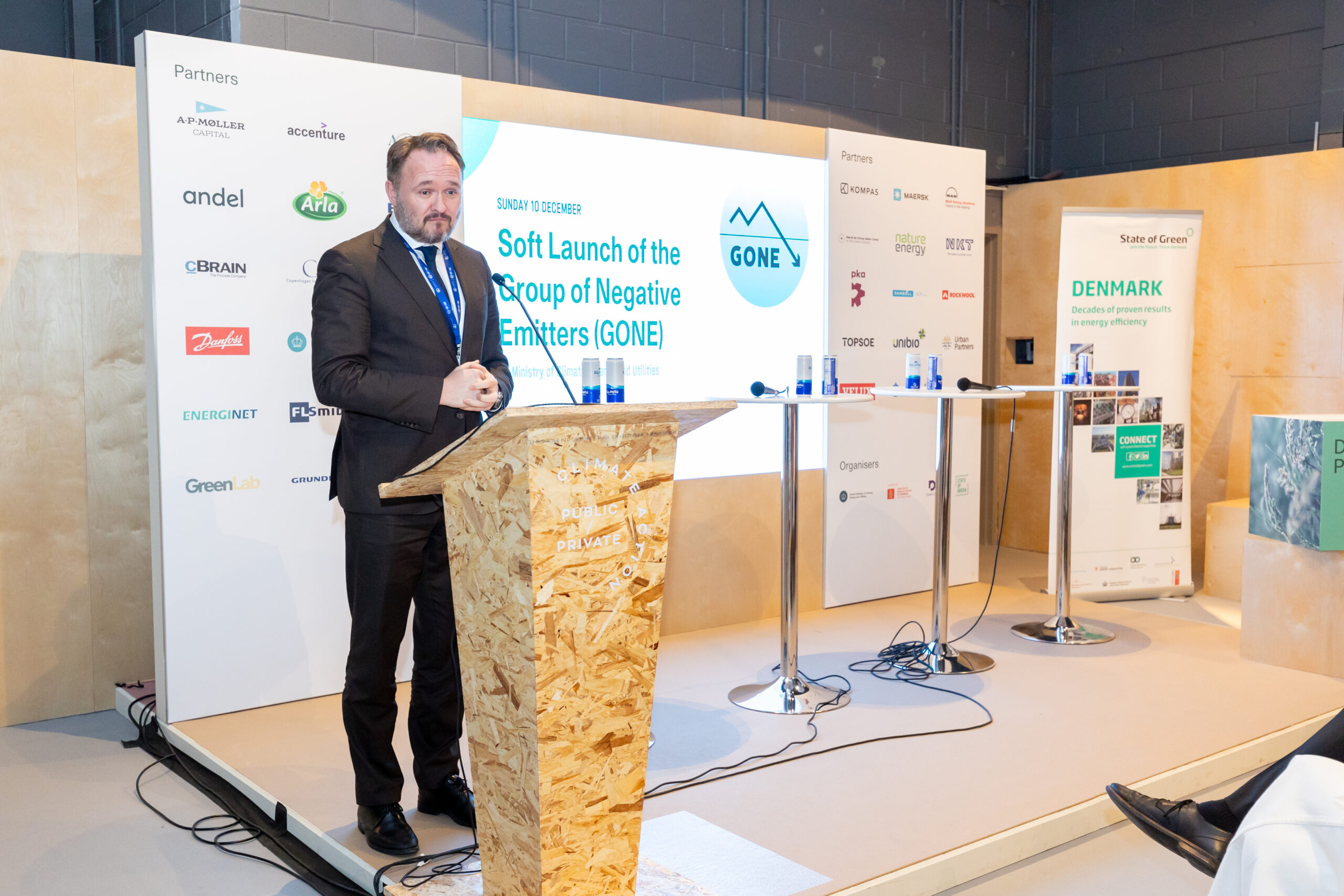
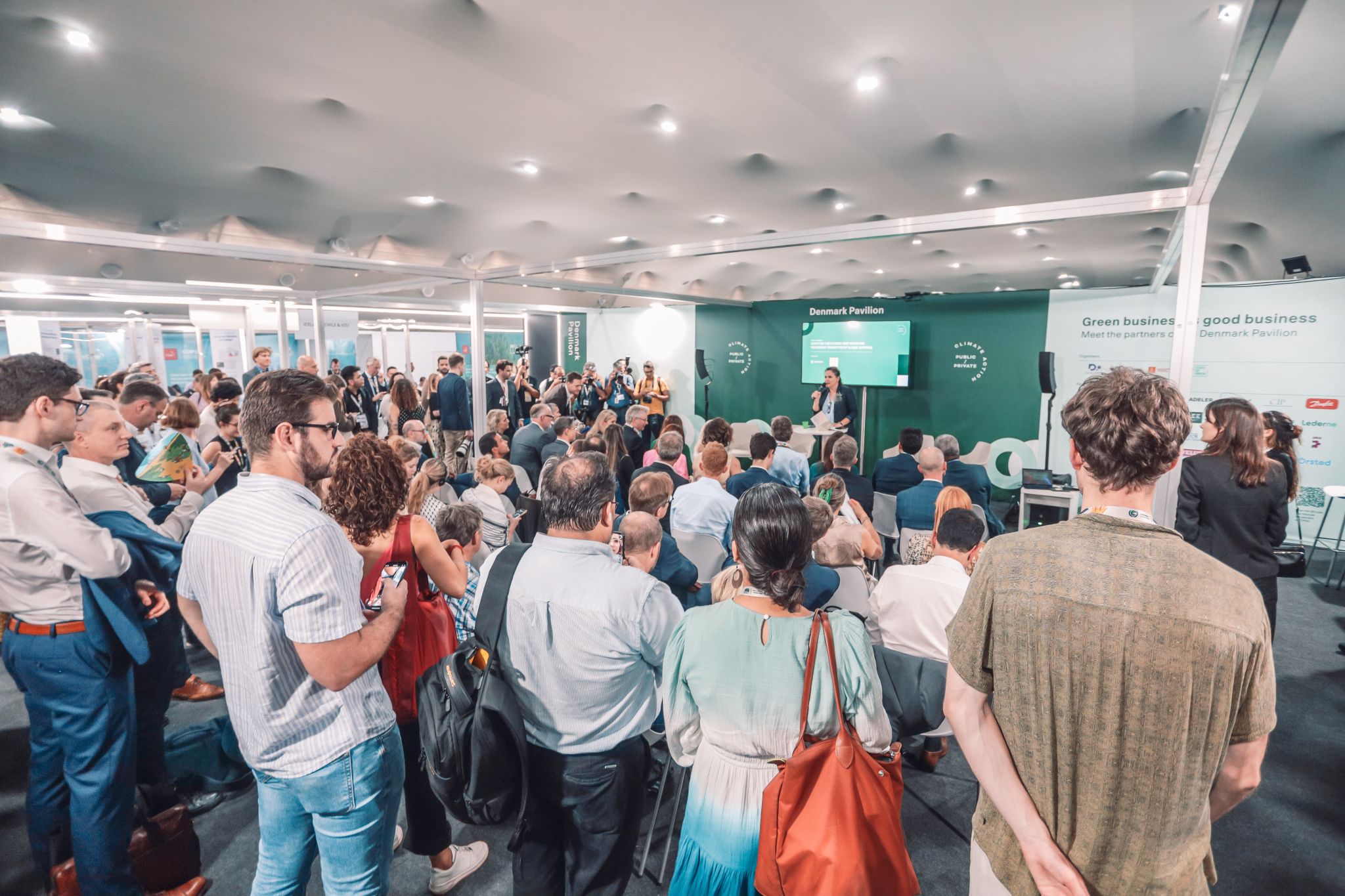
One of the high-level moments at the Denmark pavilion came during a ministerial panel hosted by the Group of Negative Emitters (GONE). Joined by ministers from Sweden, Suriname, the Netherlands and Finland, Lars Aagaard, Denmark Minister for Climate, Energy and Utilities, underscored the need to pair deep emissions cuts with credible, verifiable carbon removals.

Launched by Denmark at COP28, GONE is a coalition of countries aiming to go beyond net-zero and become net-negative after 2045 – removing more CO₂ than they emit. With Denmark’s newly proposed 2035 target of 82–85% emissions reduction, and its role in shaping the EU’s 2040 climate target as the holder of the EU Presidency in the remainder of 2025, the country remains a strong advocate for ambitious and science-based climate leadership.

Also read: Denmark raises climate ambitions with new 2035 target proposal

New global alliance to advance negative emissions

GONE: Group of Negative Emitters

Launched by Denmark, Panama, and Finland at COP28 in Dubai, the Group of Negative Emitters (GONE) is a Danish-led international alliance committed to going beyond climate neutrality. While most countries aim for net-zero emissions, GONE’s ambition is more far-reaching: to become climate-negative by removing more CO₂ from the atmosphere than is emitted — a goal set for after 2045.

Read more about GONE

3. Beyond oil and gas: Climate finance takes centre stage

With much activity and several important topics at COP, climate financing remains one of the key discussion points. At the Denmark Pavilion, this theme took the spotlight during a high-level event hosted by the Beyond Oil and Gas Alliance, the Danish Ministry of Finance, and Confederation of Danish Industry.

The events explored how climate finance can support the transition away from fossil fuels in the next generation of national climate plans (NDCs 3.0). With contributions from the Coalition of Finance Ministers for Climate Action and a keynote by Lord Nicholas Stern, the discussion highlighted that climate finance is no longer a niche issue – it is now central to national economic policy and global climate diplomacy.

The common message throughout the day was clear: meaningful climate progress depends on financial systems that can raise, allocate and de-risk capital effectively – especially in developing economies. Strengthening international cooperation and improving access to decision-ready data will be critical for delivering on global commitments.

The debate was connected directly to the new Mutirão goal of raising USD 1.3 trillion annually for climate finance by 2035.

Read more about the event

4. A royal spotlight: HM Queen Mary visits COP30

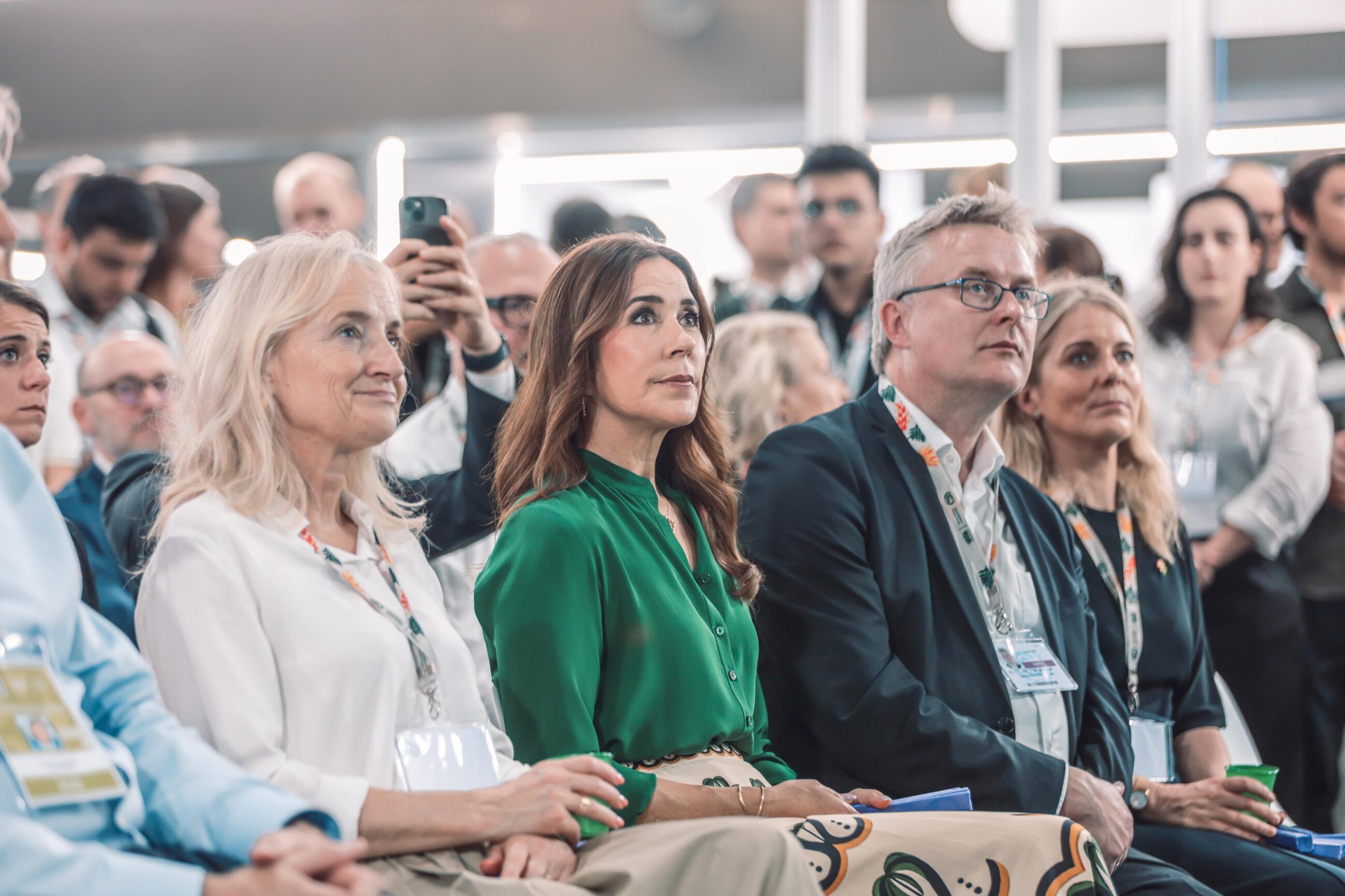
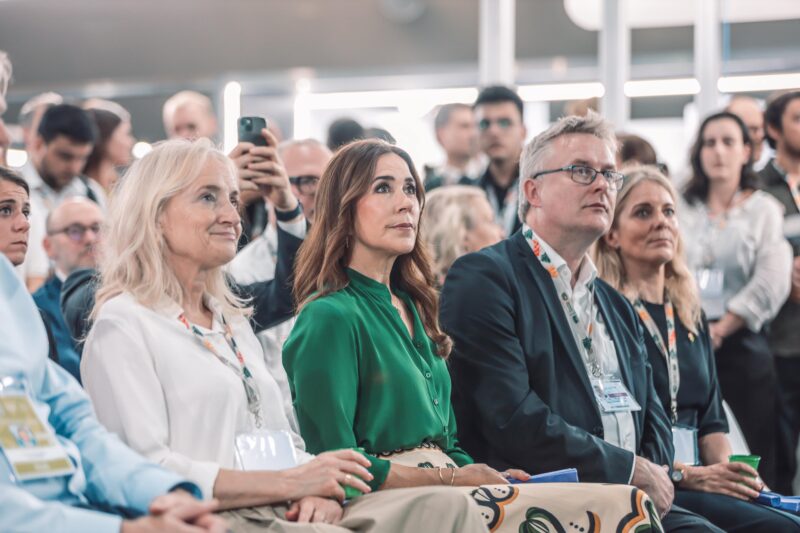
On 11 November, Her Majesty Queen Mary of Denmark visited the Denmark Pavilion, shining a spotlight on Danish contributions to the global green transition.

Welcomed by Brazilian governors and key Danish representatives – including Ole Thonke (MFA), Anne Højer Simonsen (DI), and Finn Mortensen (State of Green) – the Queen toured the Pavilion, met with partners including VELUX, Ramboll, and Ørsted, and attended two events:

  • Charting the Course on Green Shipping (Maersk and European Energy)

  • Circular Economy Solutions by Novo Nordisk

Her visit reaffirmed Denmark’s strong presence at COP30 and the value of collaboration across sectors and countries.

Also read: COP30: New finance window launched to strengthen climate adaptation in Africa

Obrigado Belém – onwards to COP31

As the world digests the outcomes of COP30, the message from the Denmark Pavilion is clear: progress depends on partnerships. The road ahead may be steep, but with global cooperation and the right tools in hand, the green transition can – and must – be accelerated.

A warm thank you to all partners, speakers, and visitors who made the journey to Belém. And a special thanks to our co-organisers: The Ministry of Climate, Energy and Utilities, The Ministry of Foreign Affairs of Denmark, and Confederation of Danish Industry.

See you at COP31.

Discover more highlights from COP30

You should consider reading

Climate COP
Climate partnerships
Policy frameworks

Solution

Digitalisation

+7

Floating Offshore Wind Solution Suite

2 April 2026
A US engineering firm sought to commercialise a floating offshore wind technology, requiring a clear market strategy, product-market fit, and access to capital to enable entry into competitive global markets.

Solution

Building design

+20

Renewables Focus with Port Development

2 April 2026
A European municipality sought to define a clear vision for transforming an industrial area into a hub for renewable energy manufacturing, while aligning stakeholders including municipal staff and elected officials.