Perspective piece
The following piece is a perspective article written in collaboration with Danish Industry, Green Power Denmark, the Danish-German Chamber of Commerce, and the Danish Embassy in Berlin.
Read the full opinion piece (in German)Perspective
Green hydrogen
Hydrogen infrastructure
Partnerships
+1
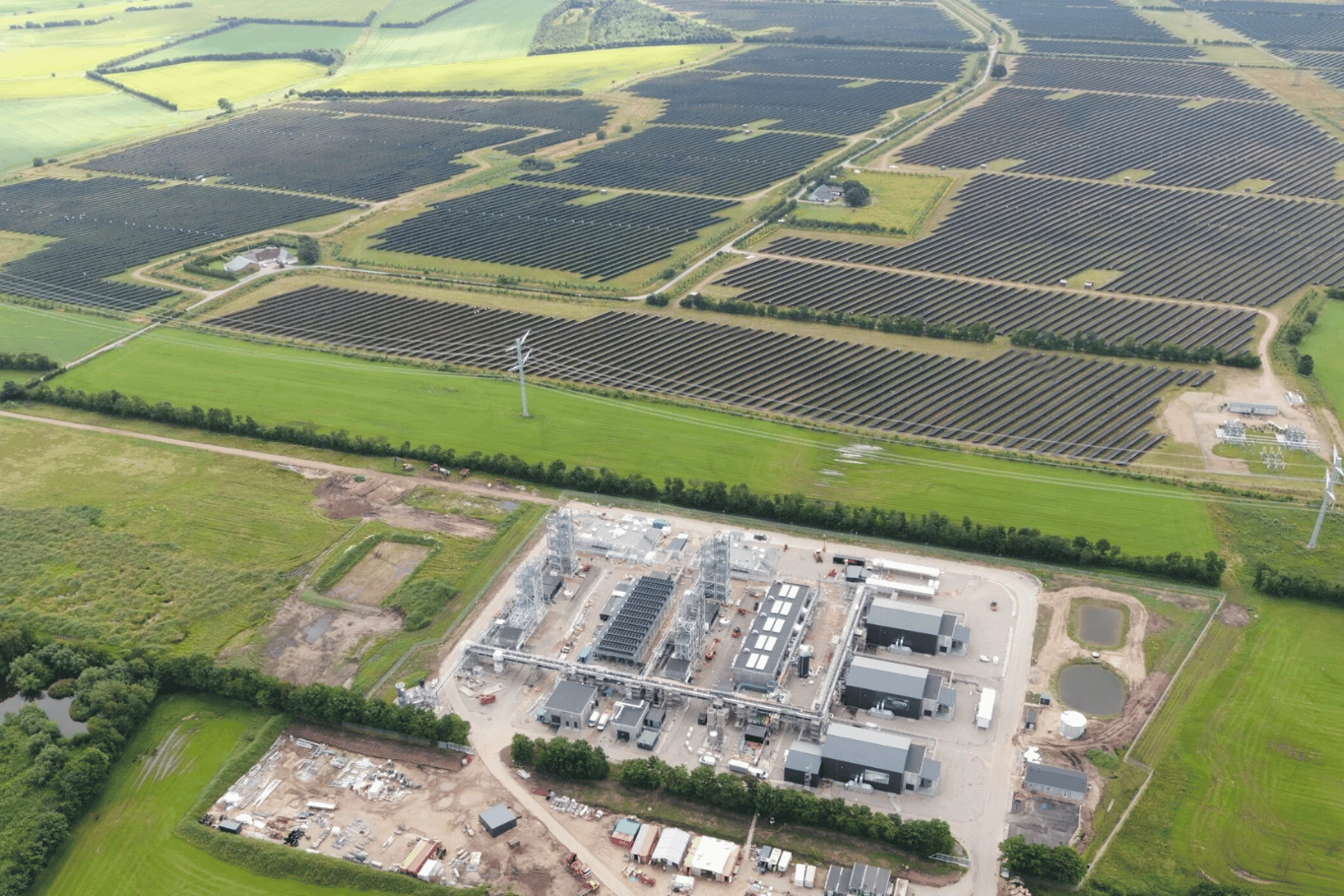
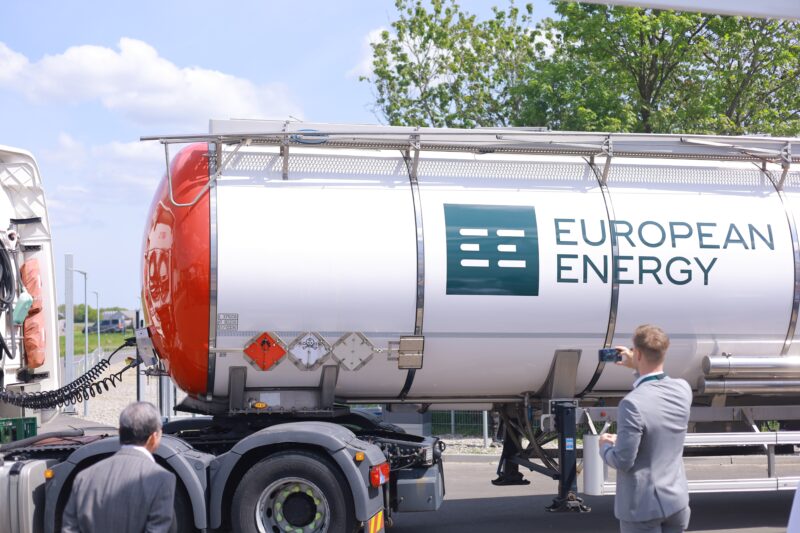
Kassø power-to-x facility. Photo Credit: European Energy
The following piece is a perspective article written in collaboration with Danish Industry, Green Power Denmark, the Danish-German Chamber of Commerce, and the Danish Embassy in Berlin.
Read the full opinion piece (in German)Heavy industries will face increasing pressure to decarbonise as carbon pricing tightens and binding EU requirements for the uptake of renewable fuels come into force.
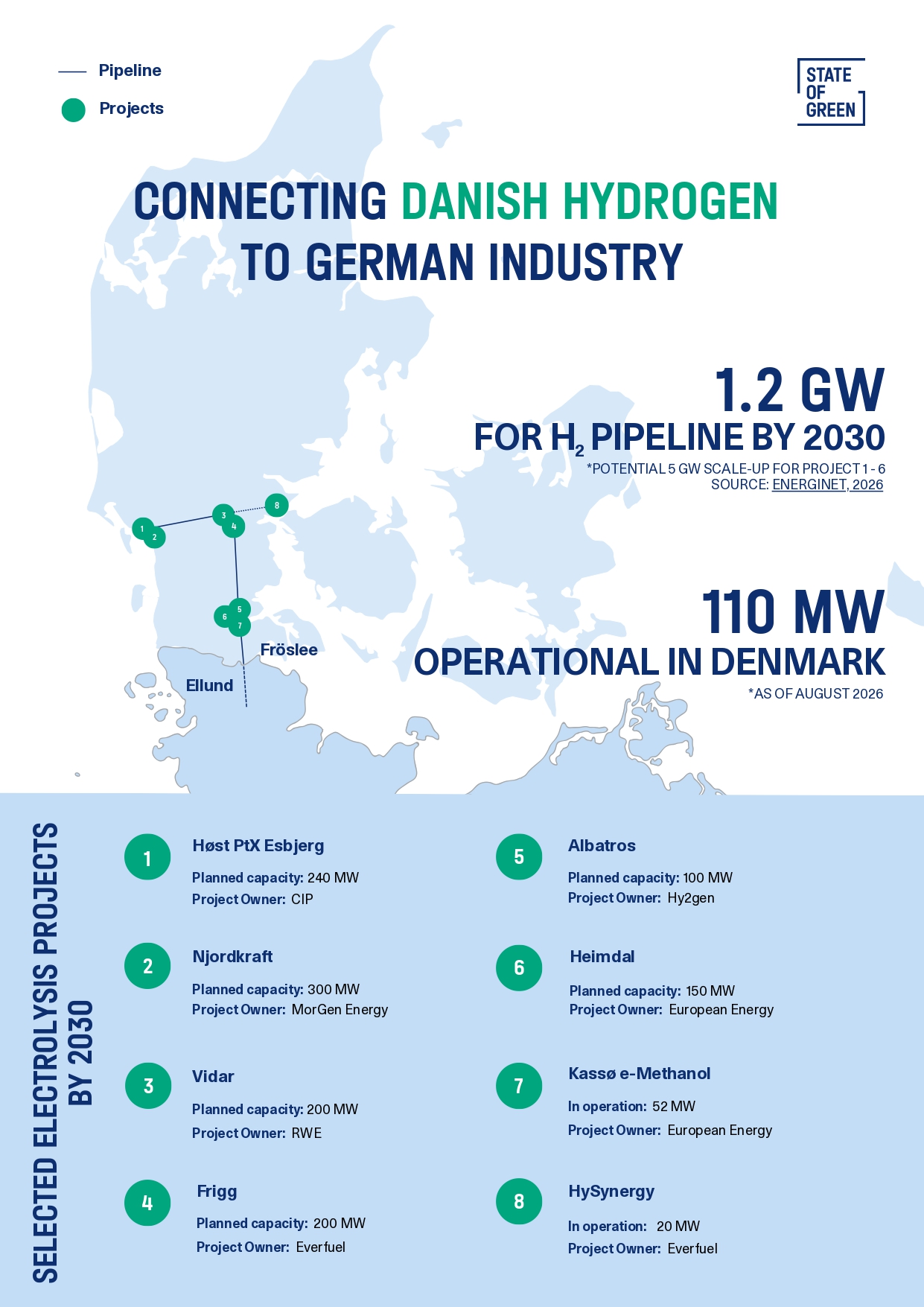
In response, Denmark and Germany are positioning hydrogen as a strategic option, committing more than EUR 3 billion to establish a cross-border pipeline that will connect Danish low-carbon hydrogen with German industrial demand.
With infrastructure planned and incentives in place, now is the time for German industries to secure their piece of future-proof European energy supply.
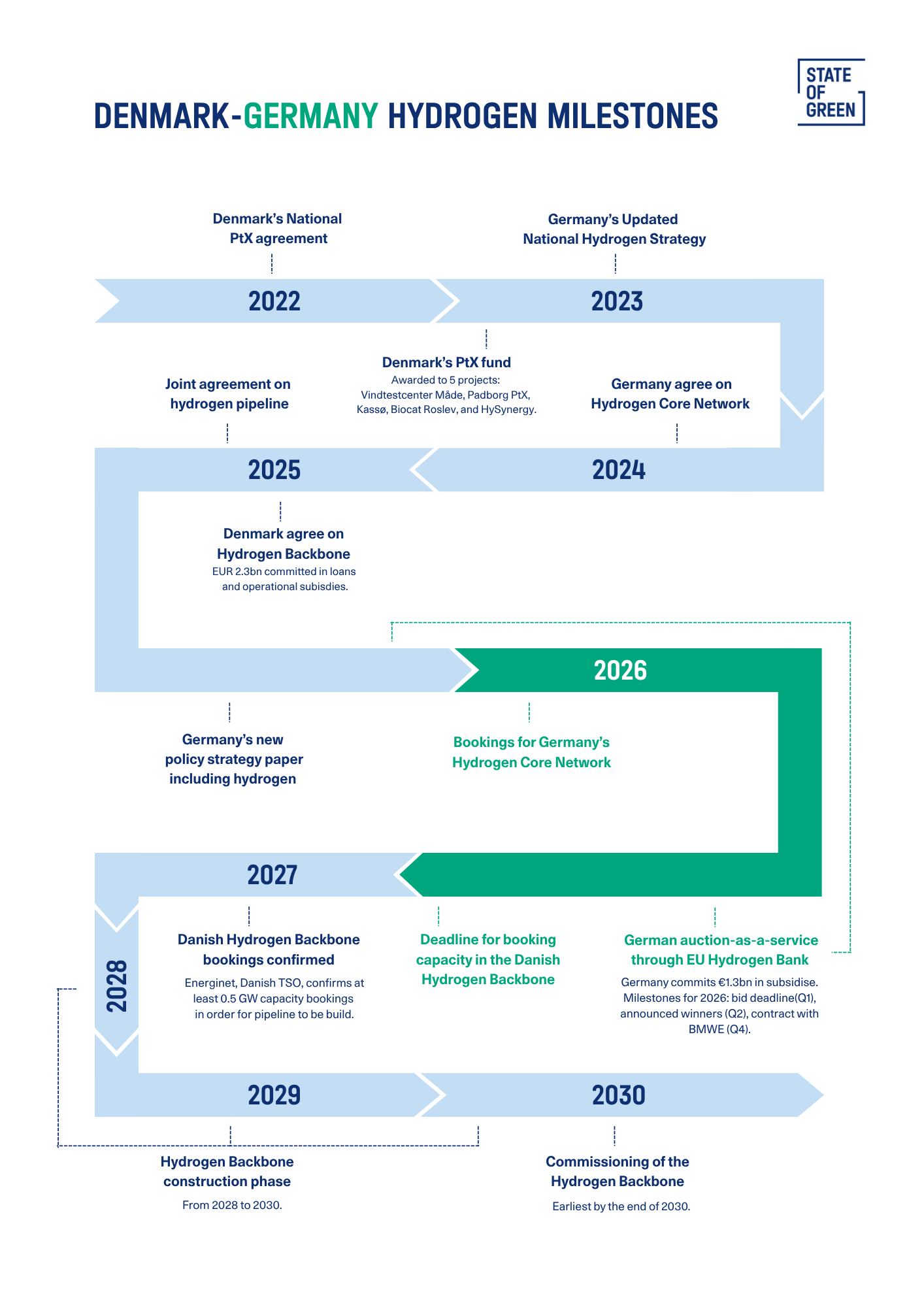
As part of the ambition to phase out Russian gas by 2027 and diversify energy supply, the German government earmarked EUR 1.3 billion to support the uptake of Danish hydrogen. The investment will provide the necessary financial backing to bring the hydrogen market up and running by enabling stable prices and long-term contracts. Through the European Commission’s ‘Auction-as-a-Service’ mechanism under the European Hydrogen Bank, the funding will subsidise the production cost of renewable hydrogen. This helps bridge the price gap between fossil fuels and green hydrogen for end users.
Similarly, from the Danish government, the establishment of a hydrogen pipe connecting Denmark and Germany has received EUR 925 million in state-backed loans for the infrastructure and EUR 1.1 billion in operational subsidies. The pipeline will form the backbone of a stable and efficient supply chain, enabling hydrogen transport at significantly lower cost than alternatives such as trucks or ships.
“Close German-Danish cooperation is a key factor in the success of building an efficient hydrogen infrastructure in Europe. Together, we are creating the conditions needed to efficiently match supply and demand and drive forward the green transition of our industries. This project demonstrates how cross-border partnerships can make a significant contribution to energy security and competitiveness,” Andreas Wenzel, CEO of the German-Danish Chamber of Commerce
The message from Brussels is also clear: clean energy is the long-term goal. The policies are in place, the financial support has been earmarked, and the infrastructure projects are underway.
For the EU, developing a robust hydrogen market framework is not just an environmental priority but a strategic necessity. With limited alternatives to achieve true energy independence, hydrogen offers a critical pathway to reduce reliance on imported fossil fuels in hard-to-abate sectors.
At the same time, for energy-intensive sectors, continued reliance on fossil fuels will become increasingly expensive, with higher carbon costs impacting competitiveness. Green hydrogen offers an alternative solution that can meet regulatory requirements, reduce emissions, and secure a more affordable, long-term energy supply. Backed politically from both national governments and the EU, the direction for the energy transition is set. It is therefore up to the industry to ride this wave or be hit by it.
“If Europe is to succeed in achieving independence from imported fossil energy, we must be able to produce both electricity and green hydrogen within the EU. The cooperation between Denmark and Germany is a catalyst for the renewable European hydrogen market. It is crucial that we maintain a strong focus on creating attractive market conditions. A strong offtake market is essential to scale Danish hydrogen production moving forward,” Kristian Jensen, CEO of Green Power Denmark.
For several industrial sectors, hydrogen represents the only viable pathway to deep decarbonization. Alternatives simply do not exist at the scale or feasibility required to meet climate goals. Given this reality, sitting out the transition is not an option.
Yet, external risk factors are causing some industry actors to wait for the sector to mature before committing. It may seem safer to let others take on the initial risks. However, early adoption offers significant benefits, such as included state funding and long-term stability of supply. Delaying commitment, on the other hand, risks slowing market development and forcing latecomers to compete for limited volumes in a less-developed market. This could result in tighter supply, higher costs, fewer subsidies, and tougher contract conditions. It is in the interest of the entire sector that action is taken swiftly. Prolonging only risks being behind on EU regulation.
“Fossil supply chains have proven both fragile and unpredictable. This means, that there is a window of opportunity for offtakers right now. Those who move early will secure a compliant and reliable green hydrogen supply, while leveraging transitional financial support and state-backed infrastructure. Denmark stands ready as a reliable partner with competitive, low-cost green hydrogen due to strong renewable resources and a stable regulatory framework.” Troels Ranis, Senior Vice President of Danish Industry
The transition to green hydrogen is not a distant possibility but is happening now. It is now up to the German industry to take initiative, shape its future footprint, and build resilience for the long run.
In recent months, State of Green, DI, Green Power Denmark, the Danish-German Chamber of Commerce, and the Danish Embassy in Berlin have coordinated a joint initiative on green hydrogen.
The purpose has been to place green hydrogen on the agenda in Germany and to provide information about the (hopefully) upcoming hydrogen pipeline and the possibility of state-supported green hydrogen. This is part of an effort to bring potential offtakers closer to producers.
Download the information kit

Green hydrogen and e-fuels play a vital role in advancing the green transition. Produced through electrolysis using renewable electricity, both are critical components in decarbonising industries and transportation globally.
We have gathered all you need to know about the Danish milestones in decarbonising industries and transportation and brought together inspiring solutions in our white paper.
Discover why “Green hydrogen is Danish hydrogen”.