Skip to content

Perspective

Non-revenue water

Security of supply

Water efficiency in industries

Reaping the benefits of reduced water losses

Reducing water losses brings multiple benefits as it can delay costly expansions by serving more people with existing resources, cuts energy use and boosts utility revenues by minimising losses. Effective NRW management also strengthens water supply security, ensuring reliable access for growing cities, businesses and communities.

There are many benefits to be reaped from adopting and successfully implementing an NRW reduction programme.

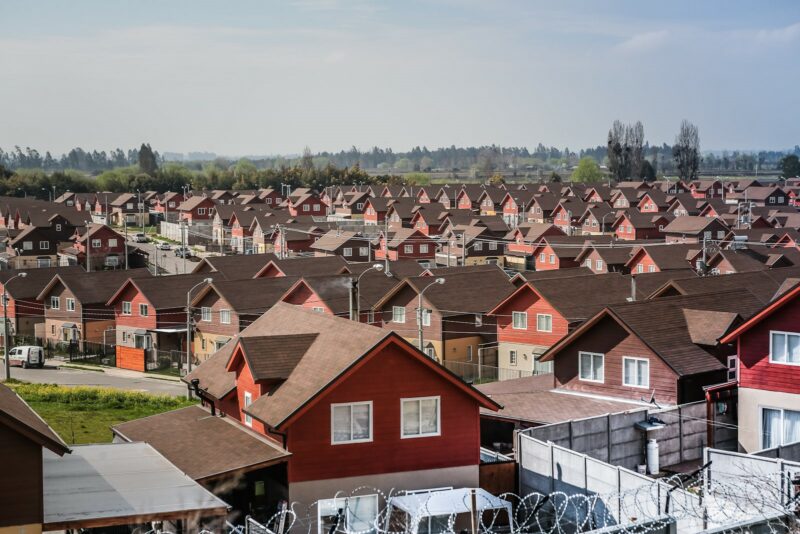
Reducing urban water losses can delay the need for additional water resources in cities with a growing population, as up to 30 percent more inhabitants can potentially be served from an existing resource by making distribution systems more efficient.

Any investments in the utility’s water supply, including new intake and treatment plants, should therefore be considered as opportunities to reduce NRW down to the ELL.

Considerable energy savings

Climate change mitigation and reduction of CO2-emissions is increasingly attracting political attention across the globe. It therefore makes sense to address reduced energy consumption as a positive spillover effect of NRW reductions when considering the efforts and expected results of an NRW programme.

If 25–50 percent of the water produced is lost through leakages and never reaches end users, the energy used to abstract, treat and distribute that water is also wasted. In systems with high levels of NRW, energy inefficiency becomes a hidden but significant cost driver, as utilities are often forced to operate pumps at higher pressures or for longer durations to maintain service levels.

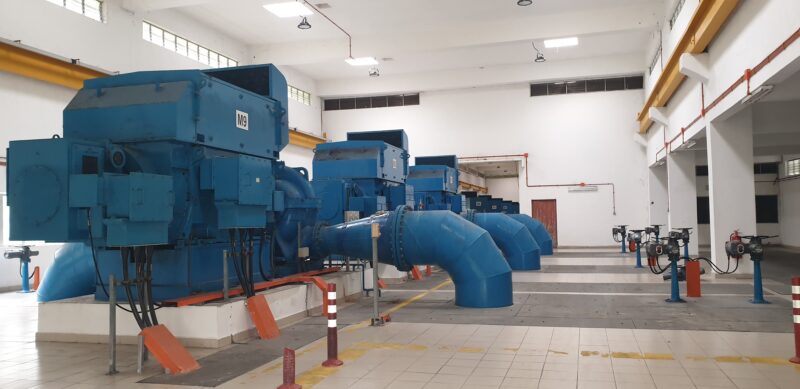
Reducing NRW not only conserves water but also unlocks substantial energy savings. A typical NRW reduction programme leads to more stable and optimised pressure across the distribution network, which in turn improves the overall efficiency of the pumping system. With more consistent operating conditions, it becomes possible to reduce peak energy demand, optimise pump performance and lower the energy intensity per cubic metre of water supplied.

Higher revenues

It is estimated that the apparent losses caused by inaccurate metering and data handling errors typically make up 25–75 percent of the total amount of NRW, which can seriously affect the financial viability of water utilities as a result of lost revenues.

The cost savings and increased revenues gained from reducing NRW through efficient management can therefore be transformed into larger working funds for the utility, securing its future efficiency and development for the benefit of the surrounding region.

Stronger supply security through effective NRW management

Reducing NRW plays a vital role in strengthening the longterm security of supply. By minimising avoidable losses and stabilising system operations, utilities are better equipped to maintain a continuous and reliable flow of water, even during droughts, peak demand periods or climate-related disruptions.

This is essential not only at the large scale, where entire communities depend on consistent access to clean water, but also at the small scale, where industries and businesses relyon a stable supply to maintain operations and productivity.

In this way, NRW management supports water supply security.

front page white paper reducing urban water losses

Discover our publication on reducing urban water loss today

This article is part of our publication ‘Reducing urban water loss’. Packed with insights and cases from Danish water experts, the publication outlines how holistic planning, innovative technologies and integrated management can reduce urban water losses and build secure, resilient water systems for the future.

Explore the publication

You should consider reading

Non-revenue water
Security of supply
Water efficiency in industries

Event

Water supply

+19

Danish Water Export Day 2026

3 June 2026
Water Export Day is being held this year on September 1st at Danish Industry, bringing together the Danish water industry with a focus on exports. Together, we will discuss how and what opportunities exist to strengthen the export of Danish water technology and know-how. The event will serve as a pl