Lars Aagaard
Minister for Climate, Energy and Utilities, Denmark.
Perspective
Carbon capture, storage and utilisation

Minister for Climate, Energy and Utilities, Denmark.
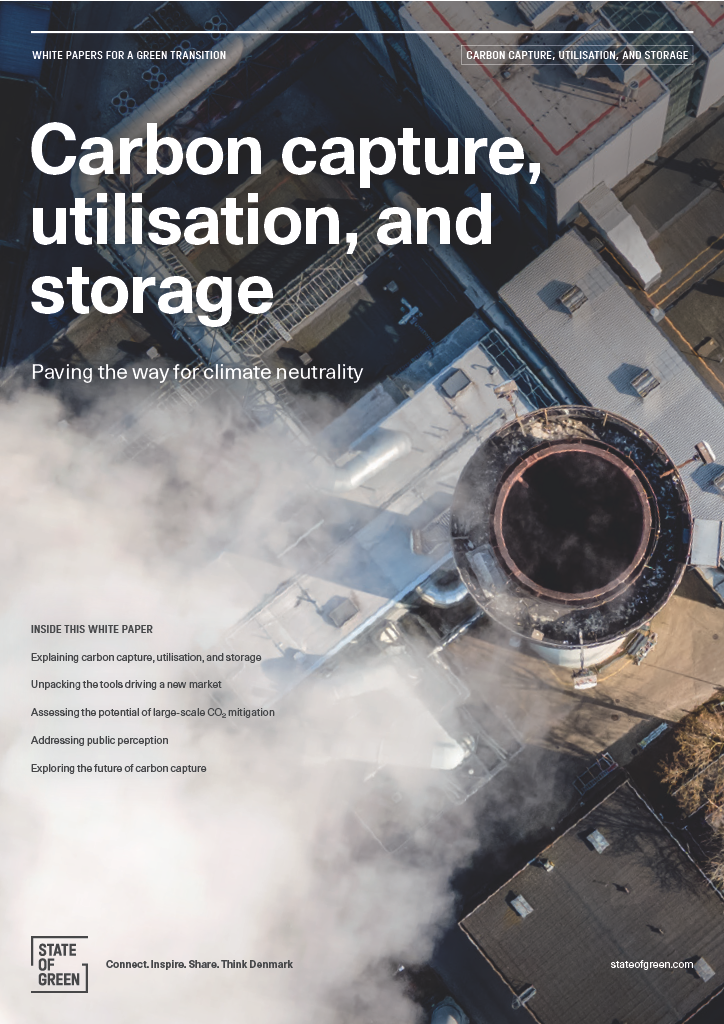
What does it take to raise a green industry from the ground and create a growing market for carbon handling? We are doing our best to answer that question in Denmark.
In the past couple of years, we have made great strides towards establishing a market for CCUS, and as this white paper shows, the effort is paying off. Our strategy combines a few key elements that lay the foundation for growth. First off, we have maintained a clear political direction and committed sizeable economic resources. Secondly, Danish companies have shown great innovative capabilities and high levels of climate ambition. Thirdly, the dialogue between industry and government has been open and honest. When you start from scratch, you don’t know what you don’t know. Therefore, keeping a constructive conversation with experts and industry flowing has been a strategic focal point.
The results continue to show, and some of them are included in the white paper as case studies. The scale of the projects is growing rapidly, and thus, the ambition is that the price will eventually go down. Utilising the market forces is key to building a robust value chain, and although we are a long way from a subsidy-free market, that remains the end goal. Therefore, we are continuously working to strike the perfect balance between ambitious climate action and competitiveness.
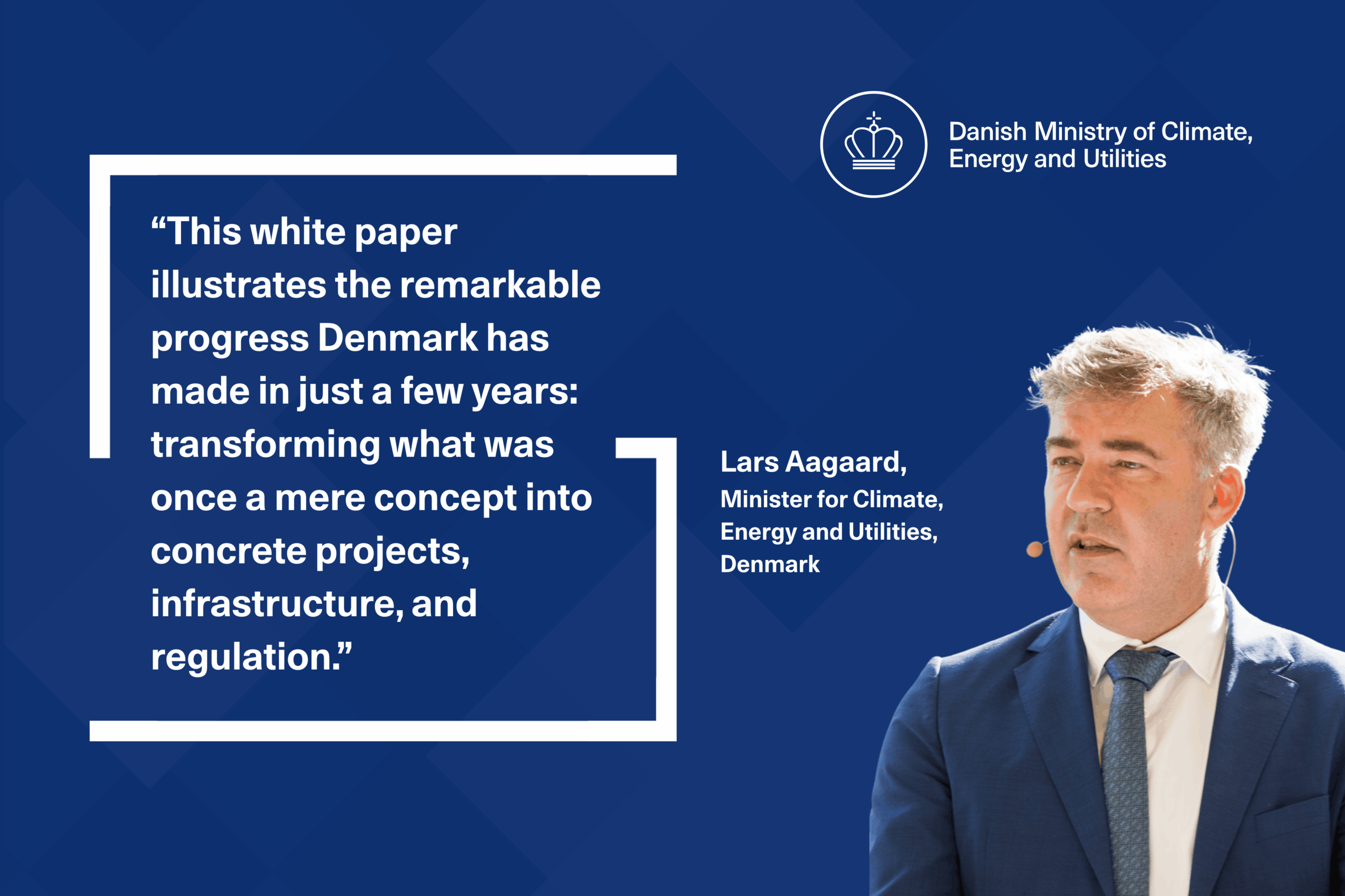
According to science, reaching our climate goals without CCUS will be very hard, if not impossible. For this reason, I closely follow developments in CCUS with great anticipation. This white paper illustrates the remarkable progress Denmark has made in just a few years: transforming what was once a mere concept into concrete projects, infrastructure, and regulation. That gives me hope, and hope is needed. Global emissions are still rising, so we will need all the tools at our disposal to combat climate change. My hope is not based on wishful thinking, but on tangible progress across multiple sectors in Denmark, including cement production, power and heating plants, waste incineration, and biogas.
In the coming years, we will need to keep the momentum going, both globally and in Denmark. The intention of this white paper is to inspire readers worldwide and across every part of the value chain. Developing new technologies is a team effort that requires all actors to lean in: ground-breaking researchers, innovative companies, and forward-thinking regulators. By working together, we can continue to make progress.
Solution
Carbon capture, storage and utilisation
Event
Carbon capture, storage and utilisation
+2