Skip to content

Perspective

Security of supply

Non-revenue water

Urban water management

+2

Save water and money: 5 ways to reduce non-revenue water

Future demands for water require a strong focus on effective water management, operation and a reduction of non-revenue water. Below we present five proven solutions on how cities can improve water management and thus reduce non-revenue water.
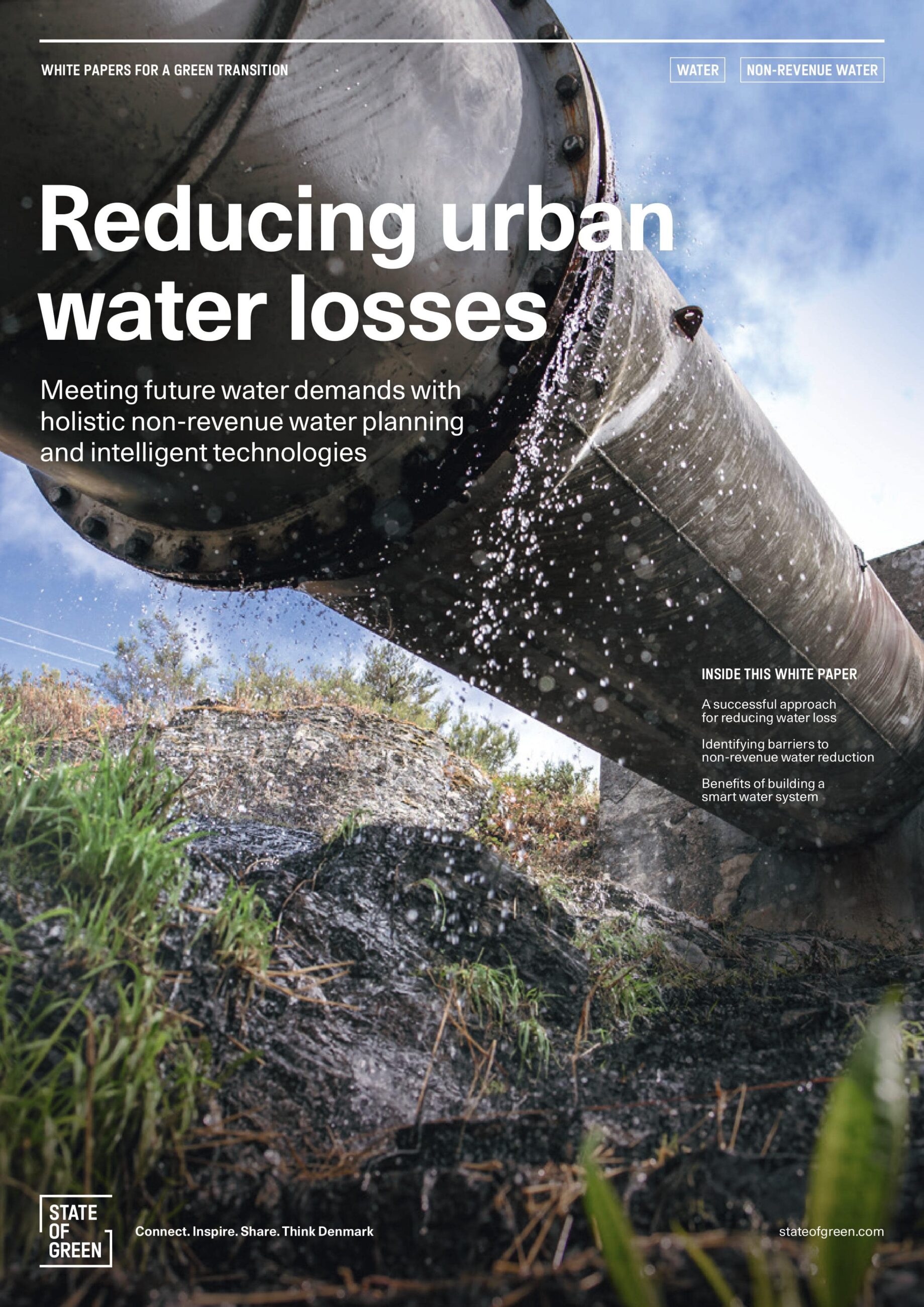
front page white paper reducing urban water losses

Reducing urban water losses

The following solutions are cases from the white paper “Reducing urban water losses”. Discover the publication for insights and inspiration from water professionals and utilities from all over the world.

Get the publication

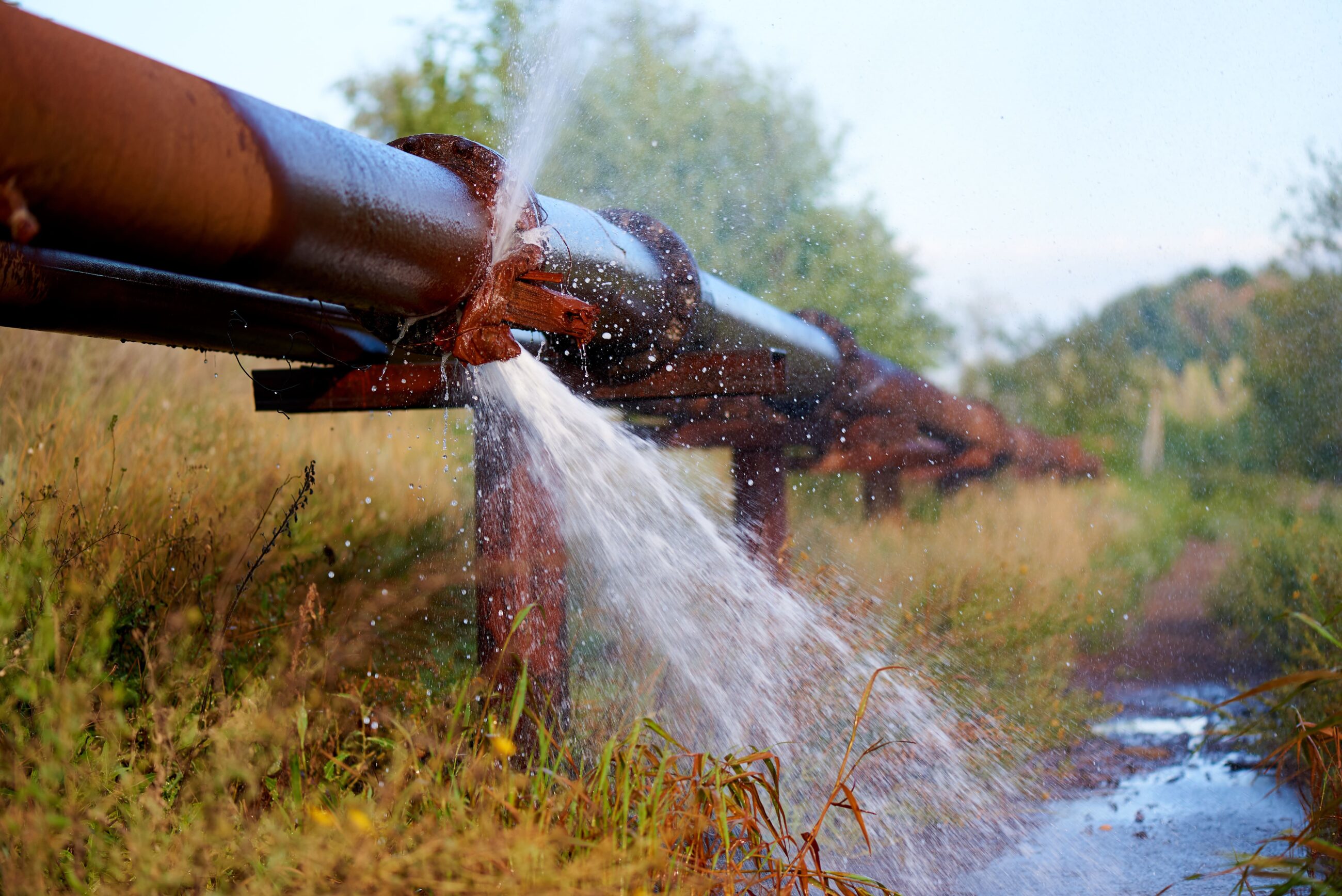
Today, 25-50 per cent of all distributed water globally is lost or never invoiced due to leakages, inaccurate billing systems, incorrect metering, illegal connections, deteriorating infrastructure and wrong water pressure management, etc. This is called non-revenue water (NRW), i.e. distributed but lost water for which a utility never receives revenue. NRW is a serious economic issue as well as a waste of the planet’s scarce drinking water resources. NRW can and should be reduced.

NRW levels are high in many cities throughout the world – varying from 5 per cent to as much as 80 per cent, with approx. 40 per cent being the average. Thus, immense volumes of clean drinking water are wasted, lost through leakages, burst or not accounted for due to metering inaccuracies or illegal connections – all leading to financial losses for water utilities.

Water consumption on a global scale is projected by the United Nations to increase by up to 30 per cent by 2030, which will lead to an even bigger supply gap for countries already facing water stress. With a ‘business as usual’ approach and average economic growth, demand for water will outnumber known available freshwater resources by 4 per cent in less than 20 years from now. Future demands for water therefore require a strong focus on effective water management, operation and a reduction of NRW.
High-quality products pay off in the long term

If improvements in the water distribution infrastructure are to last in the long term and show an expected reduction in water loss, it is recommended to use high-quality components and products. Aspects to be considered when purchasing and installing new components include length and scope of warranty, Total Cost of Ownership, energy consumption as well as long-term reliability and accuracy.

Water loss challenges from around the world

In the following, we have gathered 5 examples of how cities can reduce the amount of NRW and thereby save money and meet increasing water needs for a growing population.

1. Smart pressure control reduces water and energy waste in Chilean towns

Solution provider: Grundfos

Explore the case story

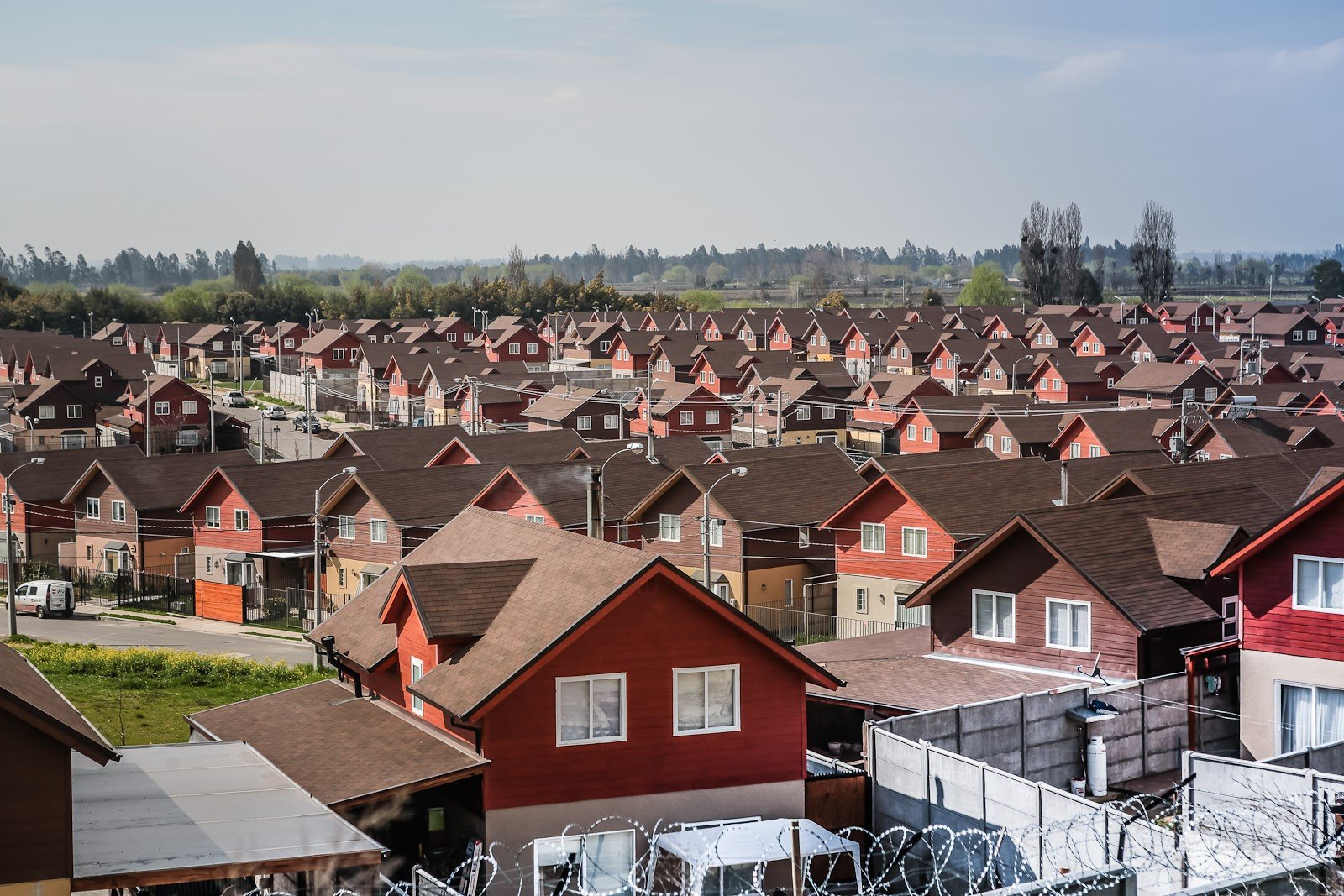
In the growing Chilean suburb of Tejas Verdes, rising water demand led to pipe damage, water losses, and high energy costs.

To address this, the local utility adopted Grundfos’ Demand Driven Distribution (DDD) system, which uses low-energy sensors to adjust water pressure based on real-time demand. The solution reduced energy consumption by 32% and cut water losses by 3.3% within months.

Pipeline failures were eliminated, and residents now enjoy a stable water supply. This case demonstrates how intelligent pressure management can reduce waste and support more sustainable water and energy use.

2. Digital modelling boosts water security in drought-prone Rajasthan

Solution provider: DHI

Explore the full case story

Water supply India

In Rajasthan, India’s driest state, outdated infrastructure and poor pressure management led to major water losses and unreliable supply.

To address this, DHI used its MIKE+ digital modelling platform to analyse water networks across 222 towns. The project produced nearly 3,000 calibrated models, identifying leakage hotspots and system bottlenecks.

These insights support smarter investments, improved efficiency, and long-term water security. The approach offers a scalable solution for other water-stressed regions in India.

3. Smart data use helps Fort Worth cut water loss and improve quality

Solution provider: NIRAS

Explore the full case

Reducing Urban Water Loss

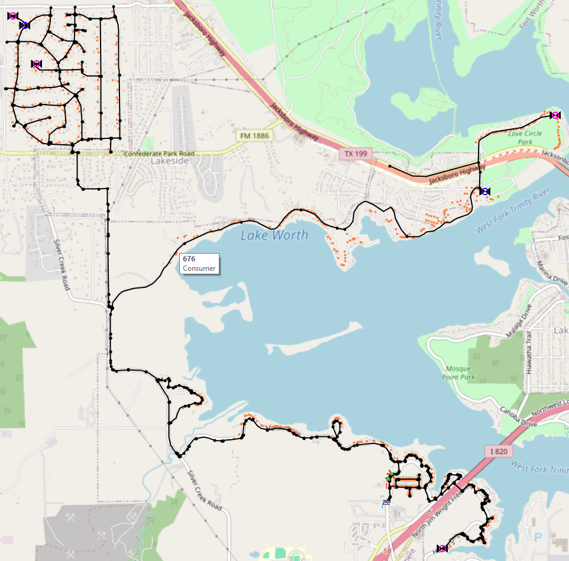
The City of Fort Worth, Texas, faced challenges in using smart meter data to tackle significant water loss—totaling 6.54 billion gallons in 2022.

Danish consultancy NIRAS helped the city develop a new methodology that integrated AMI data with flushing records to improve accuracy and reduce data noise. The approach allowed for more precise water loss calculations and a 20% reduction in flushing volumes.

It also enabled better water quality management through detailed modelling of water age. The case shows how smart data use can boost efficiency and reduce non-revenue water.

4. Pressure management cuts water loss and energy use in Tbilisi

Solution provider: AVK

Explore the full case

AVK- Georgia case

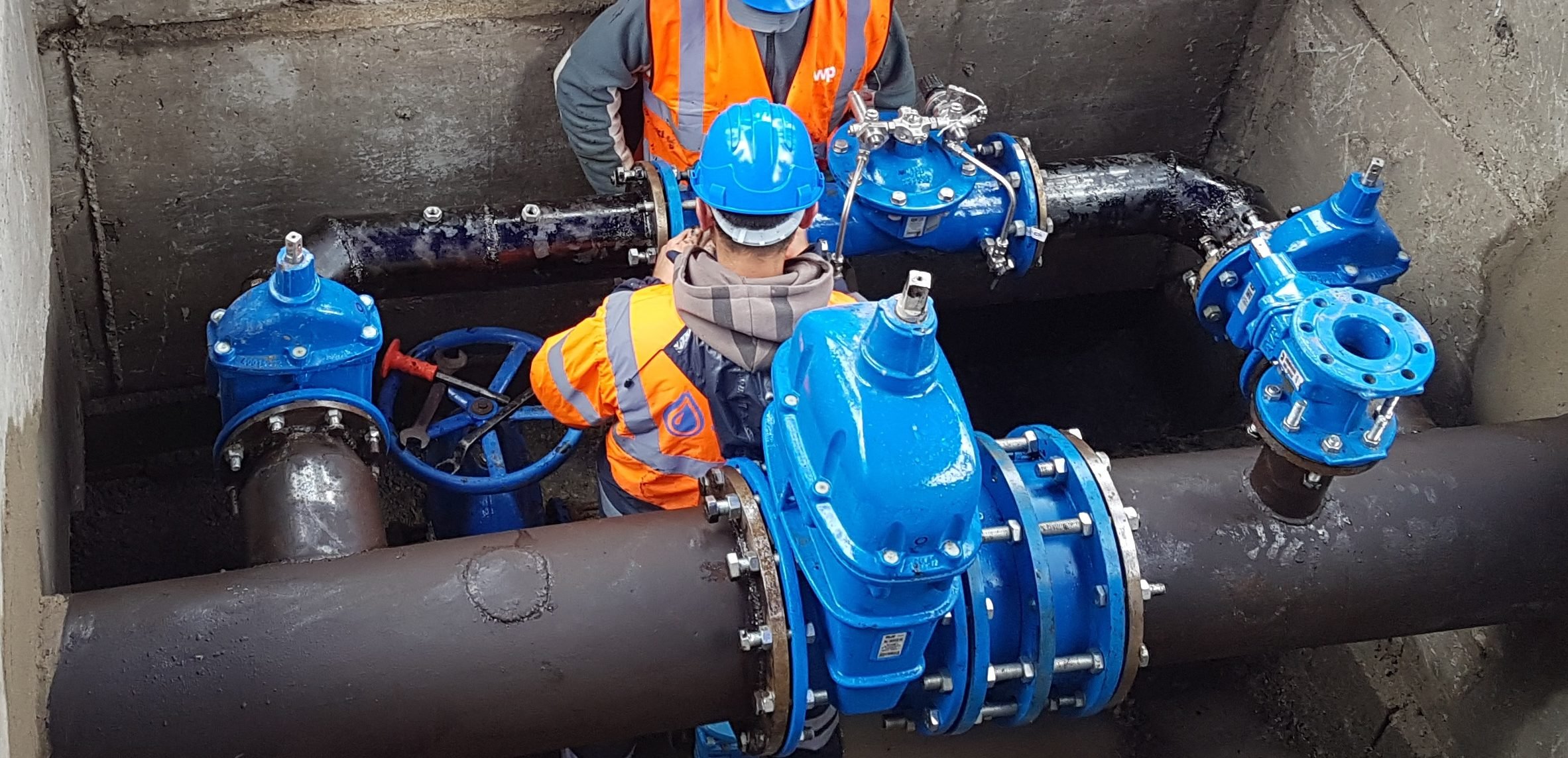
Faced with high water losses and energy inefficiency, Georgian Water and Power (GWP) in Tbilisi partnered with Danish manufacturer AVK to install 500 pressure-reducing valves across its complex network.

The solution stabilised pressure, reduced pipe bursts, and improved overall system efficiency. Early results include a 50% drop in non-revenue water, a 10% cut in electricity use, and significant reductions in pumping and maintenance costs.

The project marks a major step towards a more sustainable and resilient water supply for the city.

5. Smart monitoring halves water loss in Norwegian holiday town

Solution provider: Envidan

Explore the full case

Envidan Larvik

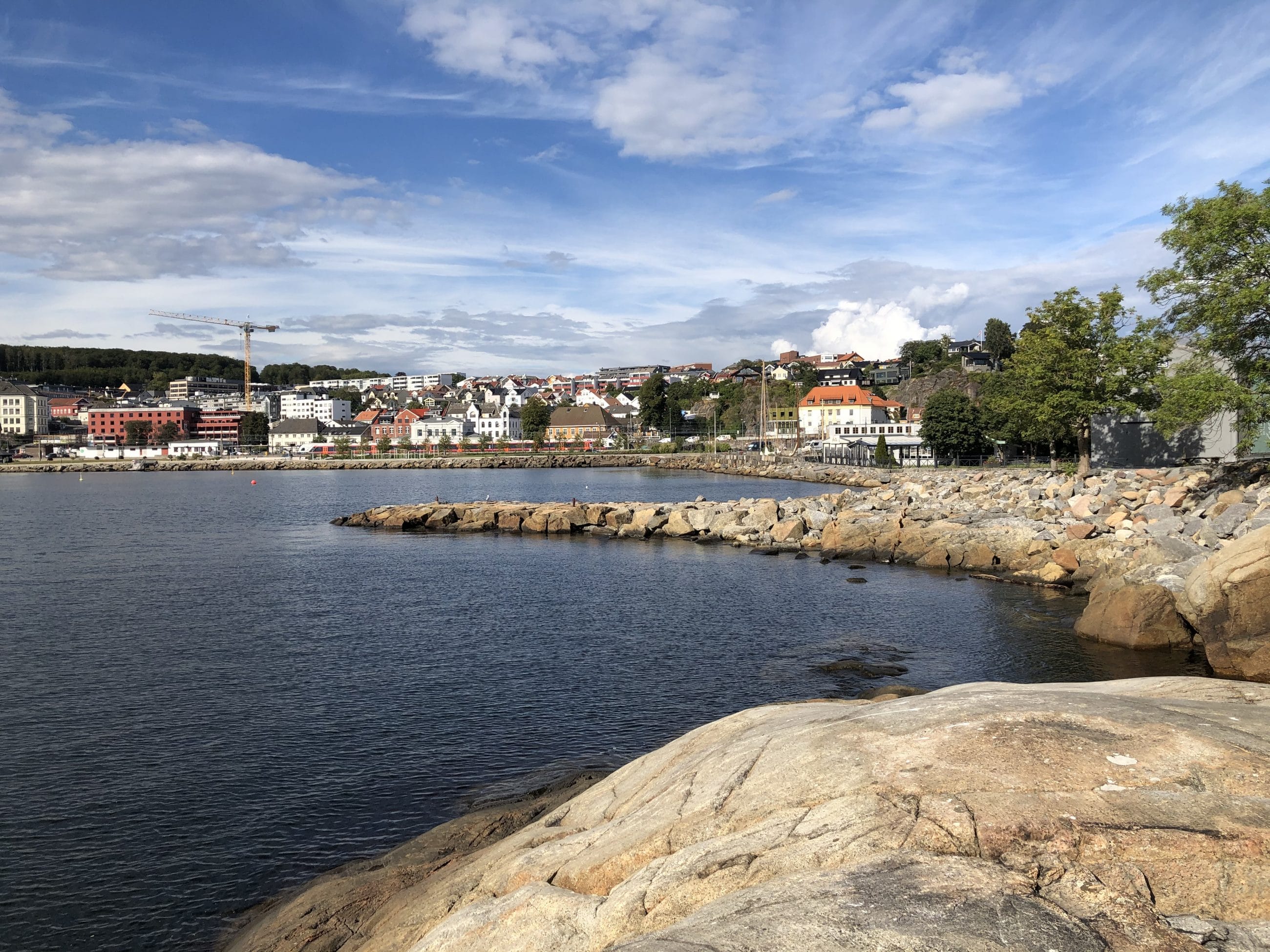
Faced with rising summer demand and water supply challenges, the City of Larvik, Norway, implemented the KeyZones monitoring system to optimise its water network. Within weeks, the system identified two major long-running leaks, which were promptly repaired, fully covering the investment cost.

Additional measures, including adjustments to pressure zones, helped Larvik cut its Infrastructure Leakage Index (ILI) from 5.0 to 2.5 in just six months.

The project demonstrates how data-driven monitoring can quickly reduce non-revenue water and improve network performance.

A wide range of valuable benefits of reducing non-revenue water

An NRW program will naturally focus on reducing urban water loss and increasing revenue, but it can also lead to other important benefits for the water utility and its consumers:

  • Reduced stress on the area’s water resources, allowing more people to be served by the same water source.
  • Reduced energy consumption for abstraction, treatment and distribution while still meeting the same demand for water as pressure is adapted to demand, and smaller volumes of water will need to be treated and distributed.
  • A more stable water supply, as improved performance, will provide full pressure distribution 24 hours a day, 7 days a week.
  • Better support for decision-making and customer service due to new management systems.
  • A strong basis for setting up a long-term rehabilitation and investment plan for the network.
  • Improved water quality due to optimised water distribution as chlorine content in the distributed water will be better controlled, and the risk of pollution related to bursts and periods with low pressure or vacuum will be reduced.

FAQ: Reducing urban water losses

front page white paper reducing urban water losses

Publication: Reducing urban water losses

It is costly to produce and distribute water, and for growing cities, this is particularly problematic, as expanding the water distribution networks without reducing urban water losses effectively means expanding a cycle of costly NRW and risking the utility’s financial viability.

Explore more solutions in our publication “Reducing urban water losses“.

Discover the publication

You should consider reading

Non-revenue water
Security of supply
Urban water management
Water management
Water supply

Event

Water supply

+19

Danish Water Export Day 2026

3 June 2026
Water Export Day is being held this year on September 1st at Danish Industry, bringing together the Danish water industry with a focus on exports. Together, we will discuss how and what opportunities exist to strengthen the export of Danish water technology and know-how. The event will serve as a pl