News
Resource efficient production
Waste-to-energy
New Technology Generates Additional Energy From Waste Incineration
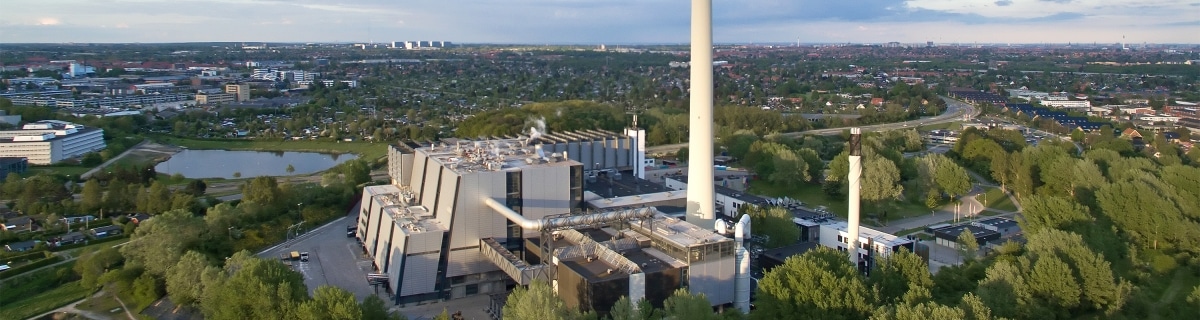
With the so-called ‘wetting process’, the supply of energy from waste increases from 89% to 99% - thus, gaining an additional 370 kWh energy from the incineration of one tonne waste.
Such an amount of energy is equivalent to 100 warm baths for every Danish household each year – that is without furthering CO2 emissions.
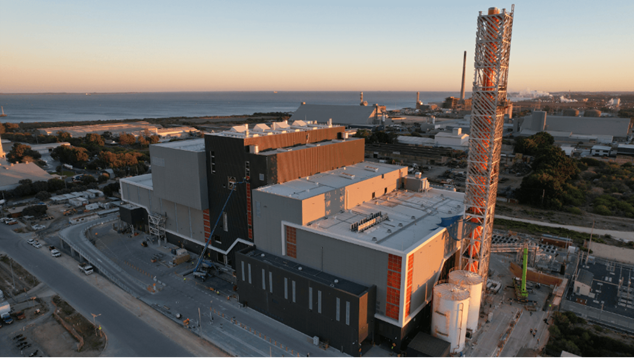
Vestforbrænding is one of the stakeholders involved in the project and if the company’s board of directors agree to the adjustment, one can expect new wetting plants at the heating season of 2018. In that case, Denmark will be the first to implement the new technology.
- Related news: Huge Waste Washing Unit Taking Shape
- The plant that Vestforbrænding is scheduled for is the first commercial plant of its kind with optimisations. Hence, the technology is now commercially available and there is a market with multiple suppliers, says the project manager, Christian Riber from Ramboll.
Christian Riber estimates that installing a standard 15-20 MW plant would cost approximately DKK 80-100 million.
- Though the investment is at a high price, you have to consider the fact that the plant does not use any fuel at all and, as a result, it does not have any operation costs. Generally speaking, the price of energy covers that of the investment, he explains.
In order to implement the technology, the only primary instalments needed are a condensing scrubber before smokestack and a wetting scrubber before the incineration.
In brief, the new technology works as follows:
In an incineration plant, the air from the incineration of waste wets with damp from the warm flue gas that normally discharges and gets lost. Wetting happens with the so-called ‘wetting scrubbers’ gives the air from incineration a shower bath with warm water that turns into damp. The energy from the damp becomes district heating when water vapour in the flue gas is condensed. As a result, the gas is staler and colder when released. Thus, by applying the process of wetting, you generate more energy with the same amount of waste and the same level of CO2.
- Related news: Looping Resources: Concrete examples of using waste as a resource
Besides having potential for Danish incineration plans, the technology opens doors to export markets – especially countries like Sweden, the Netherlands, Belgium and Germany where there is a prominent interest in district heating, says Christian Riber.
- As we are dealing with a simple technology that delivers CO-neutral heat, the export potential stems from the short payback time on investment, he explains.
Ramboll has the primary responsibility for the project at Vestforbrænding. It has received financial support from the Danish Energy Agency’s EUDP fond for Energy Technology Development and Demonstration.
Babcock & Wilcox Vølund, the Technocal University of Denmark (DTU Chemistry) and the waste companies AffaldPlus and AffaldVarme Aarhus are also involved in the project.
You should consider reading
Solution
Circular business models
+15