Katherine Richardson
Professor of Biological Oceanography, University of Copenhagen.
ConnectPerspective
Biodiversity
Biodiversity COP
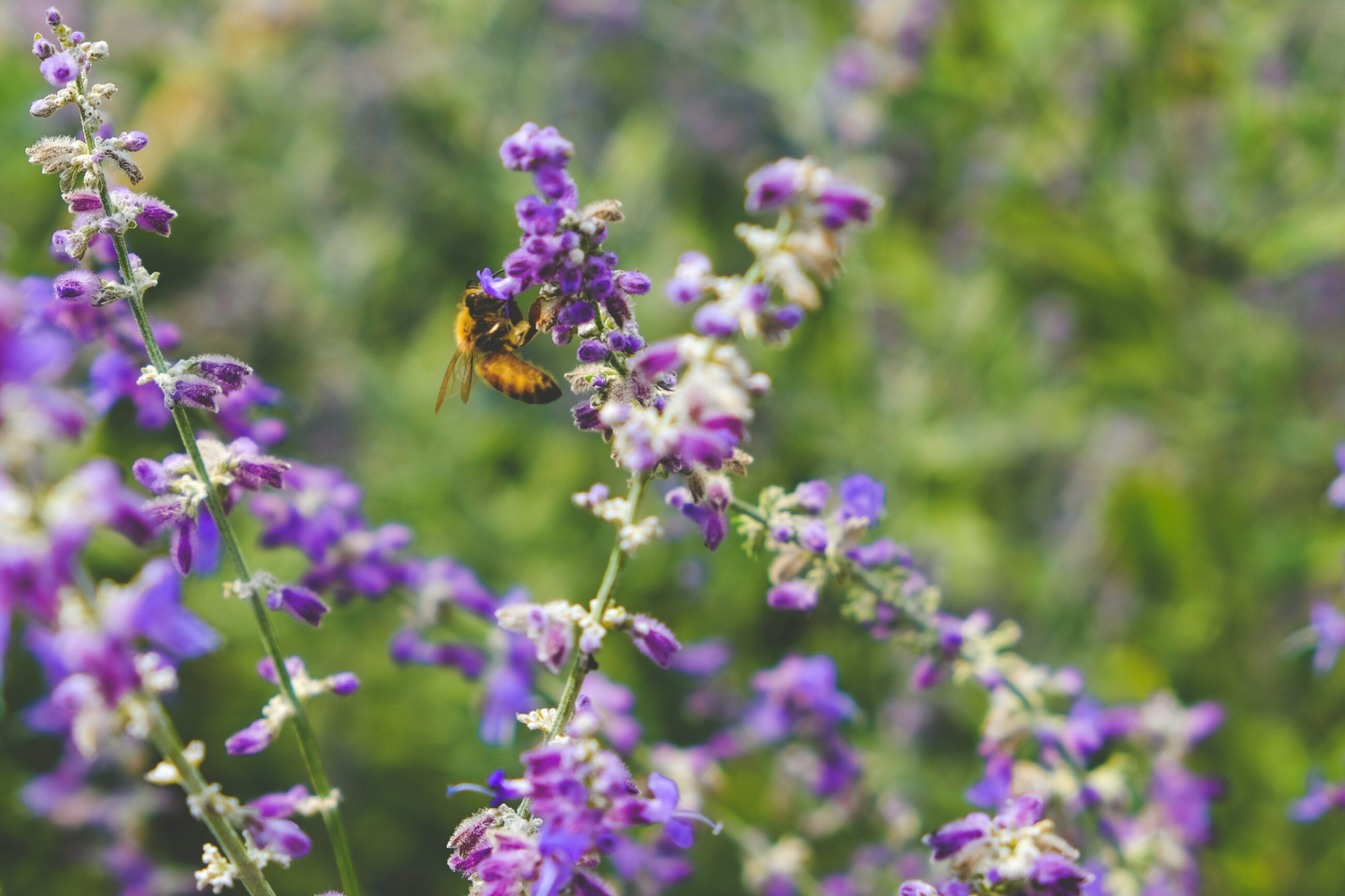

Every planet has a climate. Only one has life. For Professor Katherine Richardson, that distinction explains why climate action cannot succeed without addressing the biodiversity crisis.
Katherine Richardson, Professor of Biological Oceanography at the University of Copenhagen, argues that the biodiversity community has struggled to translate this complexity into something businesses can use in practice.
“Climate is incredibly complicated too, and yet the physicists managed to say: the biggest effect is greenhouse gases. That’s where we start. And that gave the accountant in the backroom something they could work with.” Richardson explains.
Richardson sees a similar need for concrete parameters that can help companies understand and act on their impact on the biodiversity agenda.
Protecting biodiversity is not a separate environmental agenda that can be addressed after climate targets have been met. The two are interconnected, Richardson marks. There is an important difference between the two challenges, however. Energy balance is a problem humanity can solve. Biodiversity loss is different: every time an organism disappears, it is lost for good. Richardson states, this is why protecting biodiversity cannot wait until climate targets have been met.
Part of the problem is where the debate of biodiversity ends up focusing. Much of the discussion centers on individual species: which are under threat and which should be protected. Far less attention goes to the ecosystems those species form together and the connections between them.
According to Richardson, the debate has focused on the alphabet rather than the language. Individual species matter, but their significance lies in how they interact. Protecting biodiversity means protecting those relationships, and that requires looking at the system as a whole.
For centuries, economic systems have often treated environmental effects as externalities, costs, or consequences that sit outside the core economic activity. Richardson argues that this distinction becomes harder to maintain when businesses are understood as part of the ecosystems on which they depend. Changing the way companies need to think about resources.
Richardson sees an important lesson for businesses: using resources efficiently, minimizing waste and creating circular flows can help align economic activity more closely with the systems that sustain life.
According to Richardson, biodiversity therefore needs to be understood from two perspectives: the local and the global level.
On a local level, businesses have to consider what happens around their activities – where they build, what they use and what they discharge. Richardson would like to see companies develop biodiversity metrics and goals in the same way that many companies already have climate targets. Investors are also beginning to factor biodiversity loss into their assessment of long-term risk.
But business action alone will not be enough.
“Change happens faster when different parts of society push in the same direction – business, academia, policymakers, if only one group pushes, change is slow. When more groups align, change is much faster” Richardson says.
This need for collaboration is particularly relevant as governments, businesses, researchers and civil society prepare to meet at The UN’s Biodiversity COP17 in Yerevan, Armenia, from 19-30 October 2026.
For Denmark and the Nordic countries, COP17 will be an opportunity to exchange knowledge, explore solutions and learn from international experiences. Denmark is part of the Nordic Pavilion, where knowledge exchange and business partnerships will form part of the agenda.
State of Green will host a panel debate together with the Confederation of Danish Industry (DI) at the Nordic Pavilion. The debate takes up the challenge Richardson describes; turning the complexity of biodiversity into action that businesses can take, both where they operate and on a global scale. Since no single sector can do this alone, the panel will bring public and private actors together to discuss how partnerships can accelerate biodiversity action, locally and globally.
Join us: 27 October 2026, 13:00-13:45, the Nordic Pavilion, Blue Zone, Yerevan
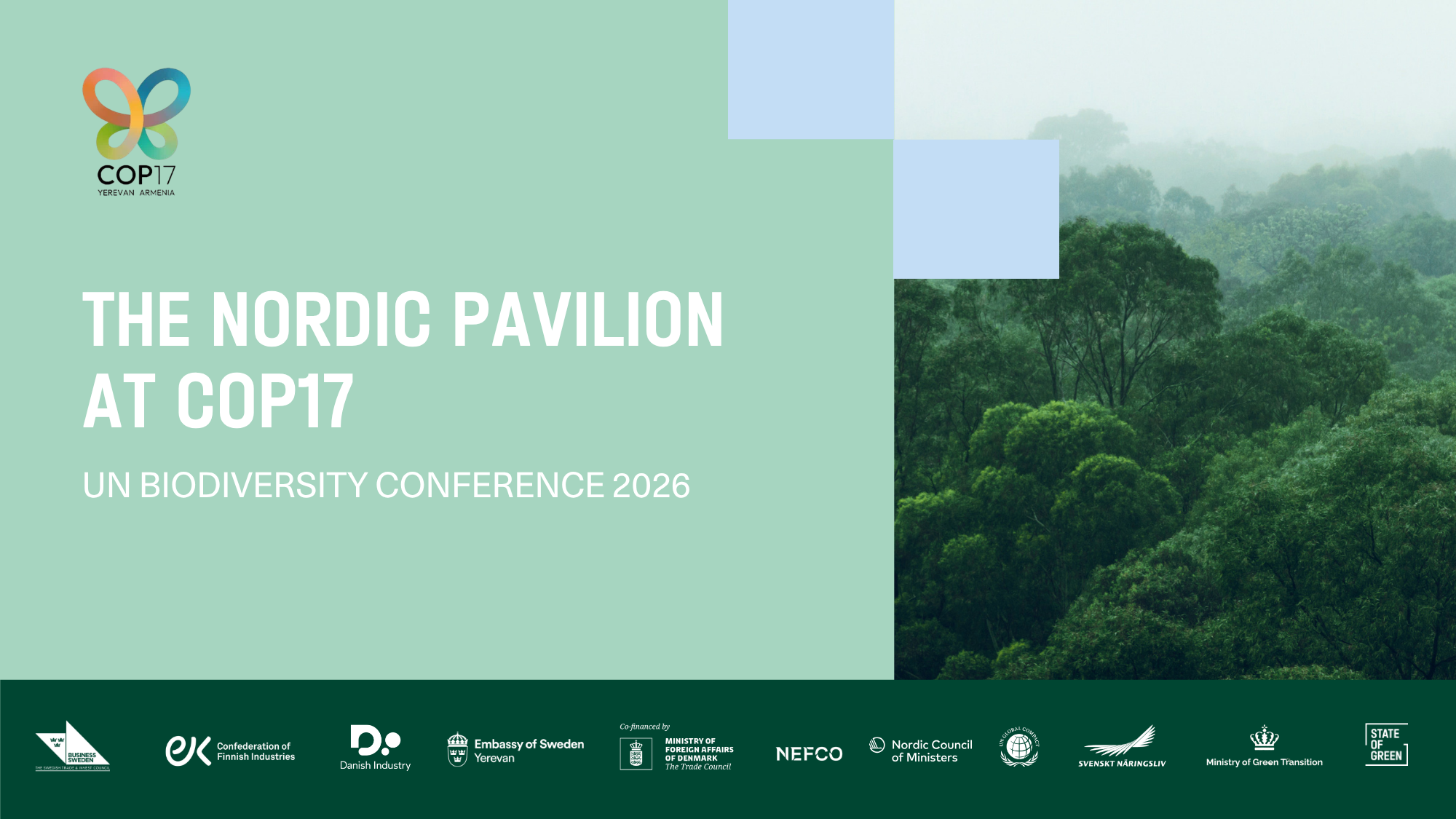
Taking place in Yerevan, Armenia on 19-30 October 2026, the global conference will bring together governments, businesses, civil society, and experts to take stock of global biodiversity efforts since the adoption of the Kunming-Montreal Global Biodiversity Framework – and to accelerate implementation on the road to 2030.
Learn more