Foreword by:
Lars Aagaard
Denmark’s Minister for Climate, Energy and Utilities
News
Buildings
Building design
Building materials
+1


Lars Aagaard
Denmark’s Minister for Climate, Energy and Utilities
With energy prices fluctuating and climate action needed, the case for energy renovation has never been stronger. When we improve the building envelope and heat buildings efficiently, we can reduce energy consumption, strengthen energy security, and create healthier indoor environments. At the same time, energy-efficient buildings can support the broader energy transition by using energy when it is cheap and green. New technologies like smart meters can help balancing energy demands by facilitating switching the heating away from peak hours, as buildings can store energy and thus be a part of the flexible energy system of the future.
Improving energy efficiency in buildings is a very effective way to reduce emissions, lower energy costs, and ease the transition to a clean energy system on a global scale. In Denmark, we see energy renovation as a key pillar of the green transition, ensuring that buildings use energy smarter and rely on clean electricity instead of fossil fuels. Denmark has decades of experience in making buildings more efficient— through improvements to the building envelope, use of efficient energy service systems and intelligent energy management and the integration of renewable energy. Today, we are accelerating this effort by enhancing the overall energy performance of buildings by promoting low-emission heating solutions such as heat pumps and district heating, expanding the use of smart technologies, and strengthening the link between buildings and the wider energy system.
The electrification of heating, combined with efficiency improvements, makes buildings active contributors to a flexible and resilient energy grid powered by renewables. Denmark’s approach demonstrates how targeted policies, public-private partnerships, and a commitment to innovation can drive real impact. By sharing best practices, scaling up solutions, and strengthening partnerships, we can accelerate the transition to energy-efficient buildings worldwide.
This white paper outlines Denmark’s experiences and solutions for energy renovation. I hope it will serve as inspiration for others.
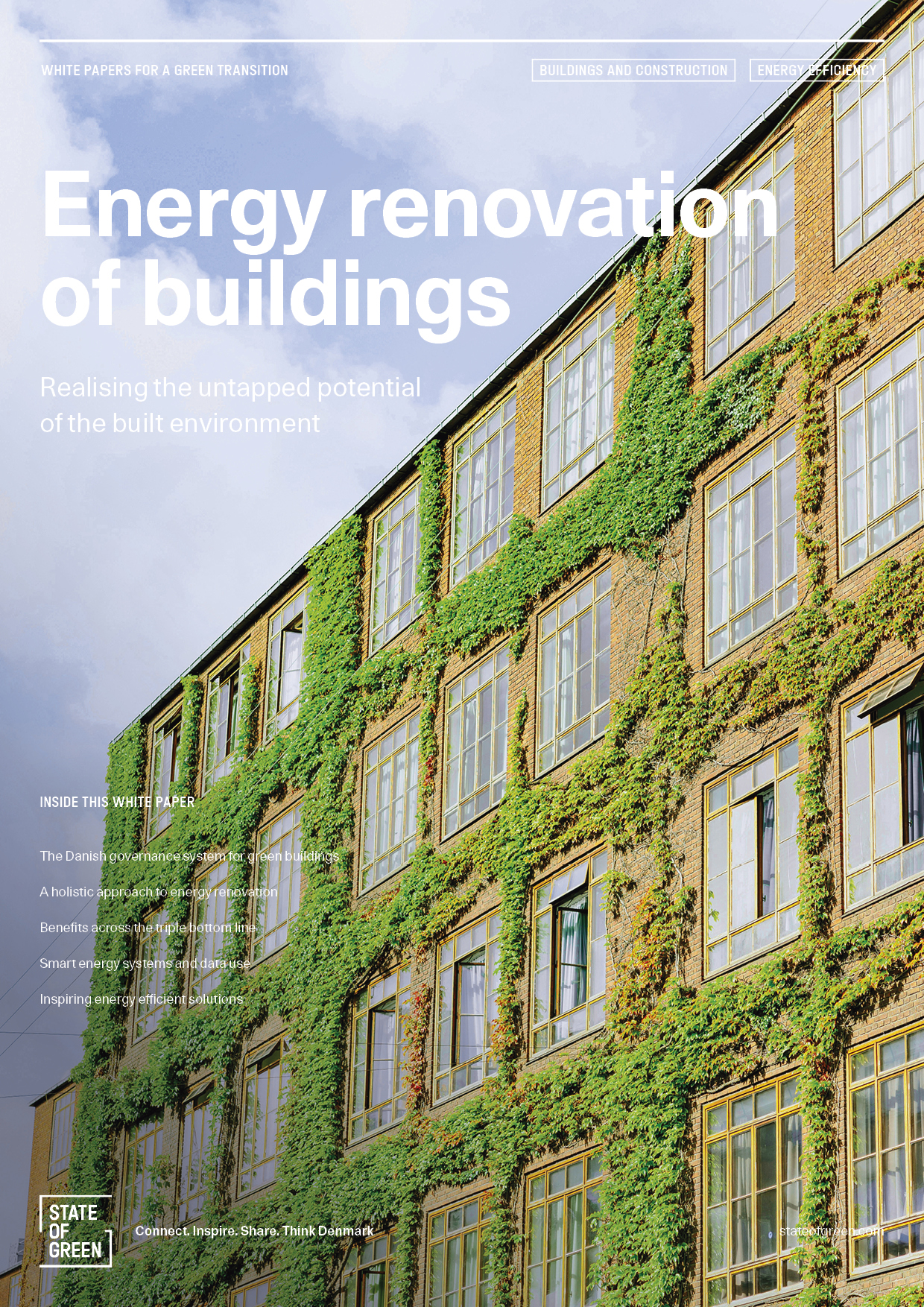
This article is a part of the “Building Renovation – Realising the untapped potential of the built environment” White Paper. Featuring in-depth cases and insights from key Danish players, the white paper offers a toolbox of ideas, technologies, and frameworks for future-ready buildings.
Explore the white paper