Skip to content

Perspective

Climate COP

Biodiversity in agriculture

Bioenergy

+5

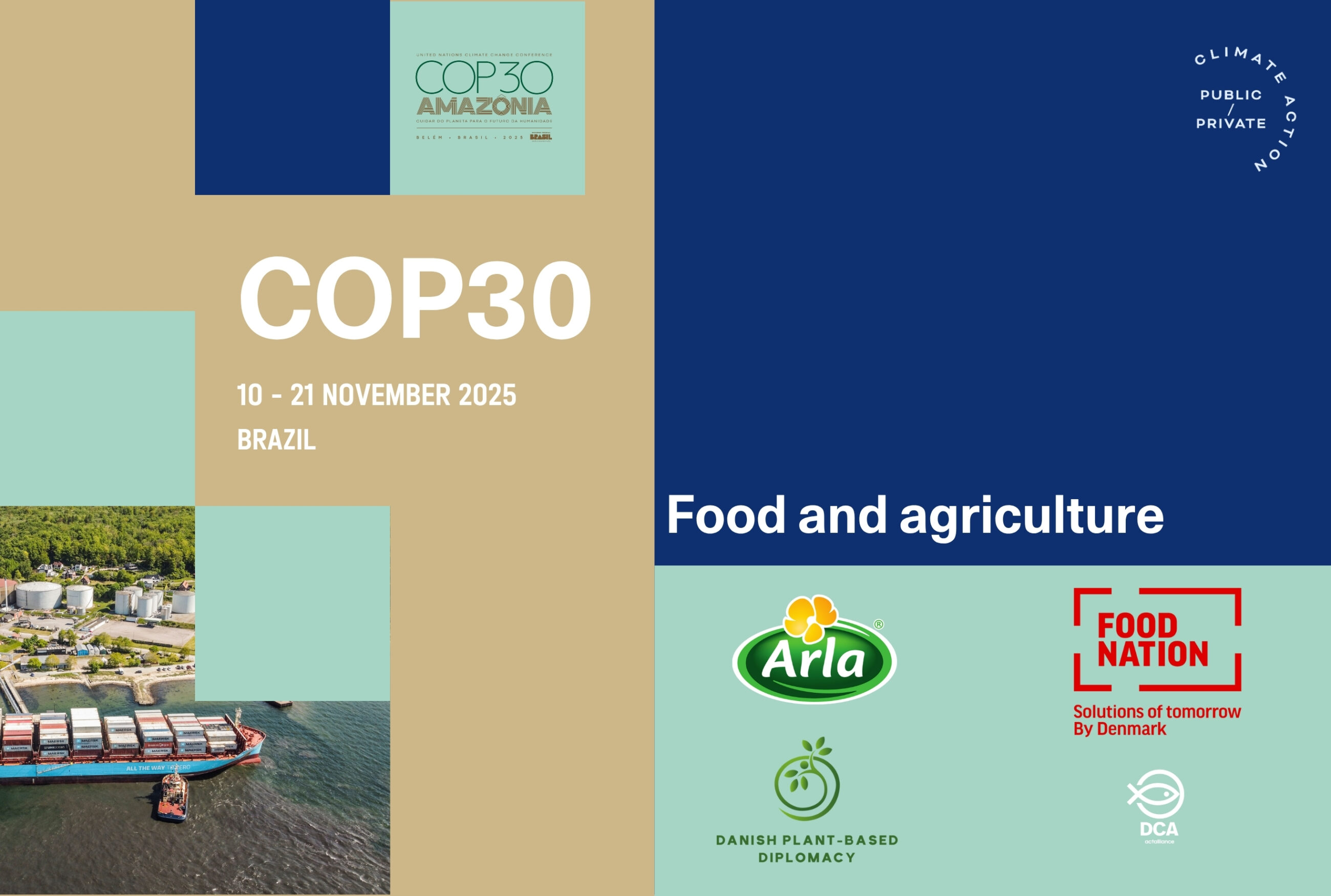
Denmark at COP30: Food and agriculture

The food and agriculture sector is among the most affected by climate change, while also contributing around a quarter of global greenhouse gas emissions through its production methods. Meet organisations fighting for sustainable food production at the Denmark Pavilion at COP30.

Discover Denmark at COP30

In the month leading up to COP30 in Bélem, Brazil, we unfold some of the various focus areas for the partners at the Denmark Pavilion.

Learn more about the Danish efforts, ambitions and activities at COP30, and connect with future solution providers.

Discover Denmark at COP30

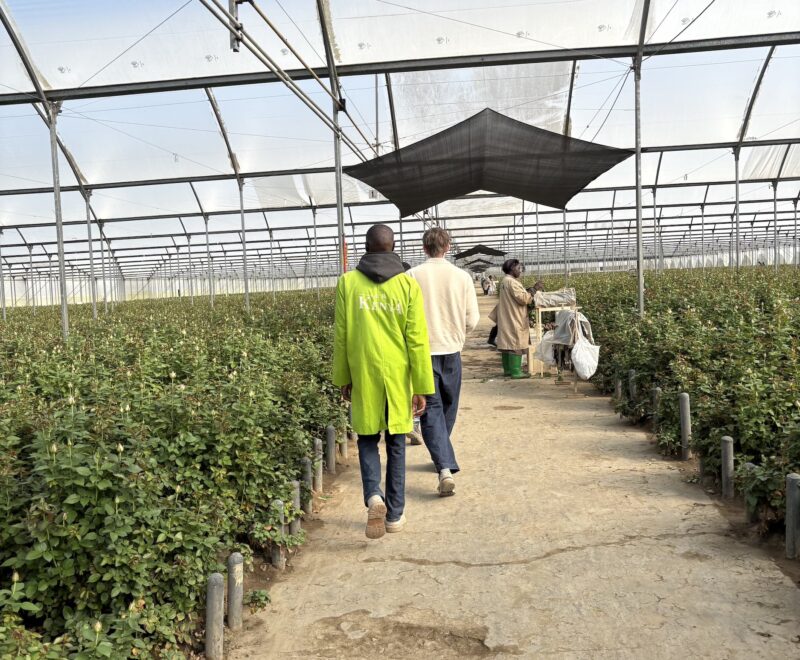
The food and agriculture sector faces a growing threat from climate change. The severe consequences of climate change are already being felt, as climate change risks the global food supply. Addressing climate change is essential to safeguarding global food security.

Paradoxically, the agriculture sector is not only vulnerable to climate change but also a major contributor to it. Responsible for approximately 25 percent global emissions, the sector’s impact is reflected in the Paris Agreement, which highlights the urgent need for action and the role of agriculture in tackling this challenge.

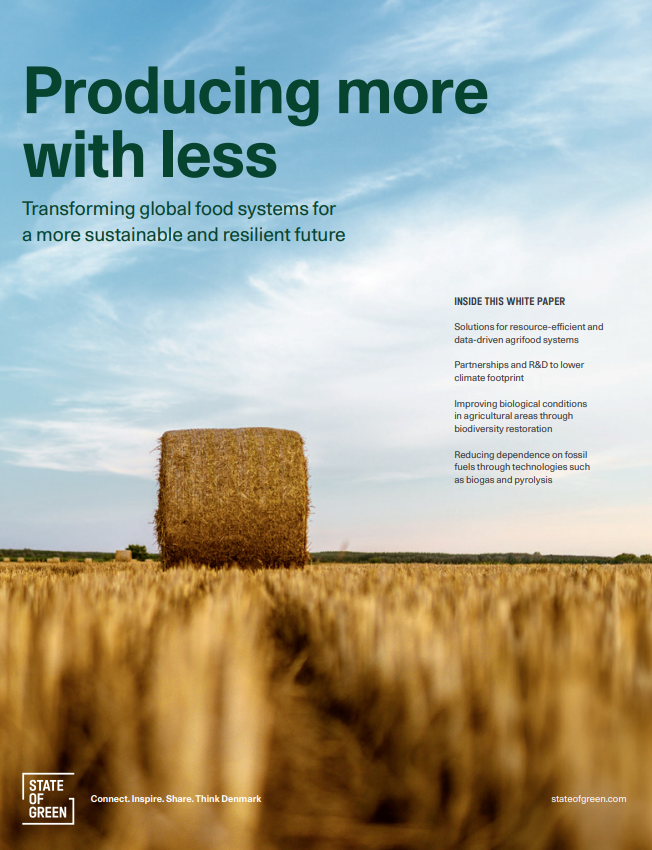
Download our publication on agriculture

Download the white paper and discover how Danish researchers, technology providers and players across agrifood systems strive to transform global food systems and produce more with less

Discover the white paper

The world’s first tax on agricultural emissions

On 18 November 2024, a broad political agreement in the Danish Parliament allocated DKK 43 billion to transform Denmark’s landscape, advance efforts in biodiversity, climate action and water quality.

Known as the Green Tripartite Agreement, the deal introduces significant measures to decarbonise Denmark’s food and agriculture sector and lessen its environmental impact. A key element is the introduction of the world’s first tax on agricultural emissions. The legislation also commits to reducing emissions by 2 million tonnes of CO2e by 2030 compared to 1990 levels. In addition, 140,000 hectares of low-lying farmland will be converted into nature areas, supporting the agreement’s goals for nitrogen reduction.

This agreement followed months of negotiations between the government and parliamentary parties, building on a landmark tripartite agreement from June 2024. The initial Agreement was between organisations such as the Danish Society for Nature Conservation and the Danish Agriculture & Food Council, and aimed to reduce agricultural emissions and restore nature.
2 million tonnes of CO2e

The tripartite agreement includes a 2 million tonnes CO2e reduction by 2030 compared to 1990 levels.

Learn more about the Green Tripartite Agreement

A radical transformation of the Danish landscape

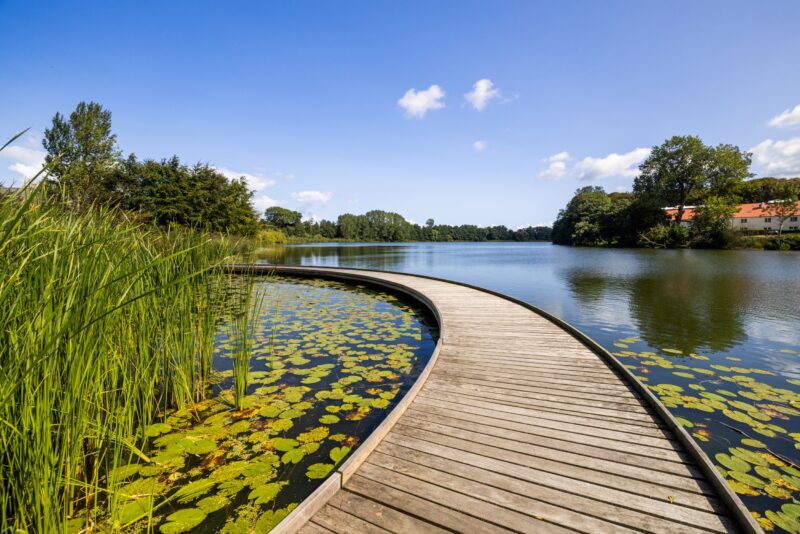
The Green Tripartite Agreement includes a strong focus on biodiversity, setting out a radical transformation of Denmark’s landscape. As part of the agreement, 250,000 hectares of new forest will be established. This is equivalent to 10 percent of Denmark’s total land area or the size of Falster, Funen and Bornholm combined. Of this, 100,000 hectares will be designated as untouched forest.

Denmark will also establish 15 new national parks, bringing the total to 21. These parks will host large grazers, and rewilding will play a central role in their management. Beyond emission taxes and nitrogen reduction, the agreement also prioritises the restoration of nature.

Discover solutions from the Denmark Pavilion

You should consider reading

Biodiversity in agriculture
Bioenergy
Biogas
Biomass
Biosolutions
Climate COP
Efficient food production
Environment and agriculture