Skip to content

Perspective

Climate COP

Energy efficiency

Energy efficiency in buildings

+1

Denmark at COP30: Energy efficiency

Doubling energy efficiency improvements by 2030 is a key priority for the European Union (EU). As holders of the EU Presidency, Denmark is set to spotlight this as COP30 begins next week.

Discover Denmark at COP30

In the month leading up to COP30 in Bélem, Brazil, we unfold some of the various focus areas for the partners at the Denmark Pavilion.

Learn more about the Danish efforts, ambitions and activities at COP30, and connect with future solution providers.

Discover Denmark at COP30

The cleanest and cheapest energy is the energy we don’t use. That’s why energy efficiency must play an essential role in the global energy transition.

Energy efficiency remains a key part of COP30. And this year is no different:

The COP30 Action Agenda must create collective motivation for the full implementation of the GST … It should also support the acceleration of the energy transition worldwide, including tripling global renewable energy capacity, doubling the global average annual rate of improvement in energy efficiency by 2030, and transitioning away from fossil fuels in energy systems in a fair, orderly, and equitable manner, André Corrêa do Lago, the COP30 President

This year, Denmark — holding the EU presidency — is travelling to Belém to support the EU’s ambitions for doubling the global average annual rate of energy efficiency improvements by 2030.

A long tradition of energy efficiency initiatives

Energy efficiency is one of the easiest and most cost-effective ways to eliminate energy waste, lower costs, and reduce fossil fuel use. And Denmark has the experience and solutions to prove it.

Denmark’s focus on energy efficiency dates back to the 1970s oil crisis, which prompted government-led efforts in building regulations. The 1980s saw an ambitious national energy plan with a focus on buildings. In the 1990s, policies such as tax incentives and a national energy labelling system were introduced.

Today, Denmark has a comprehensive regulatory framework for energy efficiency, featuring strict building codes, labelling schemes and public-private partnerships. With a 50-year legacy, Danish companies offer cutting-edge solutions, positioning Denmark as a leader in sustainable technologies.
69%

“69 percent of Danish homes are currently heated through district heating. By centralising heat production and reducing energy loss, the system improves overall energy efficiency and supports Denmark’s green transition.”

Energy efficiency in buildings

Globally, buildings account for 30 percent of final energy consumption. In Denmark, the construction sector alone accounts for 40 percent of national energy use.

With an ambitious target to reduce greenhouse gas emissions by 70 percent before 2030, energy efficiency plays a crucial role in Denmark’s climate strategy. This is reflected in a public-private partnership presenting 63 proposals from the construction sector, aiming to cut emissions by 5.8 million tonnes annually by 2030.

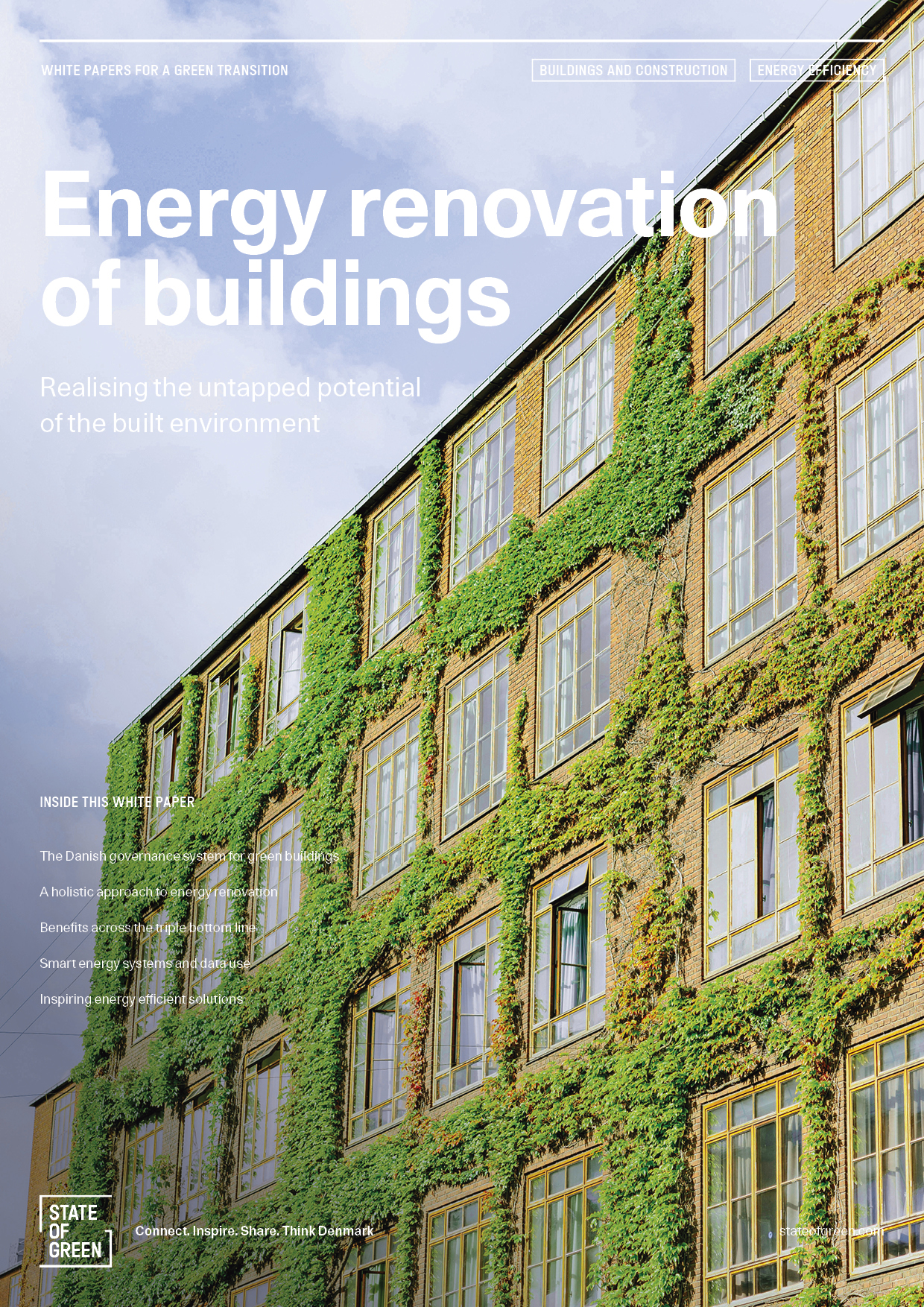
SoG_WP_EnergyEfficiencyInBuildings_210x297-forside

Download our publication on energy renovation of buildings

Explore our newly updated publication on the energy renovation of buildings, and discover the untapped potential of the built environment.

Explore the white paper

Securing resource-efficiency in energy-intensive industries

Industries with high energy demands, such as the food and beverage sector, rely heavily on energy for production, processing and transport. This sector alone represents roughly 30 percent of global energy consumption within industry.

Energy-efficient solutions are vital to tackling these challenges. By optimising energy use and reducing waste — particularly in energy-intensive industries — companies can lower costs, improve efficiency, and boost market competitiveness while supporting sustainable resource use.

Energy efficiency has long been embedded in Denmark’s approach, supported by a wide range of policies, initiatives and incentives. Denmark demonstrates that it’s possible to decouple economic growth from rising energy consumption — and that real impact starts with smart energy use.

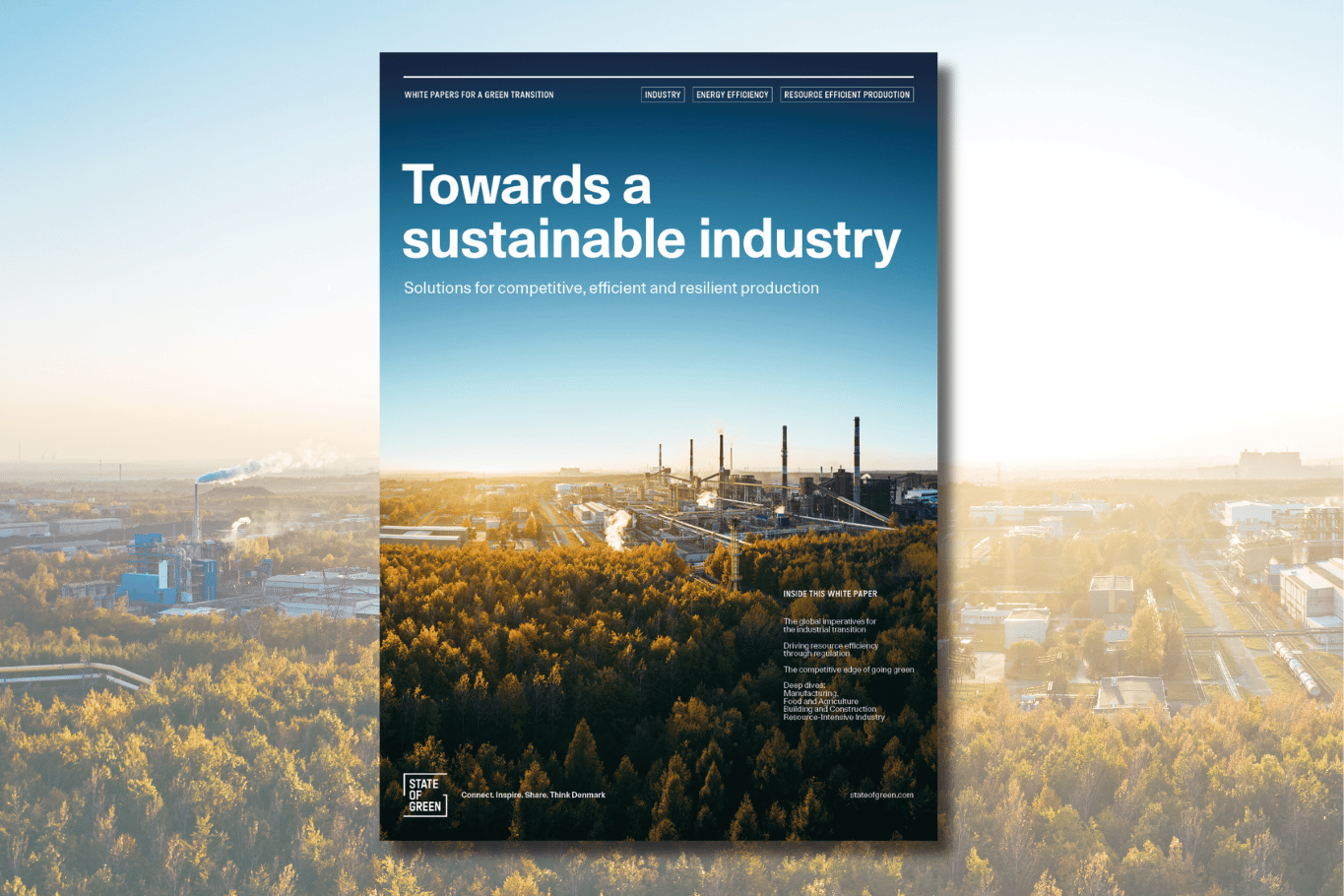
Towards a sustainable industry white paper

Discover our whitepaper "Towards a sustainable industry"

Industry stands at the centre of climate and resource challenges – now is the time to rethink how we produce. Discover solutions for competitive, efficient and resilient production in this white paper on “Towards a sustainable industry”.

Towards a sustainable industry

Connect with partners of Denmark Pavilion

Solution Provider

Buildings

+20

Danfoss

21 January 2009
Danfoss engineers solutions that increase machine productivity, reduce emissions, lower energy consumption, and enable electrification.

You should consider reading

Climate COP
Energy efficiency
Energy efficiency in buildings
Energy efficiency in industry

Solution

Building design

+20

Renewables Focus with Port Development

2 April 2026
A European municipality sought to define a clear vision for transforming an industrial area into a hub for renewable energy manufacturing, while aligning stakeholders including municipal staff and elected officials.

News

Partnerships

+14

Relive highlights and partnerships from the Danish state visit to Australia

23 March 2026
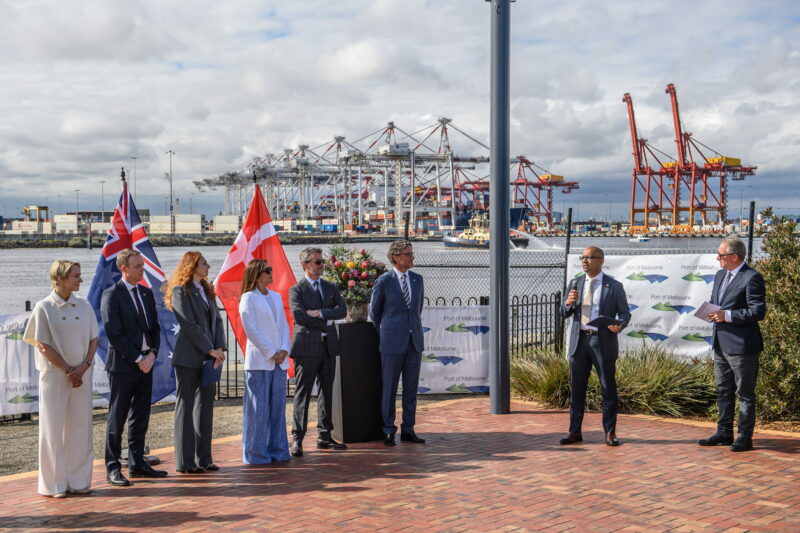
During the 2026 Danish State Visit to Australia, more than 50 Danish companies joined forces with Australian partners to advance collaboration on renewable energy, green buildings, and sustainable innovation. Relive some of the highlights and concrete partnerships made during the week.