Emissions in the built conditions
The building and construction sector plays a pivotal role in shaping a more sustainable and competitive future. It is responsible for 36 percent of global carbon emissions, with approximately 10 percent linked to the production of construction materials used in new and existing buildings. Addressing these emissions is crucial to achieving global climate targets and enabling a circular, resource-efficient economy.
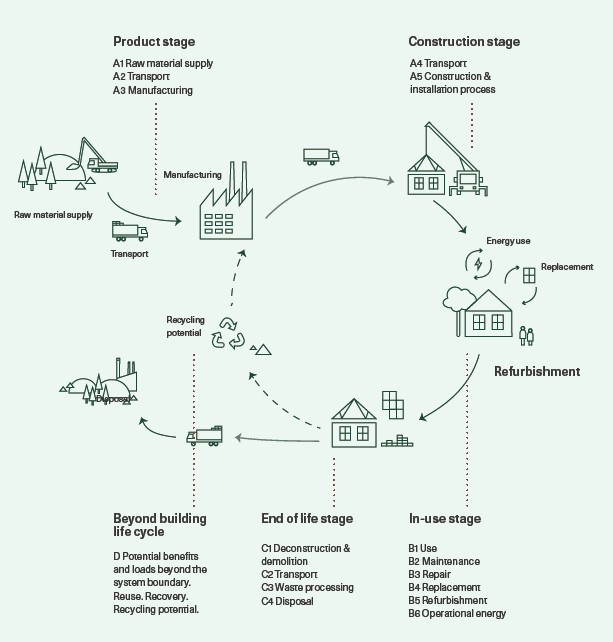
Historically, efforts in the sector have focused on reducing operational carbon emissions—those generated during a building’s use phase through heating, cooling and lighting. While this has delivered significant progress and continues to be a crucial green frontier, less attention has been paid to reducing embodied carbon emissions. These originate from the design, production and deployment of materials such as cement, steel and aluminium, and solutions to mitigate embodied emissions have lagged.
The scale of the challenge is vast. The built environment drives demand across numerous sectors, supports local jobs and directly impacts quality of life. It also consumes around 50 percent of all extracted materials globally and generates over 35 percent of the EU’s total waste. Unlocking climate gains in this sector will therefore require innovation in material use, building design, construction processes and end-of-life reuse.