Skip to content

News

Carbon capture, storage and utilisation

Smart energy systems

10 examples of CCUS projects from Denmark

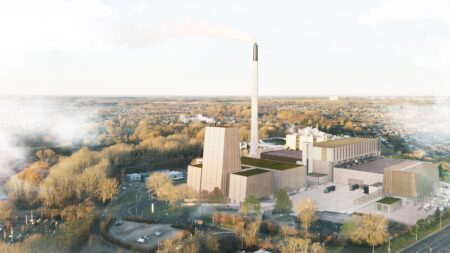
We have gathered 10 examples of ongoing CCUS projects showcasing how Denmark has moved CCUS from a vision to an emerging value chain.
image
10 February 2026
CCUS

Carbon capture, utilisation, and storage

Discover how Denmark is turning climate ambition into a scalable reality by downloading the publication to explore the partnerships, policies, and projects shaping a complete CCUS value chain.
Download publication

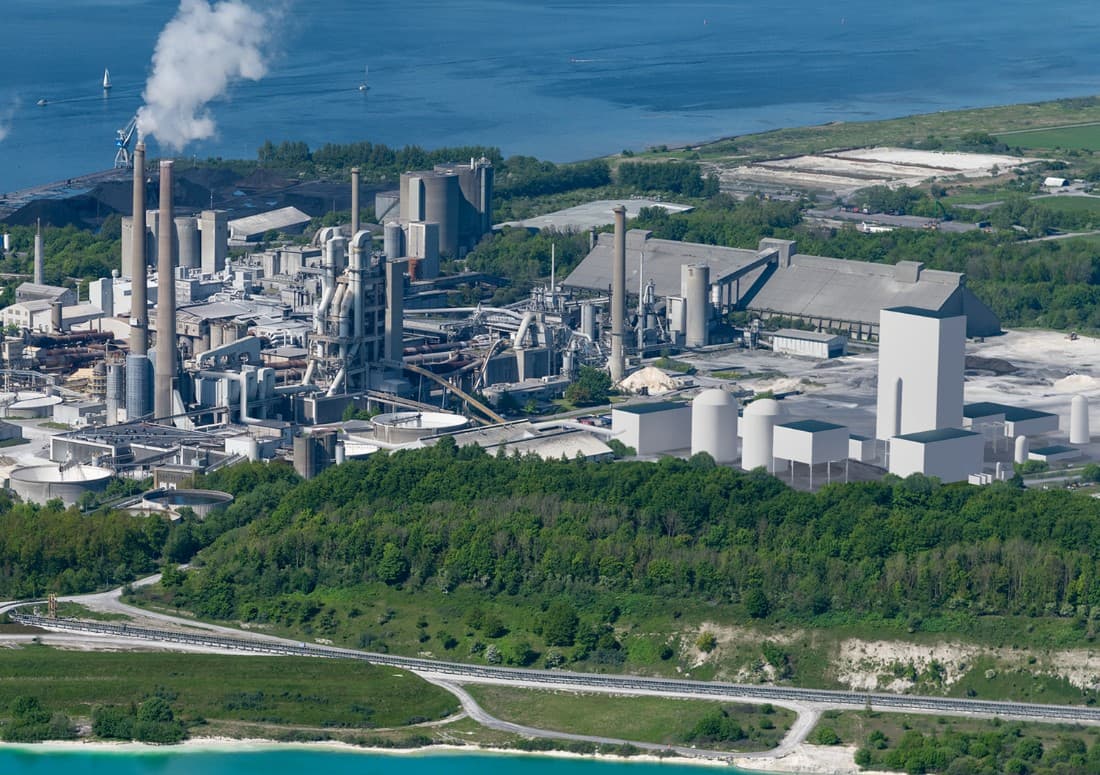
1: ACCSION: CO2-neutral cement production in Denmark

The ACCSION project, a partnership between Aalborg Portland and Air Liquide, aims to make cement production CO₂-neutral by 2030. Using Cryocap™ technology, the project will capture 95% of emissions from cement kilns and store CO₂ onshore in Northern Denmark.

Expected to reduce emissions by 1.4 million tonnes annually, the project will also provide district heating to 20,000 households. With EU support, this is a significant step towards decarbonising the cement industry and meeting EU climate goals.

2: Project Bifrost: Establishing the Danish North Sea as a CCS hub

Project Bifrost, led by TotalEnergies, Schwenck via CarbonVault, and Nordsøfonden, aims to transform the Danish North Sea into a European CO₂ storage hub. Located 250 km off the coast of Jutland, the project will store CO₂ from industrial emitters beneath the seabed, with an annual storage capacity of over 5 million tonnes by 2030.

By leveraging existing offshore infrastructure and pioneering advanced monitoring technologies, project Bifrost ensures a scalable, long-term solution to unlock the Danish North Sea’s CO₂ storage potential and supports Denmark’s climate goals.

3: Asnæs and Avedøre Power Stations: Pioneering carbon-negative energy in Denmark

Ørsted will begin capturing from it’s two power stations Asnæs and Avedøre in 2026. When fully operational, Ørsted will capture and store 430,000 tonnes of CO₂ annually. The captured CO₂ will be stored beneath the North Sea. The CO₂ will be transported by truck to Ørsted Kalundborg CO₂ Hub by Asnæs Power stations, then shipped to Norway for permanent storage at the Aurora storage complex, marking a key step towards Denmark’s net-negative emissions goal.

The carbon capture units, supplied by SLB Captur, will capture 280,000 tonnes of CO₂ from the woodchip-fired Asnæs Power Station and 150,000 tonnes from the straw-fired Avedøre Power Station.

This project also includes a landmark agreement with Microsoft for the purchase of 3.67 million tonnes of carbon removal credits. By using biomass from waste and residues, Ørsted’s plants are carbon-negative, reducing net CO₂ in the atmosphere and contributing to Denmark’s climate targets. The project is supported by a 20-year subsidy from the Danish Energy Agency.

4: Greensand Future: Pioneering CO₂ storage to meet EU and Denmark’s climate goals

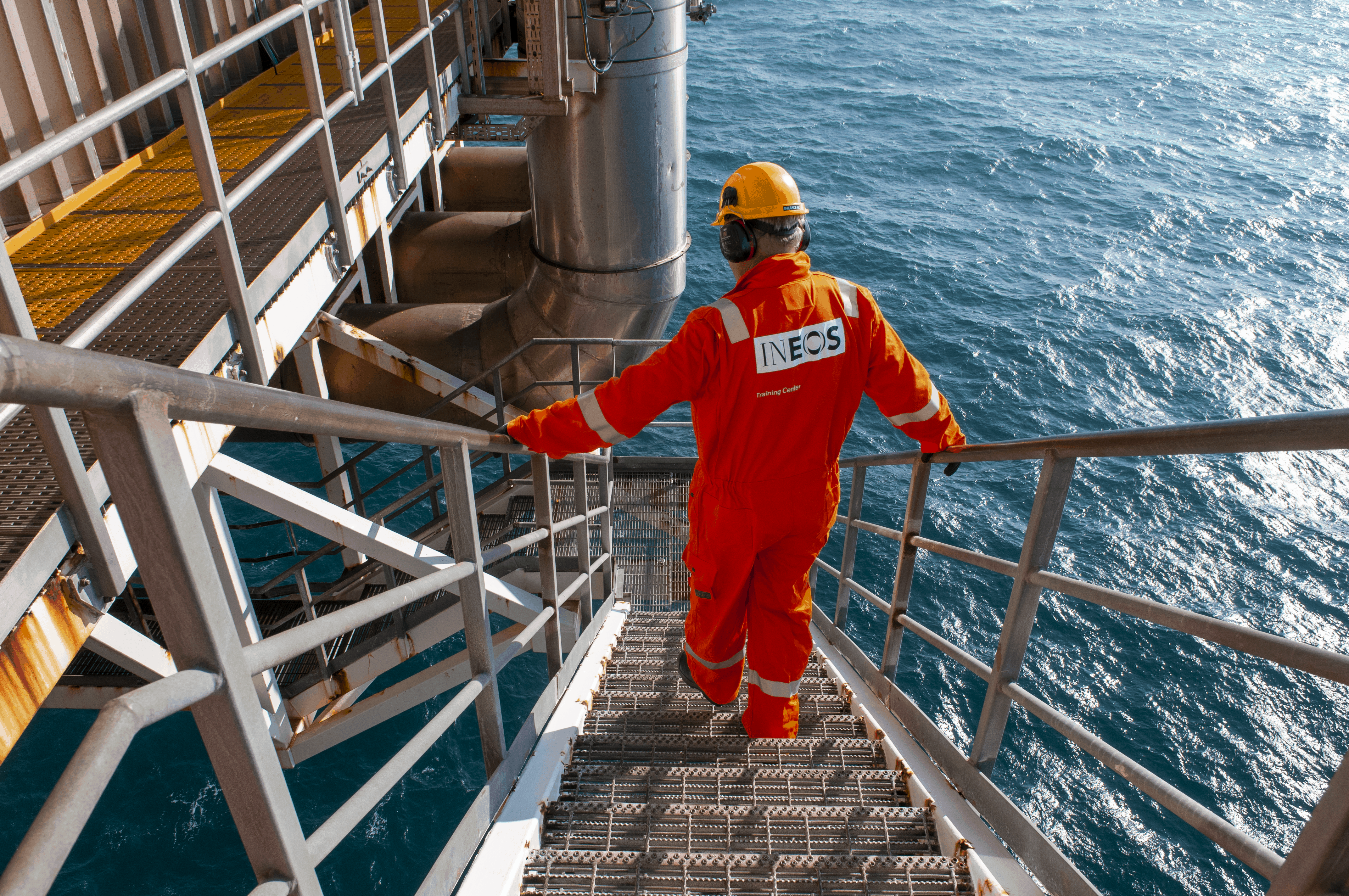
The Greensand Future project, led by INEOS with partners, aims to store 2.4 million tonnes of CO₂ annually in a depleted oil field in the Danish North Sea. This critical project supports both the EU and Denmark’s climate targets, helping to achieve the Paris Agreement and Denmark’s net-zero goal by 2045.

In the first phase, starting in 2026, CO₂ from Danish biomethane producers will be transported via the Port of Esbjerg to the Nini West oilfield for permanent storage. This marks the beginning of the EU’s first operational CO₂ storage facility. The project also includes the world’s first dedicated offshore CO₂ carrier, Carbon Destroyer 1, built by Royal Wagenborg.

By 2030, Greensand Future has the potential to store 2 million tonnes of CO₂ annually, equivalent to the emissions of about 275,000 Danish residents. This project will reduce 94% of greenhouse gas emissions compared to releasing CO₂ into the atmosphere, setting a new standard for safe and efficient CO₂ storage in Europe.

:

INEOS launch the world's first offshore carbon dioxide carrier, unlocking CCS in Europe

5: Fjord PtX: Advancing sustainable aviation in Denmark

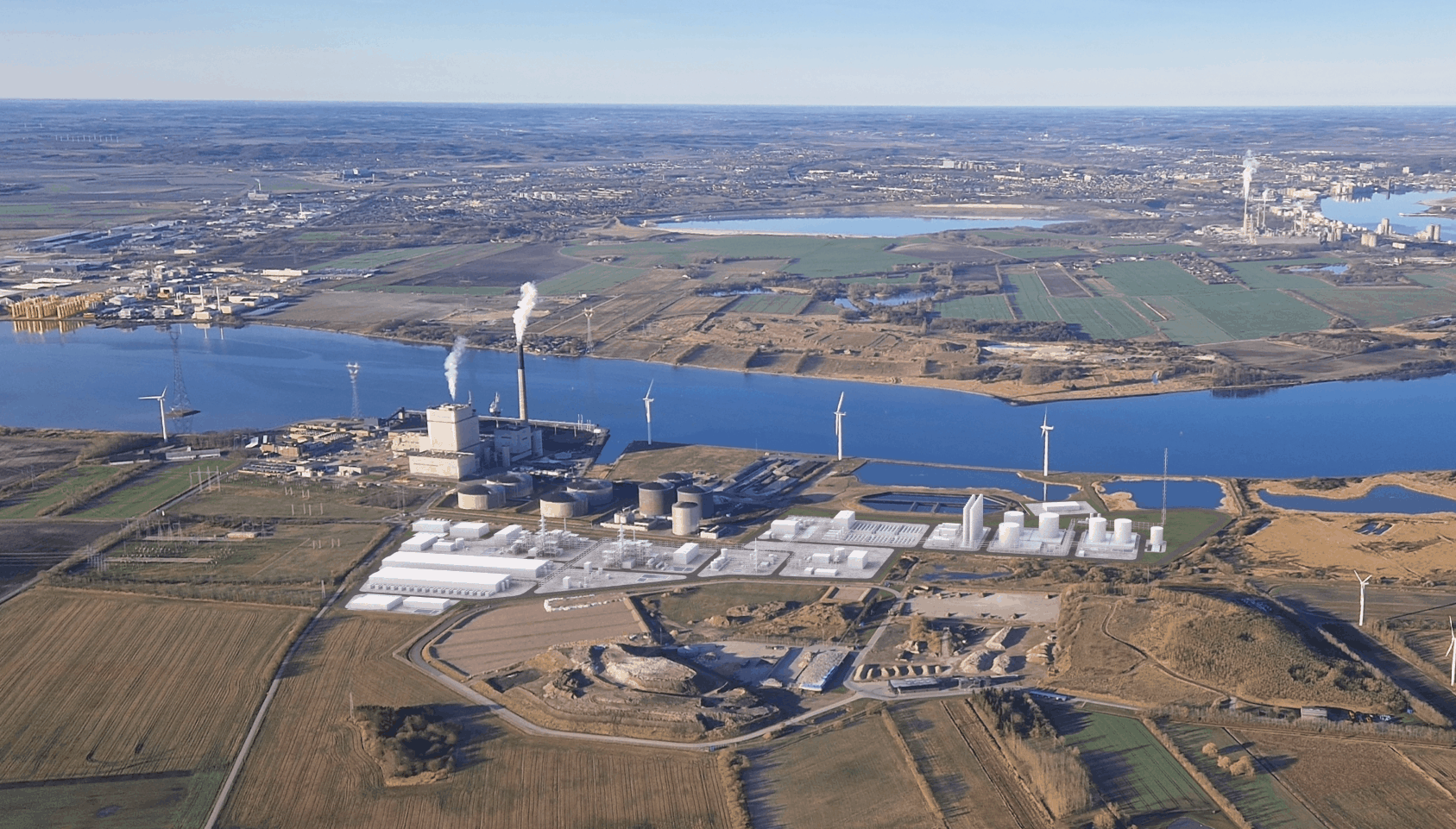
Fjord PtX, located in Aalborg, is tackling the decarbonisation of aviation by producing eSAF (sustainable aviation fuel) through a locally integrated system that combines renewable energy, carbon capture, and district heating. By sourcing CO₂ from Nordværk’s waste-to-energy operations, the project turns local emissions into a valuable feedstock for eSAF production.

In partnership with Aalborg Forsyning, the project will use surplus heat from the plant to feed the district heating network, creating a circular, sector-coupled system. By 2030, Fjord PtX aims to produce 90,000 tonnes of eSAF annually, covering 15% of Europe’s projected demand or enabling fully renewable domestic aviation in Denmark. The project will reduce lifecycle emissions by up to 90%, supporting both European and Danish climate targets.

6: Lindø’s Terminal Nord: Denmark’s first CO₂ terminal

Lindø’s Terminal Nord, developed by Linde Gas at Odense Port, is Denmark’s first CO₂ terminal, designed to safely transport CO₂ extracted as a by-product from industrial processes. The terminal addresses the challenge of transporting CO₂ at -40°C, requiring innovative engineering to handle extreme temperatures and ensure safety compliance.

Process Engineering was responsible for the technical design of the terminal, including a 1.5 km pipeline from the wharf to the terminal. The project faced challenges such as pipe location adjustments, for which custom pipe carriages were designed to ensure optimal alignment for ship connections.

Now operational, Lindø’s Terminal Nord handles weekly CO₂ unloading, providing a reliable link between industrial CO₂ capture and end-use, demonstrating how tailored engineering can turn logistical challenges into effective infrastructure.

7: CO₂ storage in Stenlille enters maturation phase

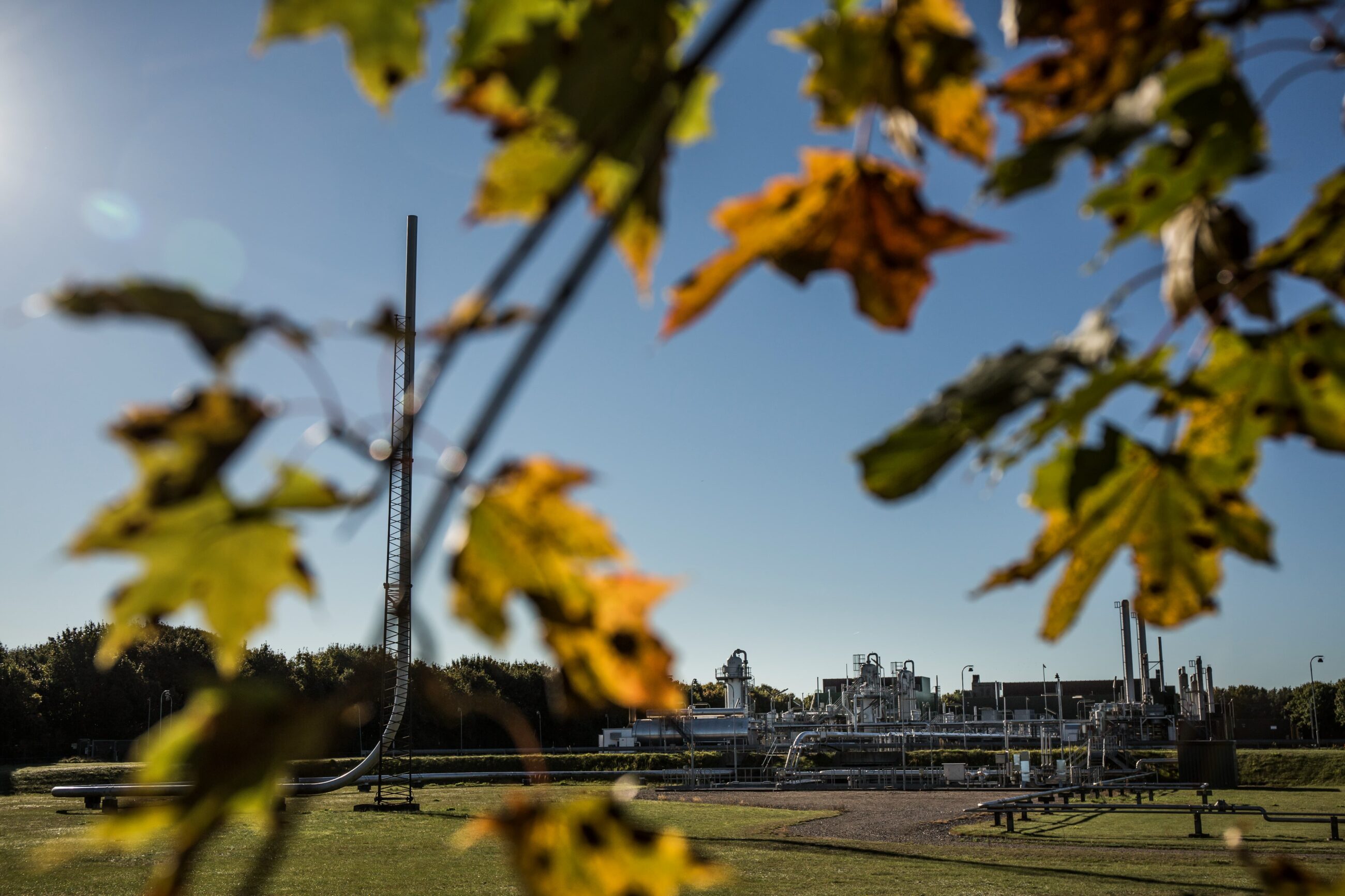
Energinet and Gas Storage Denmark are progressing towards establishing a CO₂ storage facility at Stenlille, one of Denmark’s key natural gas storage sites. The maturation phase, set to conclude by mid-2025, focuses on assessing the technical, regulatory, and commercial feasibility of converting the existing sandstone reservoir into a CO₂ storage site.

This phase will explore the potential for co-existing CO₂ storage and natural gas operations, ensuring that the new facility does not interfere with ongoing gas storage activities. The outcome will be a comprehensive work program and updated business case, laying the groundwork for a permanent CO₂ storage solution in Denmark.

8: C-ASH Project: Converting CO₂ into limestone in Denmark

The C-ASH project, a collaboration between Aarhus University, Energibyen Skive, and local municipalities, explores using CO₂ mineralisation to permanently store captured CO₂ as limestone. The project focuses on injecting CO₂ into volcanic ash layers beneath Limfjord, where it reacts to form stable carbonate minerals, mimicking a natural process that has occurred over millions of years.

Recent tests have confirmed the presence of volcanic ash layers in the region, which could store the equivalent of 60 years of Denmark’s total CO₂ emissions. If successful at scale, C-ASH could play a significant role in meeting Denmark’s climate goals and provide new opportunities in the emerging CO₂ economy.

9: Navigator Gas: Accelerating the development of CO2 shipping

Navigator Gas, a key player in the shipping industry, is accelerating the development of CO₂ shipping to support CCUS efforts. As decarbonisation targets drive the need for emission reductions, many emitters are turning to CO₂ shipping as a viable solution, especially where pipeline infrastructure is not available.

Navigator Gas provides commercial and technical solutions, including vessel optimisation, liquefied CO₂ carriage, and expertise in impurity control and pressure management. The company has 15 different CO₂ carrier designs, ranging from 7,500 m³ to 56,000 m³, catering to both upstream and downstream customers.

Navigator Gas also plays an active role in global projects, such as the Bluestreak CO₂ feasibility study for Uniper Grain CCGT in the UK. The company’s focus on safety, reliability, and flexibility is helping to advance the CO₂ shipping industry, driving decarbonisation across sectors.

10: Gaia: A groundbreaking model for carbon-neutral waste incineration in Denmark

The Gaia project, led by Vestforbrænding and Copenhagen Infrastructure Partners, aims to revolutionise waste-to-energy by capturing up to 95% of CO₂ emissions from incineration. Using an amine-based absorption process, captured CO₂ is stored offshore, and surplus heat is used to provide district heating to 10,000 households in Denmark.

Though the CO₂ capture facility won’t be operational until 2029, Gaia has secured a major agreement with Microsoft for 2.95 million tonnes of carbon removals. This project sets the stage for large-scale decarbonisation in the waste sector.

Explore related publications

State of Green

Air pollution from industry production

+20

Towards a sustainable industry

16 July 2025
Industry stands at the centre of climate and resource challenges - now is the time to rethink how we produce. Discover solutions for competitive, efficient and resilient production in this white paper on "Towards a sustainable industry".

State of Green

Power-to-x

+11

Green hydrogen is Danish hydrogen

19 September 2023
Get a full overview on how hydrogen can produce green fuels for transport and industry, create value for electricity supply and the electricity grid, and deliver heat for district heating - provided the input is green energy.

You should consider reading

Carbon capture, storage and utilisation
Smart energy systems

Solution

Building design

+20

Renewables Focus with Port Development

2 April 2026
A European municipality sought to define a clear vision for transforming an industrial area into a hub for renewable energy manufacturing, while aligning stakeholders including municipal staff and elected officials.