Skip to content

News

Carbon capture, storage and utilisation

Denmark approves first CO2 storage facility

For the first time, a permit is being issued for a full-scale CO2 storage facility in Denmark. The Danish Energy Agency has approved that the Nini West field, located about 240 kilometers northwest of Esbjerg, can now be used for geological storage of CO2.

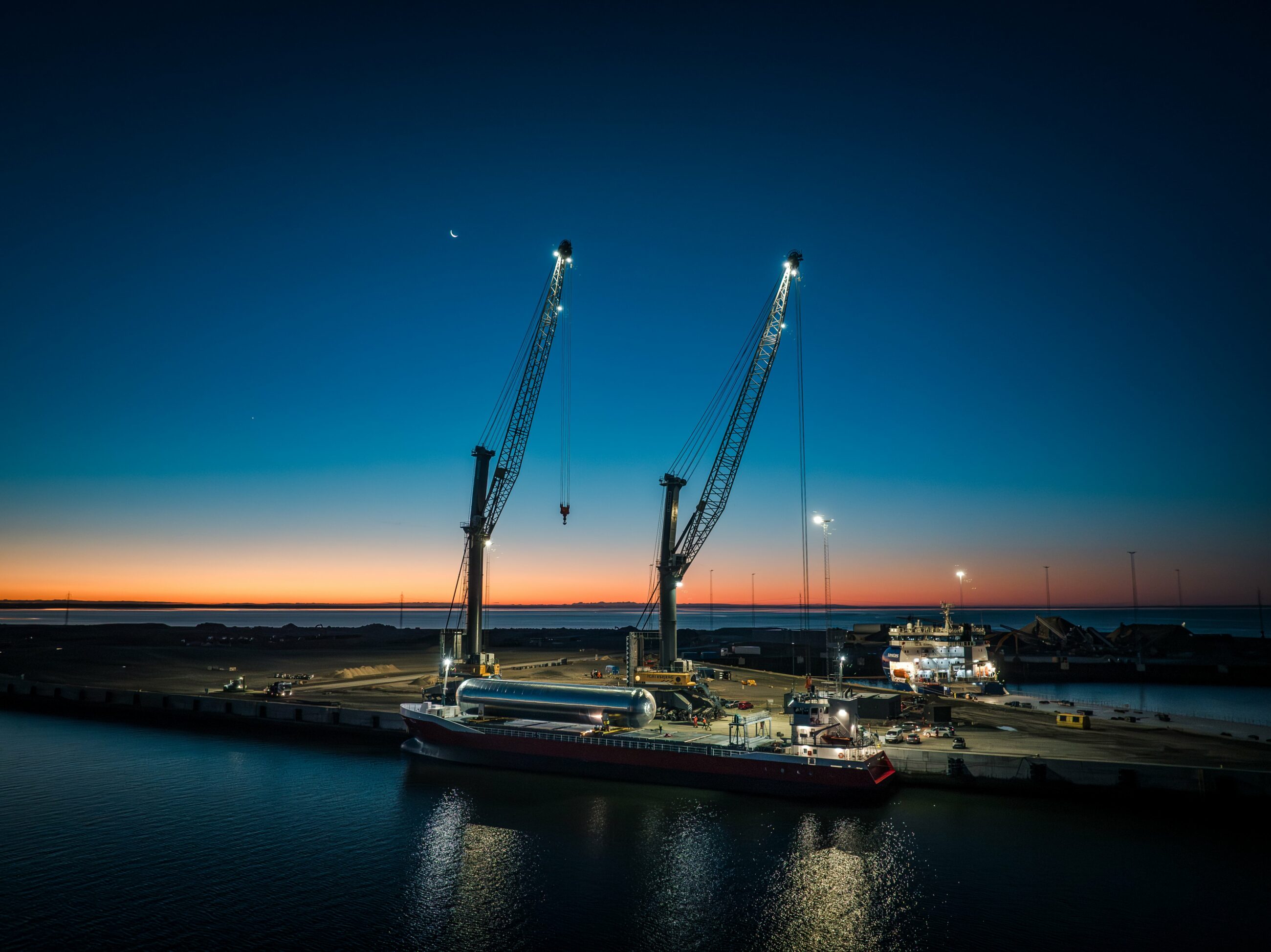
CO2 tanker ready to leave port. Photo credit: Project Greensand

image
18 December 2025

Today marks a defining moment for Denmark’s climate efforts, as the country’s first full-scale CO2 storage facility was approved by the Danish Energy Agency. The Greensand Future project aims to store up to 2.4 million tonnes of CO2 over a 30-year period. This is one of Denmark’s next steps in the green transition.

Once operational by mid-2026, the Greensand Future project will be the first of its kind in Denmark and the European Union, marking a significant step in advancing carbon capture and storage technologies in the region. It is located at the Nini West field in the North Sea about 240 kilometers northwest of Esbjerg.

The project is a joint effort led by INEOS E&P, Harbour Energy, and Nordsøfonden, and it reuses infrastructure from a former oil and gas field. The Nini West field, now transformed into a CO2 storage site, will serve as an essential part of Denmark’s strategy to achieve its climate goals.
“It is a significant milestone that we now have the first CO2 storage facility here at home. Storage is a crucial part of the carbon capture and storage value chain. We only benefit the climate when the CO2 is stored and removed from the atmosphere. Therefore, the approval of the first CO2 storage facility in Denmark is a very important step towards establishing a market for carbon capture and storage and creating the conditions to reap the substantial climate benefits that carbon capture and storage can contribute to.” Peter Christian Baggesgaard Hansen, Deputy Director General at the Danish Energy Agency

This approval builds upon the successful pilot project of Project Greensand, which in 2023 injected CO2 for the first time into the Danish sector of the North Sea, demonstrating the potential of storing CO2.

The project is part of a broader European effort to address climate change, with the EU aiming to reach net-zero emissions by 2050. The successful operation of this storage facility will be a vital contribution to achieving the EU’s climate targets and establishing a viable market for carbon capture and storage solutions.

Discover the case: Project Greensand

Learn more about Project Greensand in our upcomming publication  “Carbon capture, utilisation, and storage – Paving the way for climate neutrality” – set to launch in the beginning of 2026.

Discover Project Greensand

You should consider reading

Carbon capture, storage and utilisation

Solution

Building design

+20

Renewables Focus with Port Development

2 April 2026
A European municipality sought to define a clear vision for transforming an industrial area into a hub for renewable energy manufacturing, while aligning stakeholders including municipal staff and elected officials.