Perspective
The following is a perspective by Fleming Voetmann, Vice President, External Relations & Sustainability, VELUX Group.
Read the original opinion piece in EuroActive.
Read the opinionPerspective
Green value chains
Electricity grid
Energy efficiency in buildings
+5
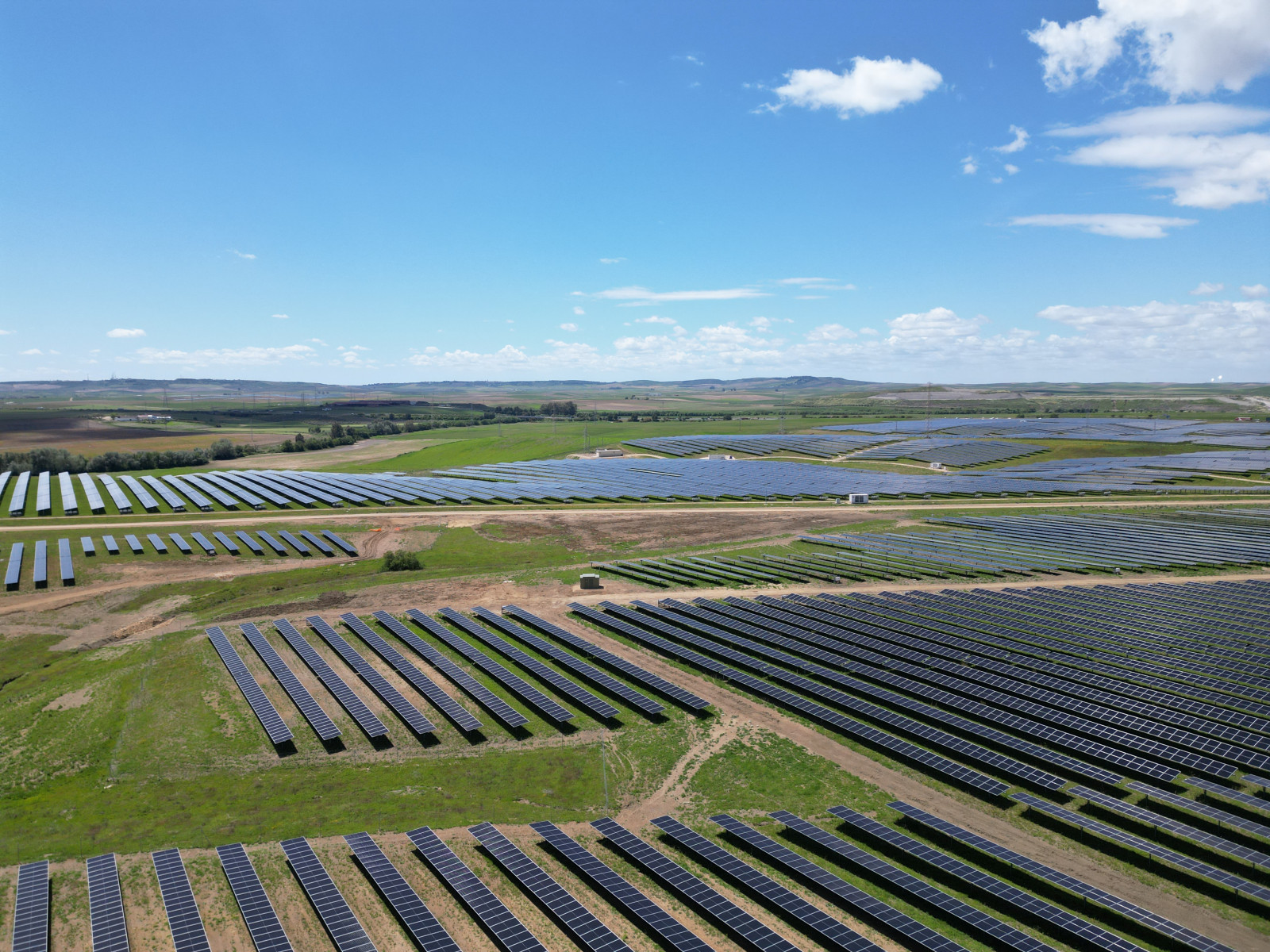
Photo credit: VELUX
The following is a perspective by Fleming Voetmann, Vice President, External Relations & Sustainability, VELUX Group.
Read the original opinion piece in EuroActive.
Read the opinionA narrative, unsupported by evidence, has emerged that Europe must choose between being competitive or green. In reality, for Europe to be competitive, it must be green.
Adopting the proposed 2040 target to decrease carbon emissions by 90% compared to 1990 levels will ensure that Europe remains on a trajectory towards a cleaner, more competitive future. It provides stability for businesses and establishes a level playing field where green innovation is rewarded. It guarantees to companies that investing in decarbonisation is a sound business move.
Attempts to water down the target will not only harm European citizens, who will face a future of more extreme weather, it will harm European business interests, undermining innovation and allowing EU businesses to sleepwalk into obsolescence.
Critics of the updated target cite cost as one of the primary reasons for their opposition. However, the cost of sticking with the status quo is far greater. Today, European businesses waste money needlessly on inflated energy bills, paying premium prices to power energy-hungry equipment and heat poorly insulated buildings.
Thankfully, energy efficiency provides a solution that reduces energy consumption and emissions while enhancing productivity. It encourages companies to prioritise cleaner, more modern technology, which results in lower power bills and better products.
According to EU figures, every euro spent on industrial energy efficiency investments translates to a saving of €4 in energy costs over the lifetime of the investment.
Energy efficiency also goes hand in hand with Europe’s renewable energy transition, as it means that clean energy can replace fossil fuels outright – in fact, every 1% of energy efficiency improvements reduces gas imports by 2.6%. Efficient buildings, which use a fraction of the energy of uninsulated buildings, are predicted to save €44.2 billion every year in distribution grid investments alone, as energy demand is reduced.
For businesses, access to a stable supply of affordable energy is key to remaining competitive. Sudden price spikes are extremely disruptive – a vulnerability exposed in the immediate aftermath of Russia’s invasion of Ukraine.
The outbreak of the war saw fossil fuel prices skyrocket, with gas prices jumping from €27 per megawatt-hour in 2021 to €321 by August 2022.
Locally-produced renewable energy, in contrast, is more resilient: the actions of foreign actors do not impact the energy produced by Danish windmills or German solar panels. And with renewable purchasing power agreements, businesses can ensure prices remain stable for over a decade, allowing for more precise financial planning.
Shifting to renewable energy, therefore, is not just a means to cut emissions – it is the most stable, cost-effective power choice for industry.
Already, companies must pay for the carbon they emit through the EU’s carbon market, the Emissions Trading System (ETS). As Europe moves towards its 2050 carbon-neutrality target, the ETS emissions cap will be steadily reduced, making releasing CO2 increasingly expensive. Meanwhile, companies that attempt to sell in Europe but offshore manufacturing to avoid carbon taxes will be subject to the carbon border adjustment mechanism (CBAM).
Embracing decarbonisation therefore allows companies to avoid the cost of these regulations. It gives shareholders peace of mind that even if stringent environmental measures are imposed, they will have a minimal impact on the company’s balance sheet.
One of the key benefits of a Europe-wide emissions target is that it will drive decarbonisation throughout value chains.
As VELUX, we are working with our suppliers to source lower carbon steel and aluminium already, and are also looking into e.g. glass – products that are historically carbon-intensive to produce. The 90% target will drive other companies to follow, boosting demand for sustainable products and giving suppliers the confidence to invest in greener solutions (adequate flexibility should, of course, be provided for industries without a clear decarbonisation pathway).
Staying the climate course ensures that Europe will retain its first-mover advantage on clean tech – a rapidly expanding market. It engenders long-term job creation opportunities in low-carbon technology and services and allows businesses to retrain current employees for the clean economy.
The 90% target is, therefore, a means to create a self-sustaining ecosystem of decarbonisation and prosperity. A technology-neutral approach is key, as it will empower industrial innovators to find the most efficient methods to bring down emissions.
VELUX is not alone in this thinking. Along with over 150 companies and investors, we have encouraged EU leaders to support ambitious climate action in an open letter.
VELUX is economic proof that sustainability is the best business model. Already, the company has entirely phased out gas from all factories and today runs on 100% renewable electricity.
We are currently on track to achieve our 2030 target of 100% reduction in scope 1 & 2 emissions from our own operations and are confident in our progress to reduce our carbon footprint.
However, this will only be possible with continued political support and a clear commitment to a carbon-free future from EU and national leaders.
Europe’s aim must be to create a green transition that serves both our citizens and our competitiveness. To do so, political leaders must uphold the 90% CO2 reduction target. The future of our economies – and our planet – depends on it.
Fleming Voetmann, Vice President, External Relations & Sustainability, VELUX Group.
VELUX is part of our mini podcast series ‘Next stop: Green business’.
Here we visit Danish businesses leading the way – turning green value chains into a competitive advantage.
Listen to the episodes to hear about the challenges, learnings and milestones along the way, underscoring that green business is, indeed, good business.
Listen to the podcast series
State of Green
Air pollution from industry production
+20
News
Energy efficiency in industry
Partner news
Electricity grid
+7