Skip to content

News

Security of supply

Energy storage

Grid and infrastructure

+3

Europe adopts new tripartite energy model inspired by Denmark

EU Energy Commissioner Dan Jørgensen has unveiled the first two sectoral tripartite contracts for offshore wind, grids, and energy storage. Inspired by Denmark’s successful agricultural tripartite model, the agreements bring together public authorities, industry, and energy developers to secure affordable and sustainable energy for Europe.

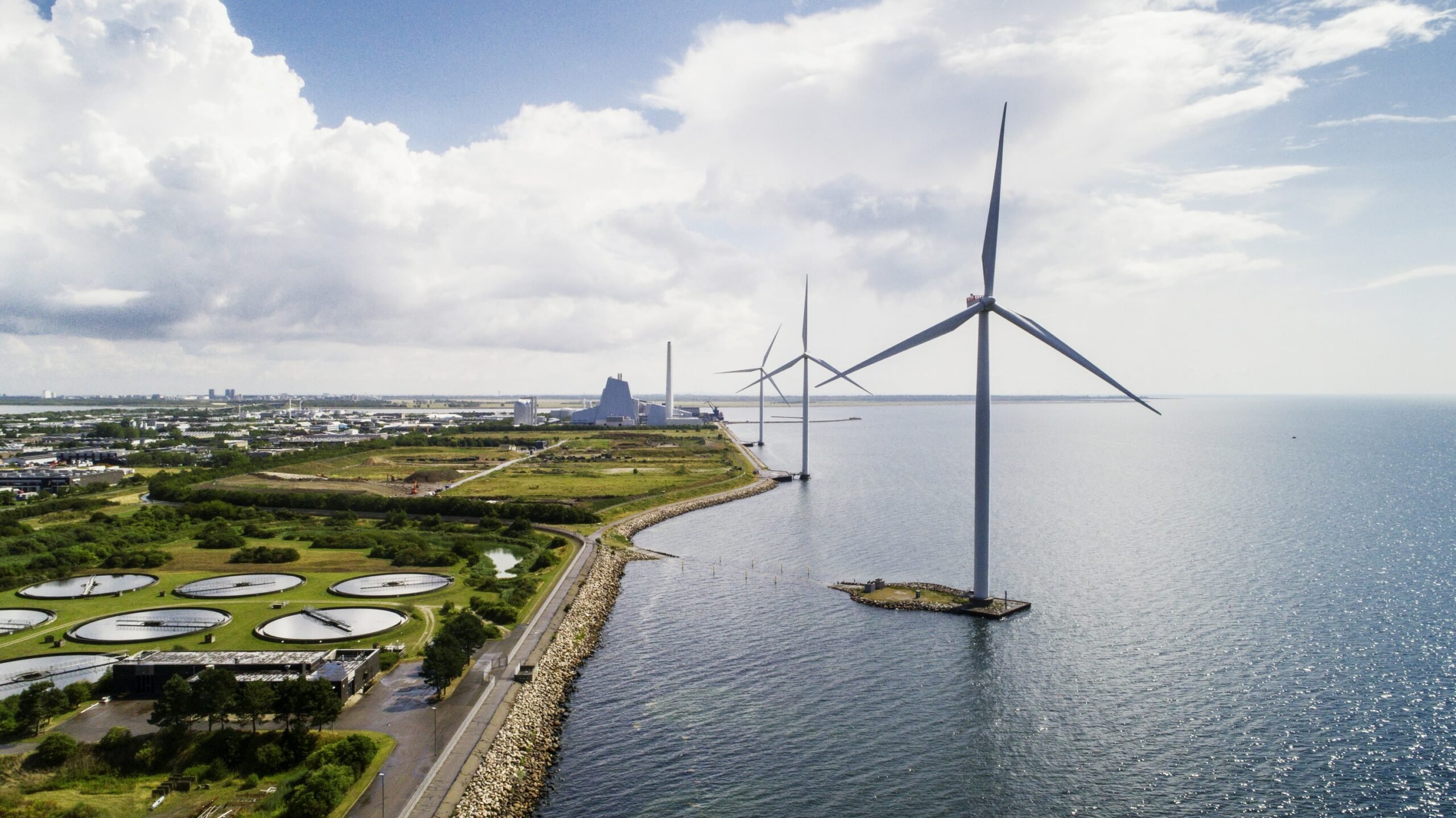
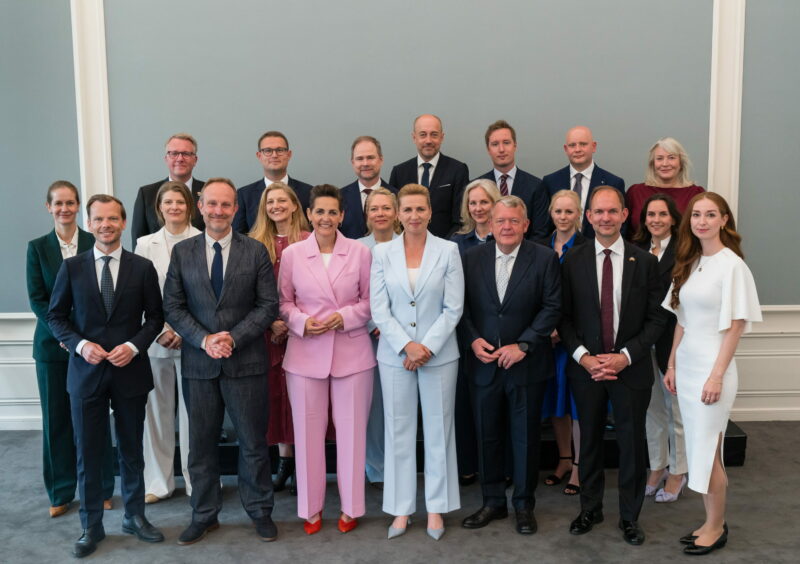
Photo credit: Kim Tonning & Jakob Boie

image
8 September 2025

Danish Presidency of the Council of the EU 2025

From 1 July to 31 December 2025, Denmark will hold the Presidency of the Council of the European Union.

Learn more about activities, priorities and get inspired by key focus areas anchored in Denmark’s green transition.

Discover the EU Presidency

Europe is taking a decisive step towards a cleaner, more affordable, and reliable energy system.

This week, EU Energy Commissioner Dan Jørgensen announced the launch of the first sectoral tripartite contracts, focusing on offshore wind and grids, as well as energy storage and flexibility. The agreements are designed to bring together energy producers, industrial consumers, and public institutions, including financial partners, to create stable demand for renewable energy while keeping costs predictable for European industries. The initiative forms a cornerstone of the EU’s Affordable Energy Action Plan, aiming to strengthen Europe’s competitiveness while accelerating the green transition.

The announcement took place during an informal meeting of EU energy ministers and attachés in Copenhagen, hosted by Denmark’s Minister for Climate, Energy, and Utilities, Lars Aagaard, as part of the Danish Presidency of the EU Council. Commissioner Jørgensen unveiled the new tripartite model during a visit to Ørsted’s Avedøre Power Station, illustrating how collaborative agreements between public and private actors can drive the deployment of renewable energy while reinforcing grid and storage capacities. The ministers’ discussions focused on improving Europe’s energy independence, closing gaps in infrastructure, and supporting a secure, cost-efficient transition to clean energy.
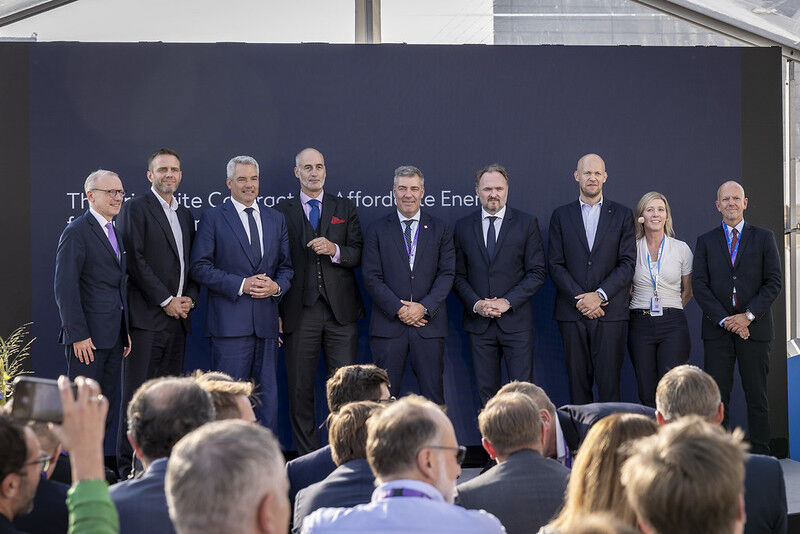
EU’s new tripartite model for offshore wind and storage

The announcement took place during an informal meeting of EU energy ministers and attachés in Copenhagen, hosted by Denmark’s Minister for Climate, Energy, and Utilities, Lars Aagaard, as part of the Danish Presidency of the EU Council.

Commissioner Dan Jørgensen unveiled the new tripartite model during a visit to Ørsted’s Avedøre Power Station, illustrating how collaborative agreements between public and private actors can drive the deployment of renewable energy while reinforcing grid and storage capacities.

“Tripartite contracts represent an innovative solution: to tackle these challenges through a combined and collaborative approach. Through political and sectoral commitments, sectoral tripartite contracts will bring together a trio of actors: that is, developers and the supply chain; industrial consumers; and finally the public sector, with the support of financial institutions like the EIB. Of course, each energy technology has its particularities. That is why the Commission is working to establish a number of sectoral tripartite contracts.  And today, I am delighted to announce the first 2 sectoral contracts on which we are working.” Dan Jørgensen, EU Commissioner for Energy and Housing.

The ministers’ discussions focused on enhancing Europe’s energy independence, closing infrastructure gaps, and promoting a secure and cost-efficient transition to clean energy. With the first two tripartite contracts being on offshore wind and grids as well as storage.
 

First EU sectoral tripartite contracts

1. Offshore wind and grids

  • Ambition: Up to 88 GW of offshore renewable capacity by 2030, and 360 GW by 2050.

  • Perspective: Equivalent to the current installed generation in Germany, Poland, and Greece combined.

  • Goal: Accelerate renewable energy deployment while reinforcing grid infrastructure to integrate the growing capacity.

2. Energy storage and flexibility

  • Importance: Supports higher penetration of renewables, optimises grid usage, and reduces price spikes.

  • Target: Around 200 GW of energy storage needed in the EU by 2030.

  • Goal: Encourage investments in storage solutions and ensure the energy system can handle more clean energy efficiently.

Looking ahead:

  • The Commission is exploring tripartite contracts in other sectors, including biomethane, energy efficiency, nuclear energy, and data centre integration.

  • Objective: Expand the collaborative model to more areas, fostering stable demand, investment certainty, and affordable clean energy across Europe.

Learn more about EU's sectorial tripartite contracts

Inspired by the Danish tripartite approach

The EU’s energy tripartite approach is inspired by Denmark’s own green tripartite agreement in agriculture, where the government, industry, and environmental organisations have successfully joined forces to reduce emissions and enhance biodiversity.

By applying this model to the energy sector, Europe aims to break down barriers between stakeholders, provide regulatory certainty, and ensure long-term investments in clean energy technologies. The result is a framework that benefits both producers – who gain stable demand -and consumers, who benefit from reliable, affordable energy.

With these first sectoral contracts, Europe is setting the stage for a collaborative, strategic, and sustainable energy future. As Commissioner Jørgensen noted, “Europe has always been a frontrunner in clean energy. But the race is not over—it is only beginning.”

Discover Denmark’s green tripartite agreement

You should consider reading

Energy storage
Grid and infrastructure
Offshore wind
Policy frameworks
Security of supply
Wind energy