
Skip to content

Case

Buildings

District energy

Energy efficiency in buildings

+1

Housing area reduces heat consumption by 27 %

24 April 2025

Solution provider

ProjectZero

ProjectZero is Sønderborg’s cross-sector climate partnership, uniting citizens, businesses, utilities and the municipality to achieve a CO₂-neutral energy system by 2029 - and to serve as a living blueprint for cities around the world.

More from ProjectZero

Want to see this solution first hand?

Add the case to your visit request and let us know that you are interested in visiting Denmark

Challenge

In 2007, the Danish city of Sønderborg set an ambitious goal to making the entire area’s energy system carbon-neutral by 2029 – with a strong focus on reducing energy consumption. Knowing than more than 25 % of all global energy-related emissions come from buildings, the citizens and housing associations in Sønderborg play a major role in making the ambition come true. Energy renovation in buildings doesn’t only help the climate. It also has the potential to create more comfortable and affordable housing.  

Solution

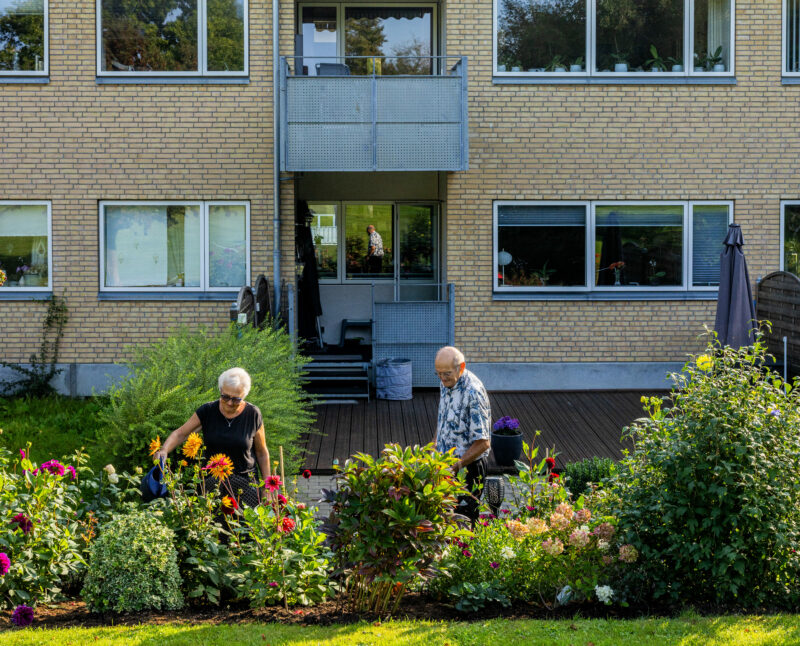
The housing area has undergone two major insulation upgrades – one at the attic and one at the building facades before rebuilding with yellow soft-molded bricks. The improved insulation accounts for more than half of the total reduction in heat consumption. The area is equipped with district heating, and the system has been upgraded from a single-pipe to a more efficient two-pipe system.  

In 2021, an intelligent heating system was introduced. By utilizing data from sources such as building models and weather forecasts, the system enhances solar radiation use and prevents excessive temperatures. Solar panels were installed on the roof tops in 2017, and later, batteries were added, making it possible to store excess solar energy.  


:

Video of the case

Watch Brian talk about the housing area’s transformation.

Result

Since 2003, heat consumption has been reduced by 27 %, with a potential for 31 % once fully implemented across all buildings. Electricity consumption has decreased by 5 %. 

Combined, the solar panel and batteries provide 38 % of the residents’ electricity needs. In 2024, intelligent battery management was introduced in two blocks, featuring a system that gathers data on variable electricity prices, tariffs, weather conditions, and consumption patterns. Using this data, an optimal production profile is generated every hour.

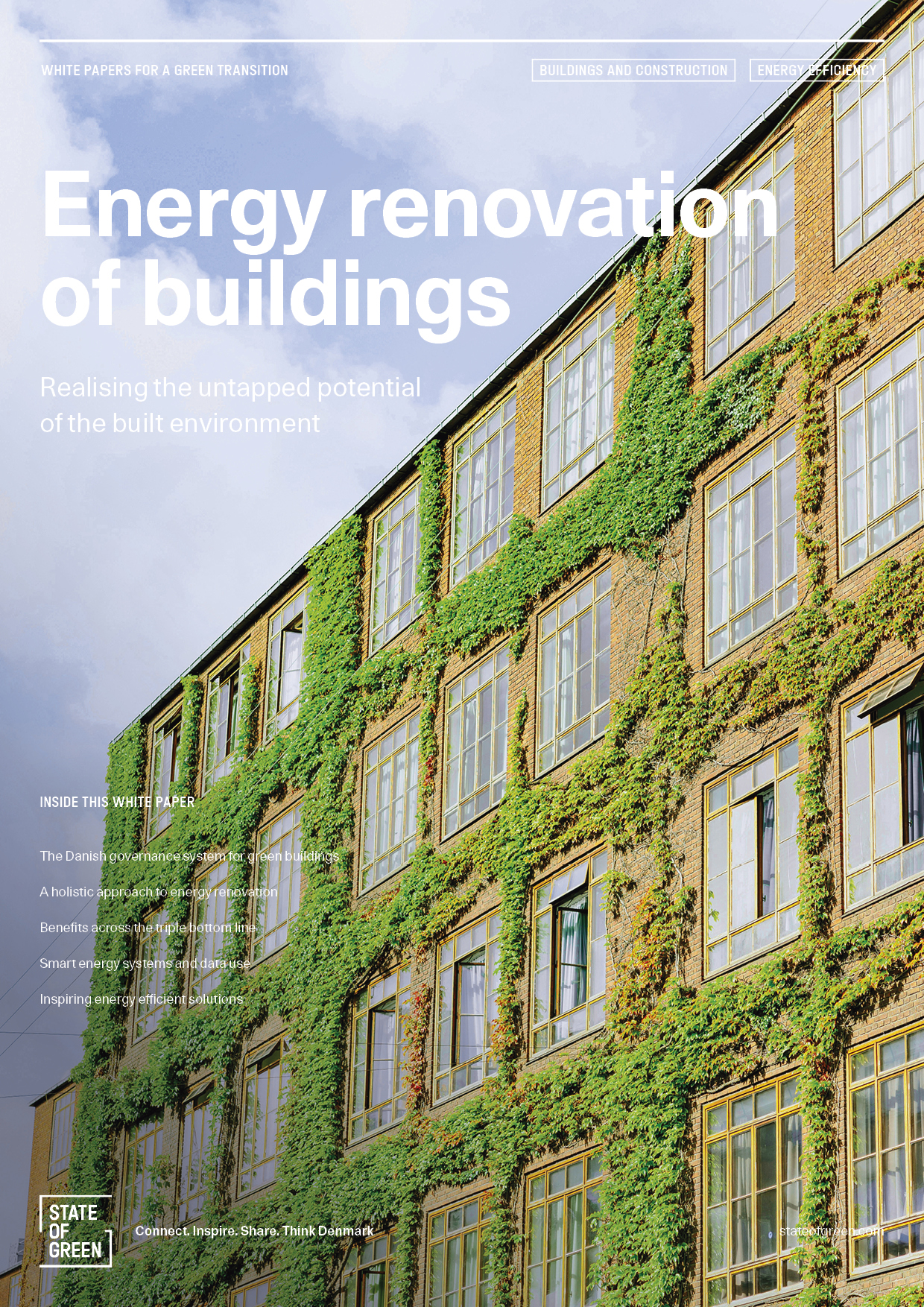
SoG_WP_EnergyEfficiencyInBuildings_210x297-forside

Discover the Publication

This case is a part of the “Building Renovation – Realising the untapped potential of the built environment”. Featuring in-depth cases and insights from key Danish players, the white paper offers a toolbox of ideas, technologies, and frameworks for  future-ready buildings.

Explore the white paper