Skip to content

Case

District heating

Living labs

Sector coupling

+3

Supermarkets cutting CO₂ emissions by 81 %

4 March 2026

Solution provider

ProjectZero

ProjectZero is Sønderborg’s cross-sector climate partnership, uniting citizens, businesses, utilities and the municipality to achieve a CO₂-neutral energy system by 2029 - and to serve as a living blueprint for cities around the world.

More from ProjectZero

Want to see this solution first hand?

Add the case to your visit request and let us know that you are interested in visiting Denmark

Challenge

Supermarkets are a cornerstone of modern society. But they are also significant energy consumers, particularly through cooling systems and heating.

Around 30 supermarkets serve local communities in Sønderborg Municipality, with a large share of energy historically coming from conventional sources.

Reducing carbon emissions and energy use in retail buildings like supermarkets – without compromising performance or comfort for customers – has been a persistent challenge. It required not only upgrading individual stores, but rethinking energy flows in a way that turns supermarkets from high-consuming facilities into active contributors to a zero-carbon energy system.

:

Video of the case

Watch Lars Andersen, Managing Director of 12 energy-efficient supermarkets, explain how they made it happen.

Solution

12 supermarkets in Sønderborg, belonging to Brugsen for Als & Sundeved (BALS), have undergone a systematic energy transition, implementing a range of energy-efficiency and renewable solutions across the stores:

  • Upgrading to LED lighting and CO₂-based cooling systems.

  • Implementing real-time energy monitoring and continuous efficiency improvements.

  • Capturing excess heat from refrigeration and cooling systems, and reusing it for space heating, tap water, and store offices.

  • Connecting to the local district heating network so excess heat can warm nearby homes and businesses.

  • Installing rooftop solar panels to generate renewable electricity on-site, with plans for future battery storage.

In partnership with local engineering leader Danfoss, one store has been designed as a cutting-edge training and test facility – enabling trial and optimisation of energy-saving solutions before scaling them across all 12 BALS supermarkets. Real-time data allows proactive response to inefficiencies, reducing energy and food waste.

Result

Since 2012, the BALS supermarkets have achieved substantial results:

  • 81 % reduction in CO₂ emissions across the stores.

  • 53 % reduction in energy consumption.

  • Up to 80 % of heating needs covered by reused excess heat.

By reusing heat from cooling systems, stores halve their energy bills and substantially cut their climate impact. Solar installations further reduce dependence on the grid and increase resilience against energy price fluctuations.

The transition demonstrates how supermarkets can become energy efficient, climate-friendly community hubs, feeding heat into district systems and setting an example for retail energy management worldwide.
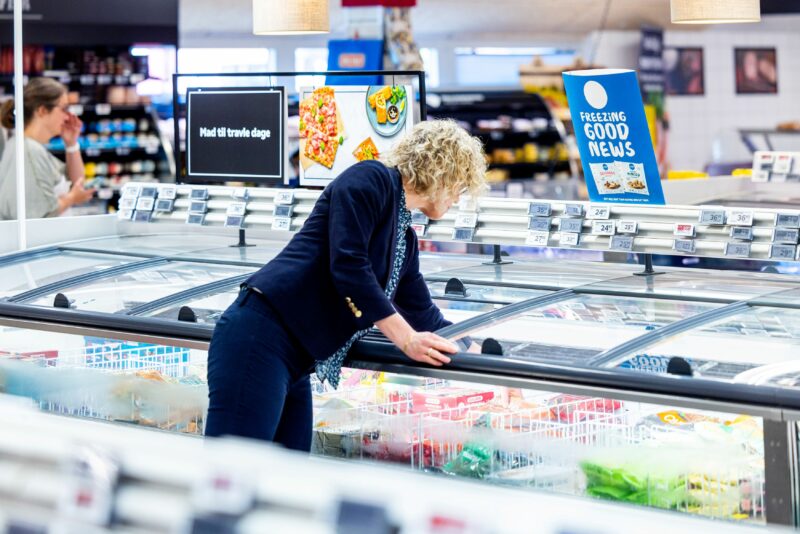

The supermarkets of tomorrow

In Sønderborg, supermarkets contribute far beyond the products on the shelves.