Solution providers

Case
Carbon capture, storage and utilisation
Add the case to your visit request and let us know that you are interested in visiting Denmark
The waste-to-energy sector stands at the intersection of three pressing global challenges. First, the resource crisis: consuming beyond the planet’s regenerative capacity. Second, the energy crisis: volatile prices and supply insecurity have left communities exposed. Third, the climate crisis: rising CO₂ emissions continue to accelerate global warming with severe consequences.
Vestforbrænding is already addressing the resource challenge by maximising reuse and recycling. The incineration process also contributes to energy security by generating a stable supply through district heating. However, one challenge remains: the climate impact of incineration.
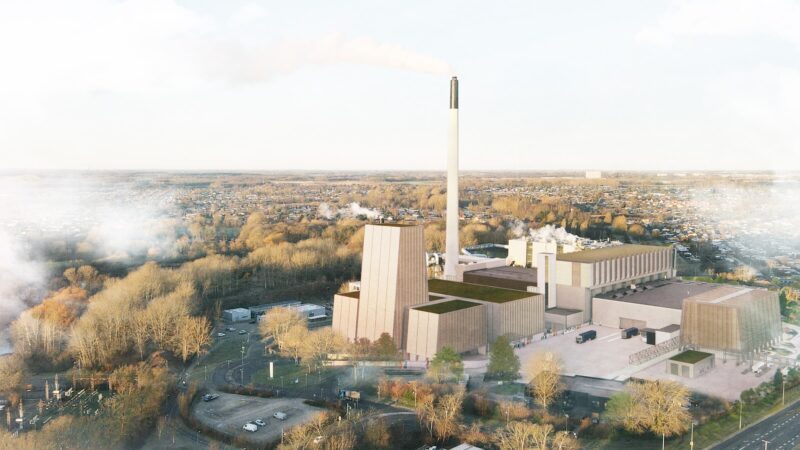
The Gaia project pioneers a model for carbon-neutral waste incineration, transforming a traditionally hard-to-abate sector into a climate-aligned solution. At the same time, the carbon capture generates surplus heat to supply an additional 10,000 households with district heating. District heating represents a further step in the green transition, as it allows households to move away from oil- and gas-based heating systems.
At the core of the solution is an integrated carbon capture system that enables up to 95% of CO₂ emissions from flue gas to be captured. Using amine-based absorption, CO₂ is chemically bound in an absorption tower to be separated from the remaining flue gas. The pure CO₂ is then released through a regeneration process. The amine solvent is continuously recycled in a closed-loop system, ensuring efficiency and minimal waste.
To ensure the captured CO₂ is handled responsibly, the Gaia project is developing a full low-carbon value chain. This includes transport via electric trucks to an intermediate storage facility, followed by permanent offshore storage. Each step is being evaluated for transparency, climate impact, and cost-effectiveness.
The project’s goal is to demonstrate how carbon capture can be applied in waste-to-energy and scaled to support broader decarbonisation goals.


Although the CO₂ capture facility is not expected to be operational until the end of 2029, the Gaia project has already reached several important milestones. These include a long-term offtake agreement with Microsoft for up to 2.95 million tonnes of permanent carbon removals, an approved Environmental Impact Assessment, and a completed Front-End Engineering Design study.
Together, the achievements demonstrate the Gaia project’s maturity and readiness for implementation.