Solution providers

Case
Carbon capture, storage and utilisation
Add the case to your visit request and let us know that you are interested in visiting Denmark
Photo credit: INNO-CCUS
Northern Denmark is home to several heavy industries that emit a significant amount of CO₂, like cement production, combined heat and power plants, biogas production, and waste incineration plants. The cement plant Aalborg Portland is Denmark’s largest single industrial emitter with approx. 1.8 million tonnes of CO₂ per year (approx. 4% of Denmark’s total emissions).
Decarbonising these hard-to-abate sectors is crucial for Denmark to reach its ambitious climate target of a 70% emissions reduction by 2030. CCUS has great potential as a climate mitigation technology, capturing CO2 from industry, storing it, and using it for other production processes. It is particularly important for heavy industry, which is difficult to decarbonise, but large-scale deployment of CCUS still faces challenges.
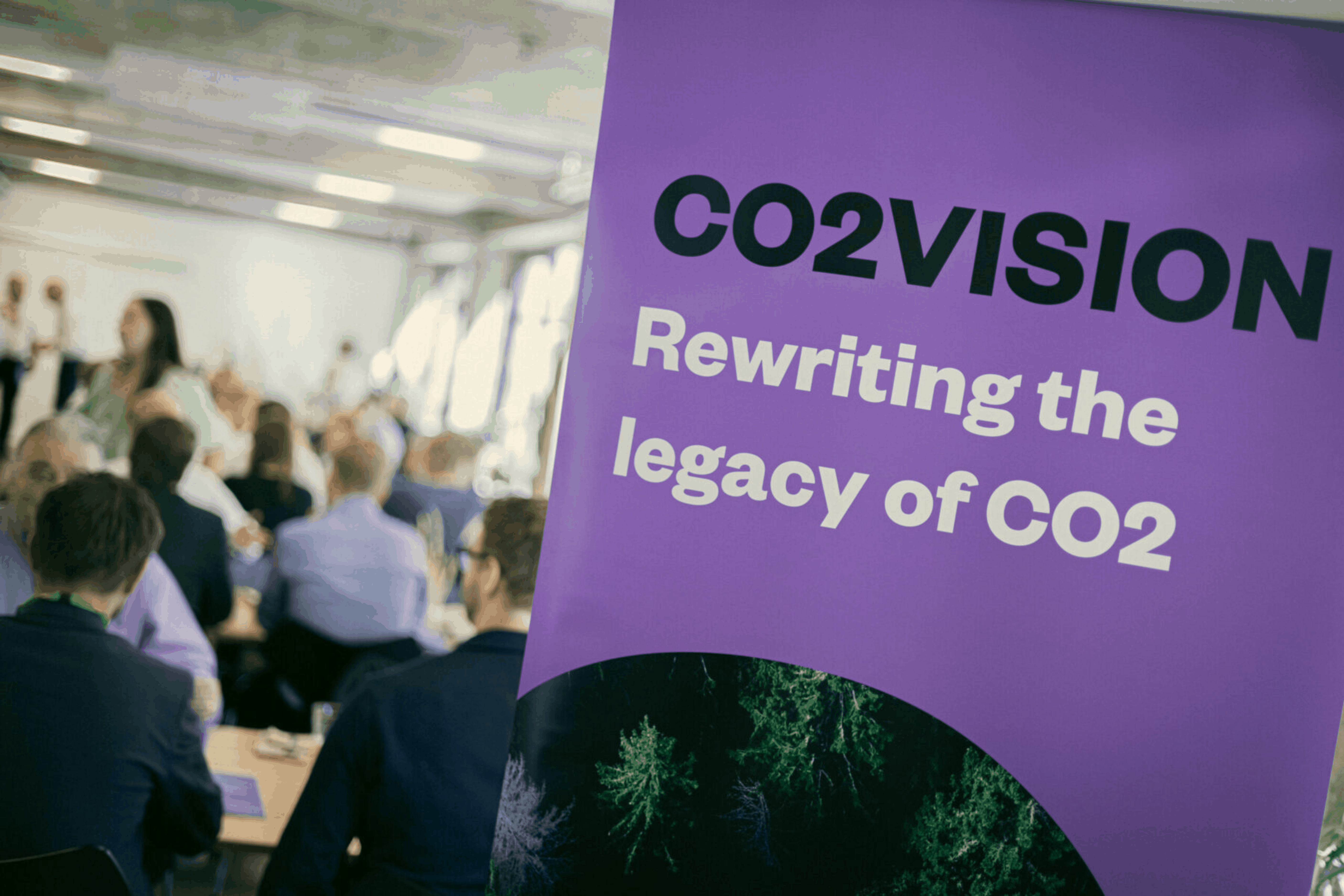
CO2Vision was launched as a broad regional development project to drive the implementation of CCUS in Northern Denmark by bringing together a network of more than 50 partners spanning the entire CCUS value chain.
This includes major CO₂ emitters, local and regional authorities, port operators, research institutions, and cleantech SMEs. This broad public–private collaboration ensures that each piece of the CCUS puzzle, like technology, infrastructure, skills, and regulation, is addressed.
The project has so far established more than 15 test and demonstration sites across the region. Together, these pilots cover a range of CCUS applications, from industrial capture to conversion into new fuels, providing real-world data and experience.
CO2Vision has laid critical groundwork for the large-scale rollout of CCUS in Denmark. The success lies in the concrete outputs supporting regional CCUS deployment: a CCUS Roadmap, more than 15 test sites, including the two follow-up projects (2.0 and NeXt) that provide funding for additional sites on industrial and agricultural decarbonisation in Northern Denmark.
The Danish Business Authority, as operator of the EU-REACT funds, conducted an independent evaluation that showed that 80% of the partners involved agreed that CO2Vision had significantly strengthened the regional CCUS ecosystem. To date, CO2Vision has received DKK 180 million from the Danish Board of Business Development. Nationally, Denmark has earmarked over €5.4 billion for CCUS between 2021 and 2028, underscoring the importance of initiatives like CO2Vision in delivering territorial impact. The momentum from CO2Vision is also influencing policy and investment decisions. The project’s findings and roadmap provide evidence-based recommendations on how to develop the necessary regulatory and economic framework to support CCUS. Key success factors identified include securing strong political support, active industry participation, and blended funding (national and EU) to de-risk these first-of-a-kind projects.
By addressing infrastructure gaps and proposing business models for CO₂ utilisation, CO2Vision is helping authorities shape conditions (such as transport networks and incentive structures) that will be needed for full-scale CCUS. With these measures coming into focus, Northern Denmark is positioned to become Denmark’s first CCUS hub, demonstrating how heavy industry can transition towards net-zero emissions.