Denmark's energy mix over time
Denmark’s transition from the energy side over the past three decades.
Find more numbers on Denmarks energy mixPerspective
District energy
Biomass
District heating
+5
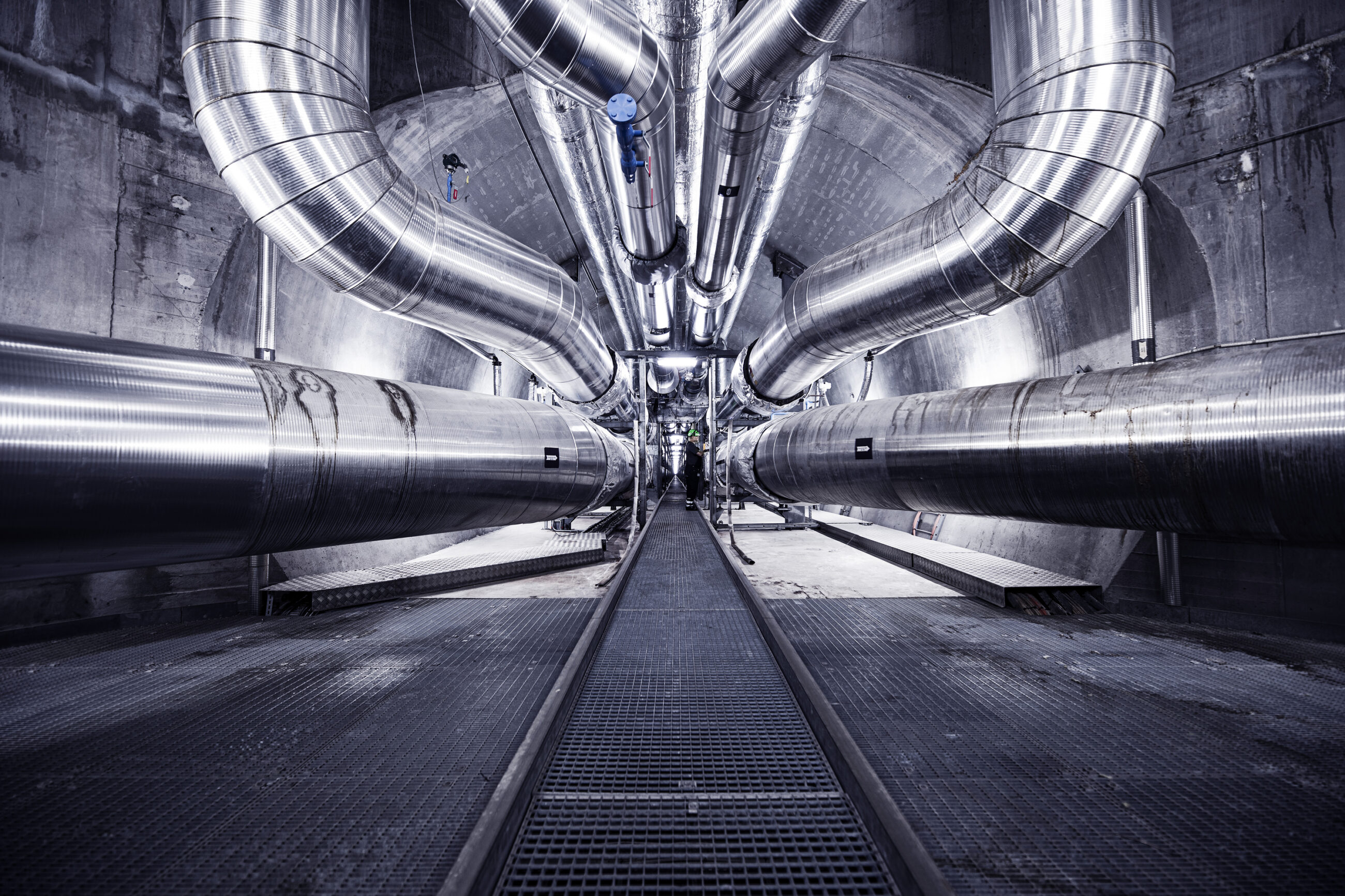

For several decades, Denmark has been transforming its energy supply to reduce its dependence on fossil fuels. An important part of this transition has taken place in the district heating sector, where coal previously played a central role.
Today, the picture is significantly different. According to the Danish Energy Agency’s 2025 Energy Statistics, Denmark’s consumption of coal and coke has fallen by 95 per cent since 1990. Coal now accounts for less than 2 per cent of Danish district heating production.
But the transition does not stop here. While many combined heat and power plants were previously converted from coal to biomass, the district heating sector is now moving towards greater electrification. Large-scale heat pumps and electric boilers make it possible to use electricity for heat production, while thermal energy storage can help align production with both energy demand and the availability of electricity.

Denmark’s transition from the energy side over the past three decades.
Find more numbers on Denmarks energy mixBiomass has played a significant role in Denmark’s phase-out of coal. Today, biomass accounts for almost 60 per cent of the country’s district heating production. At the same time, there are signs that the energy mix is undergoing another transformation.
The 2025 Energy Statistics show that biomass consumption for district heating fell by almost 2 per cent compared with the previous year, while the share of electricity increased. This is part of a broader development in which district heating companies are increasingly investing in electric solutions.
Official projections indicate that heat pumps and other technologies that produce heat without burning fuels will supply more than half of Denmark’s district heating by 2035.
Large-scale heat pumps can harness energy from sources such as seawater, ambient air and excess heat from industry. Using electricity, they raise the temperature so the energy can be used in the district heating network. This makes it possible to utilise heat sources that might otherwise go unused.
At the same time, electric boilers can convert electricity directly into heat when conditions are favourable. Combining different technologies gives district heating companies more options for adapting production to local conditions and the needs of the energy system.
The transformation of heat production is only one side of the story. The amount of energy households need also plays an important role.
The Danish Energy Agency’s 2025 Energy Statistics show that total energy consumption in Danish households fell by 2.1 per cent compared with 2024. The decline covered several of the energy sources used for heating: oil consumption fell by 15.6 per cent, gas consumption by 7 per cent, while the use of firewood and wood pellets also decreased.
Heat pumps followed the opposite trend. The contribution from heat pumps increased by 8.1 per cent between 2024 and 2025. Heat pumps harness heat from their surroundings, for example from the air or the ground, and use electricity to raise its temperature so that it can be used for heating.
Looking at a longer period, energy consumption for residential heating has also declined. Since 2015, consumption has fallen by 11 per cent, partly as a result of better insulation and more efficient heating solutions.
The figures point to two parallel developments: households are using less energy, while heat pumps are playing a greater role in heating. This is relevant to the overall transition, as more efficient energy consumption can reduce the need for heat production, while new technologies can change how the remaining heat demand is met.
Aalborg, located in the northern part of Jutland, is home to Denmark’s last coal-fired power plant: Nordjyllandsværket. But at the end of 2028, the plant is scheduled to close down its production, as coal will no longer be used for electricity and heat production in Denmark.
This raises a key question: How do you replace a large, existing heat source while ensuring a stable supply for the many households that depend on district heating?
In Aalborg, the answer is a combination of technologies and energy sources. The heat production from the power plant will be replaced by excess heat from nearby industries, thermal energy storage, electric boilers and a seawater-based heat pump facility that is currently under construction.
This approach illustrates how district heating can evolve from relying on a few large power plants to utilising a range of different heat sources. Excess heat from industry can provide energy that is already available, while heat pumps can harness seawater as a heat source. Electric boilers also make it possible to produce heat using electricity.
No single technology will solve the challenge. Instead, it is the combination of several solutions that will replace heat production from the coal-fired power plant.
Located on the outskirts of Aalborg, Nordjyllandsværket is Denmark’s last coal-fired power plant. The plant is scheduled to stop using coal on the 1’st of january 2029, marking the end of coal-fired power in Denmark’s electricity and heat production.

An important element of Aalborg’s transition is thermal energy storage. Large storage tanks can store hot water, allowing heat to be produced when conditions are favourable and used later when demand arises.
In some ways, the principle is similar to batteries in the electricity system. When electricity from wind and solar is abundant and electricity prices are low, electric heating solutions can use this electricity to produce heat. The heat can then be stored until it is needed.
This can help strengthen the integration between the electricity and heating systems and make it easier to adapt heat production to fluctuations in both electricity generation and demand. Thermal energy storage does not eliminate the need for sufficient production capacity, but it can give district heating companies greater operational flexibility.
Aalborg is not alone in developing this type of solution. In Esbjerg, one of the world’s largest seawater-based heat pump facilities supplies heat to around 25,000 households. Across Denmark, 218 large-scale heat pump facilities supplied district heating in 2025.
These examples illustrate how electrification is already part of Denmark’s district heating transition, while local conditions determine which combinations of technologies are most relevant.
District heating supplies heat to around two-thirds of Danish households. The experience gained in Denmark is therefore relevant not only to the country’s own energy supply, but also to other countries exploring how to reduce the use of fossil fuels for heating.
The European Commission’s Electrification Action Plan aims, among other things, for district heating and cooling to cover 15 per cent of the EU’s heating and cooling needs by 2030. This highlights the growing interest in developing collective heating systems and making better use of electricity, excess heat and other local energy sources.
Denmark’s experience shows that the transition can involve several stages. Biomass has helped reduce the use of coal, while electrification, heat pumps and thermal energy storage are now taking on a greater role. At the same time, energy efficiency improvements can reduce the overall demand for heat.
There is no single solution that fits every city and energy system. Access to excess heat, local heat sources, electricity infrastructure and existing district heating networks varies from place to place. However, Aalborg’s transition illustrates how several technologies can be combined to replace coal and support a more flexible heat supply.
As more European countries explore opportunities to develop or expand district heating, experience from Denmark’s transition can provide practical insights into how the heating systems of the future can be designed.

With more than 100 years of experience in district heating, Denmark is a showcase for how district heating can provide cost-effective, energy-efficient, and resilient heating.
From governance tools to technical solutions, this white paper presents the case for recognising district energy’s immense potential in the green transition of our societies.
Discover the white paper
Solution
Combined heat and power production
+7

Solution
Bio-based circular solutions
+8