Skip to content

Perspective

Green supply chains

Building materials

Circular value chains

+3

ROCKWOOL: From lava to legacy

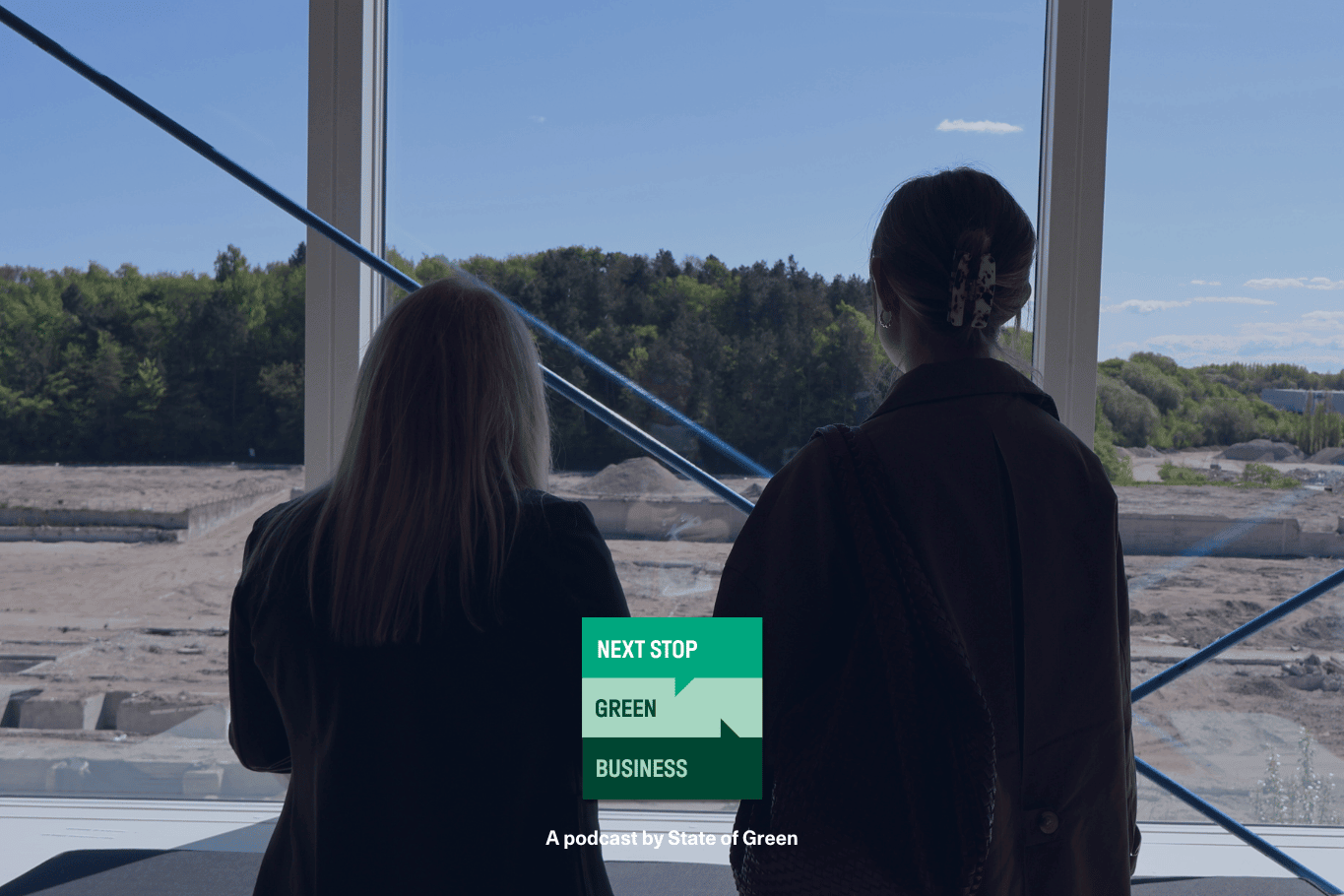
In this podcast series, we ask Danish companies why they continue to believe, despite growing pressures and uncertainties, that green business is good business. Next stop: ROCKWOOL.
image
18 September 2025

In this episode of “Next stop: Green business”, we visit ROCKWOOL. ROCKWOOL is a legacy business. Founded in 1909, ROCKWOOL’s first stone wool factory was established in 1937 in Hedehusene just outside Copenhagen. Close to a century later, the group HQ is still in that very same spot, and unlocking the strengths of stone wool is still the company’s purpose.

Still, businesses and products have evolved with the times, especially on the sustainability front.

Listen to the episode in its entirety:

Next stop: Green business

In this podcast series, we ask Danish companies why they continue to believe, despite growing pressures and uncertainties, that green business is good business. The series will be published bi-weekly on your favourite podcast streaming platform.

Discover 'Next Stop: Green Business'

Decarbonising ROCKWOOL’s value chain with plans over pledges

We visited Mirella Vitale, Senior Vice President of Marketing, Communication and Public Affairs, in Hedehusene, where she took us through ROCKWOOL’s soon-to-be-opened innovation centre. And innovation is key for ROCKWOOL, as their main sustainability problem is foundational to their business: How do you reduce your environmental footprint when your product is energy-intensive to produce? 

I would say the way ROCKWOOL approaches sustainability is that we don’t make pledges – we make plans. So you will probably not hear me, the CEO, or the head of technology go out and make a big pledge for 2050 without knowing exactly what we are going to do.

We prefer to have a very concrete plan. Sometimes people say we are not ambitious enough with our goals for 2050, but we respond that it is a plan, not a pledge.

Mirella Vitale, Senior Vice President of Marketing, Communication and Public Affairs

Let’s look at some of these plans, because even though the problem is simple in essence, it became clear during our walk that ROCKWOOL is getting at it from multiple angles. So, let’s start with the obvious one at the heart of the value chain production. Melting rocks at temperatures exceeding 1500 degrees requires a lot of energy, so what do you do?   

We’ve done a lot, making changes through trial and error as we progressed. In the beginning, perceptions in the world were also different. When I joined, we spoke a lot about biofuels, gas, and biogas. Eventually, our key solution turned out to be electrification.

Of course, this also requires access to a clean electrical grid, because sometimes electrification can actually make matters worse. If the power station is coal-fired, then it does not benefit the community.

Creating jobs locally

If you manage to solve the complex engineering challenge of developing large-scale electric melting technology and find a place where green electricity is available on a large scale, you then have to face the local community where the factory is based.

When you begin the process of permitting and building new facilities, you quickly see how much awareness there is in society, particularly towards factories. And even though you may feel you are doing everything right, suddenly you are faced with people in the community who see you as the bad guy coming into town.

Mirella Vitale, Senior Vice President of Marketing, Communication and Public Affairs

This perception is something ROCKWOOL has to contend with, especially in regions where factories are often viewed with scepticism. But their commitment to building locally is actually tied to a green imperative – to avoid what is often energy-intensive transport of products.  

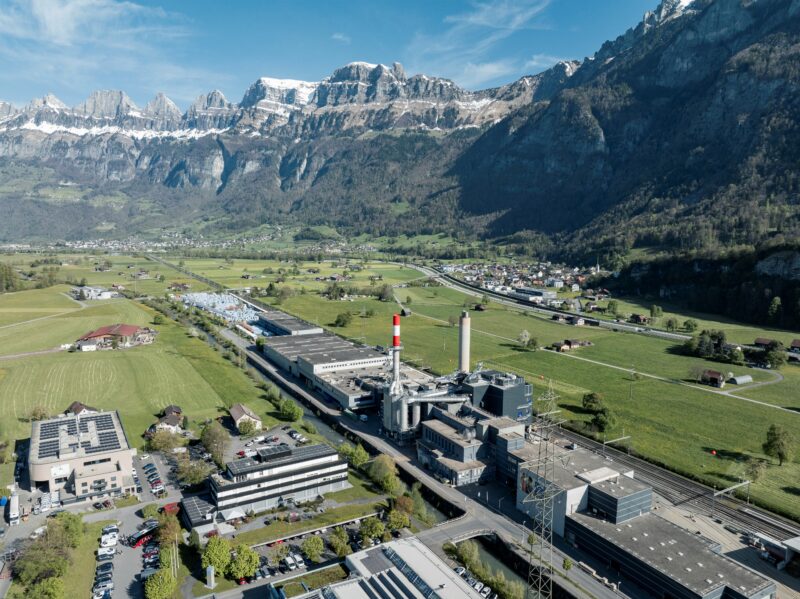
We always build locally because our products cannot be transported over long distances. As you mentioned, we have a factory in Switzerland. I remember using that factory as a case study when I was in the US, saying: we build locally everywhere. That is who we are, and we live and coexist with our communities.

Discover the case: An electrifying solution for melting stone

ROCKWOOL Group

ROCKWOOL is the world leader in stone wool products, from building insulation to acoustic ceilings, external cladding systems to horticultural solutions, engineered fibres for industrial use to insulation for process industry and marine & offshore.

Discover cases and projects from ROCKWOOL

ROCKWOOL’s handprint on energy consumption in buildings

Moving further down the value chain from production and transport to actual use, this is where the environmental footprint of ROCKWOOL products intersects with the positive handprint it has. Although it takes a lot of energy to produce, stone wool insulation helps to reduce energy consumption in buildings, which is one of the world’s most energy-consuming and valuable assets.

Buildings have great value in society, both economically and in terms of the energy they consume. Going forward, we will play an even greater role in helping to reduce energy consumption. And buildings are everywhere – we work, live, play, recover, and study in them.

Buildings are integral to our daily lives, and the impact of a well-insulated building extends beyond energy use. ROCKWOOL also emphasises the acoustic and fireproofing properties of their product. And so, in Mirella’s view, improving buildings is more than just necessary maintenance – it is an investment towards the quality of life. 

In terms of ROCKWOOL and its products, the green business is also tied to the economy. This is clear because buildings are everywhere – we all use them no matter what we are doing. I believe that in today’s society more than ever, funding to improve people’s buildings will continue, as there is a growing recognition of the impact buildings have on people’s lives.

Circularity and innovation

Stone wool can be infinitely recycled. So, in the end, you have a product that is durable and energy efficient despite its energy-intensive production process. 

When our product exits the gate of course it has consumed a lot of energy to make the products. But over its entire life cycle, it helps reduce energy consumption in society and gives back far more than it takes. In addition, our product is circular – it is infinitely recyclable and can be used to make new products. So, when considering the full life cycle, it is actually far less energy-intensive than one might imagine.

Making their product infinitely recyclable has been a key part of ROCKWOOL’s sustainability plan. They put a big emphasis on innovation, and as Mirella pointed out during our trip around the innovation centre, they have a dedicated area with a particularly fun name.  

We have a small area we call Seventh Heaven, where engineers can experiment with ideas. They come up with many interesting concepts, and sometimes these end up becoming products we actually sell.

Their horticultural substrate “Grodan” is a great example of how the innovation that comes with pursuing the green transition and extending the life cycle of products can bring new business opportunities with it. 

The horticultural substrate I mentioned started that way years ago – with an engineer who had noticed a piece of stone wool that had been left outside, where grass had begun to grow on it. He found this very interesting and thought about how it could be used. The stone wool had been discarded because it was not of sufficient quality for construction. While stone wool is normally moisture-resistant, the fibres can be engineered differently to make them moisture-absorbent, allowing them to hold water. What was once discarded as unsuitable for buildings suddenly became useful.

The commitment to harnessing the life cycle of the product is also prevalent further downstream in ROCKWOOL’s value chain. Through their program Rockcycle, they take back stone wool material from construction, renovation and demolition sites and recycle it in their production process. However, the feasibility of such a program depends on factors outside of ROCKWOOL’s immediate control.

It’s not easy everywhere. We can offer it in many countries, but we would like to see it used a lot more.

This is simply because regulation is not yet in place, and not everyone acts for the sake of the greater good. Sometimes it requires a little bit of a nudge to change behavior. So we are in favor of regulations of pushing that agenda a little bit more. Because as long as it’s cheaper to bring things to landfill, then it’s hard to sort of convince people that they should do otherwise.  

When asked about ROCKWOOL’s approach to solving these challenges, Mirella matter-of-factly stated that whether it involves developing electrical melters or making the Rockcycle program available in 24 countries, it comes down to collective decisiveness.

I think that the part of our decision making that when we decide to do something, we go all in is probably the most exciting thing, right? We do not sit around saying, “this is hard.” Yes, it is hard, but we focus on finding a way – and we work together. Technology, finance, and myself in the more external-facing role work very well together, so we are all aligned and moving in the same direction.
The competitive advantage of green supply chains

Discover tangible cases and connect with solution providers that have turned green supply chains into a business advantage.

Discover the landing page

Is green business still good business?

So how do you translate this determination to the outside world, where arguments about the costs of doing green business often prevail? You assert the costs of not doing it. 

There is a lot of discussion about whether the sustainability agenda is expensive. Many people say that it is – but it depends. What is the cost of not pursuing it?

That’s what I try to say to people: what is the cost of not making resilient homes? The cost of a construction being destroyed in a fire or being destroyed because of bad weather.

Perhaps the simplest signal that ROCKWOOL believes in the competitiveness of sustainability is that even after nearly a century, stone wool is still their only product type.  

If we did not believe there was a future for a sustainable premium product, we would probably look at diversifying. Yet we remain very firm in staying on our trajectory.

Just as stone wool has stood the test of time, for ROCKWOOL, the green agenda isn’t a passing phase — it’s part of building a legacy fit for the next century.  

The cost to society of not acting – of not having the green transition – is, I believe, far more expensive for all of us in the long term than the investments we are making today.

So I do not see us moving away from the green agenda. I know ROCKWOOL is not.

Discover related content

News

Energy efficiency in industry

+21

New white paper: Explore how industries can decarbonise while staying competitive

17 July 2025
As industries work to cut emissions and secure long-term competitiveness, efficiency, circularity and innovation are proving essential. Explore how decarbonising industry goes hand in hand with driving costs down, resilience up and future growth in our new white paper "Towards a sustainable industry".

You should consider reading

Building materials
Circular value chains
Energy efficiency in buildings
Energy efficiency in industry
Green supply chains
Green value chains

Solution

Building design

+20

Renewables Focus with Port Development

2 April 2026
A European municipality sought to define a clear vision for transforming an industrial area into a hub for renewable energy manufacturing, while aligning stakeholders including municipal staff and elected officials.

News

Partnerships

+14

Relive highlights and partnerships from the Danish state visit to Australia

23 March 2026
During the 2026 Danish State Visit to Australia, more than 50 Danish companies joined forces with Australian partners to advance collaboration on renewable energy, green buildings, and sustainable innovation. Relive some of the highlights and concrete partnerships made during the week.