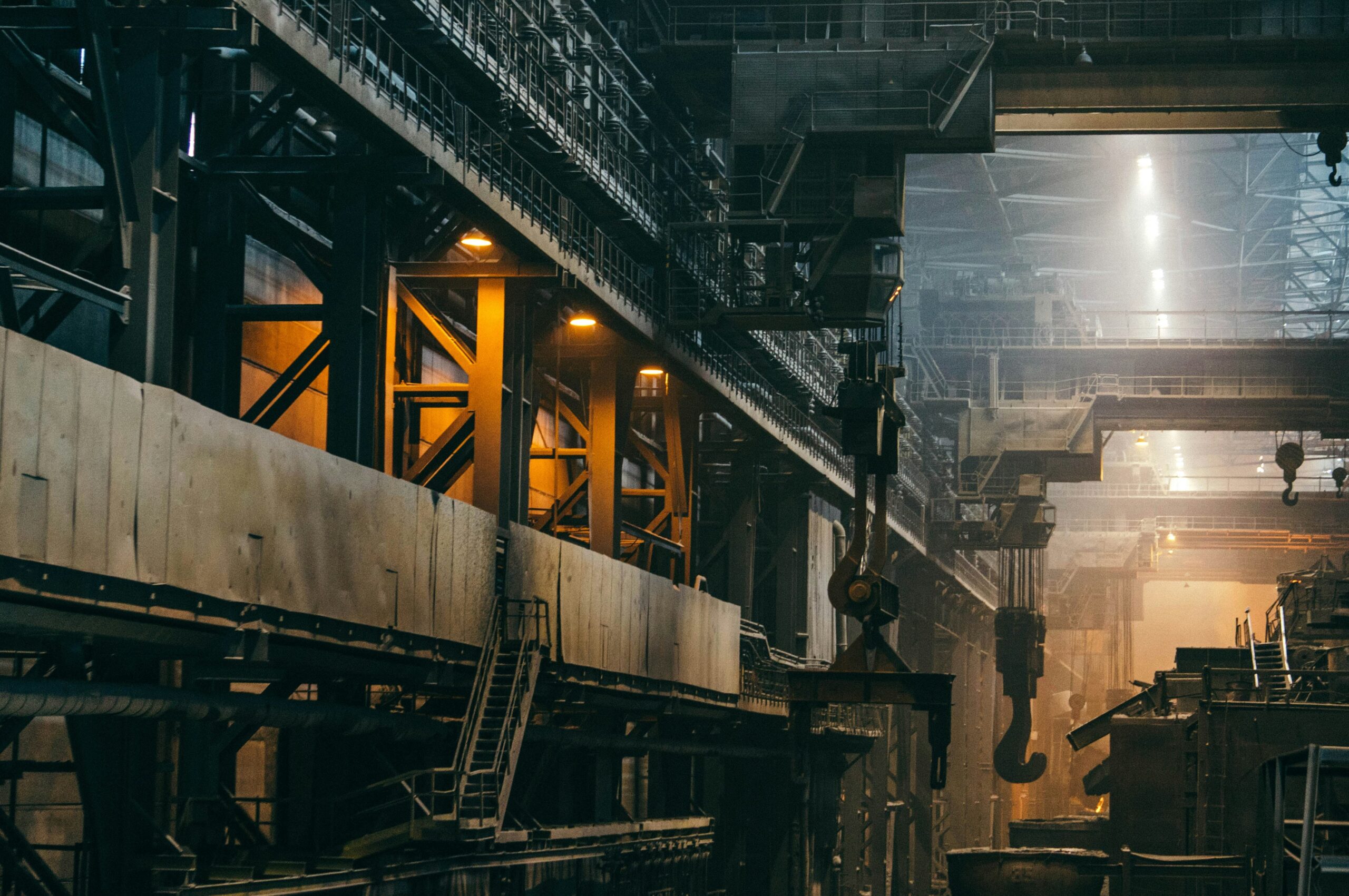
Industries such as steel, refining, chemicals and cement form the backbone of modern society. They supply essential materials for infrastructure, transport systems, energy technologies and countless other sectors. Yet their importance is matched by the scale of their environmental impact
A complex challenge
Resource-intensive industries account for around 70 percent of global industrial emissions and are among the highest industrial users of water. Reaching climate goals is impossible without targeting these sectors. Yet demand for steel, chemicals and cement is set to grow alongside the development of a futureproof energy system, given their extensive use in the construction of wind farms, power plants, transmission lines, electric vehicles and other clean energy infrastructure.
This means a balance must be struck between reducing emissions and maintaining competitiveness. According to the International Energy Agency (IEA), businesses in energy-intensive industries can reduce their energy consumption by up to 30 percent through energy efficiency measures. Even so, decarbonising these sectors remains technically and economically complex.
Many of the industrial processes associated with resource-intensive products require extremely high temperatures – often exceeding 1,000°C – and rely on raw materials that inherently emit CO₂ during transformation. Much of the water used in these sectors must also meet strict quality requirements, which complicates efforts to switch to alternative sources like greywater or treated wastewater.
Furthermore, the pathway to deep emissions reductions depends on technologies not yet ready for large-scale deployment. These new production methods often involve higher costs, and in global markets like steel, slim margins limit the ability to absorb them. Lastly, access to critical raw materials – such as rare earth elements, lithium and nickel – rests on global supply chains that are increasingly vulnerable to geopolitical tensions, trade dependencies and resource scarcity.
Innovation and collaboration are key
In Denmark, the resource-intensive sector is relatively small, accounting for 14 percent of national emissions. Still, Denmark is actively investing in and developing solutions tailored to the sector’s challenges.
Industrial symbioses across the country are piloting integrated approaches to decarbonisation – combining access to renewable energy with carbon capture, green hydrogen production and sector integration. Through public-private collaboration, these innovations are paving the way for scalable, exportable solutions to some of industry’s toughest climate challenges.