Skip to content

Perspective

Job creation and just transition

Water in industries

Water management

Denmark’s water sector has much to offer international talent – and much to gain

International students want to work in Denmark's water sector – and Danish companies want to hire them. A new study reveals that bridging the gap is less about motivation and more about creating clearer pathways.

Denmark is a global frontrunner in water technology, sustainable solutions, and climate adaptation. This position has been built over decades through innovation, specialization, and high standards. Yet at a time when climate change is accelerating worldwide, and the demand for new solutions is growing, the water sector faces a critical challenge: a shortage of qualified labour.

At the same time, hundreds of international students come to Denmark every year to pursue degrees in environmental technology, engineering, and natural sciences  – many with a genuine wish to stay and contribute to the country’s green transition. Nevertheless, far too few find their way into the Danish water sector.

A new study conducted by anthropology students from Aarhus University sheds light on this paradox and points to one overarching conclusion: International talents and Danish companies often have much to offer one another, but the pathways between them are not always visible, accessible, or easy to navigate.

“International students are a crucial part of the future workforce in the Danish water sector. If we want to remain and strengthen our position as global frontrunner, we need to understand what motivates them and how we create clear pathways into the industry. That’s why the insights from the anthropology students at Aarhus University are so valuable – they give us a concrete starting point for turning interest into recruitment.”
Michael Ramlau Hansen, Chairman, DI Water
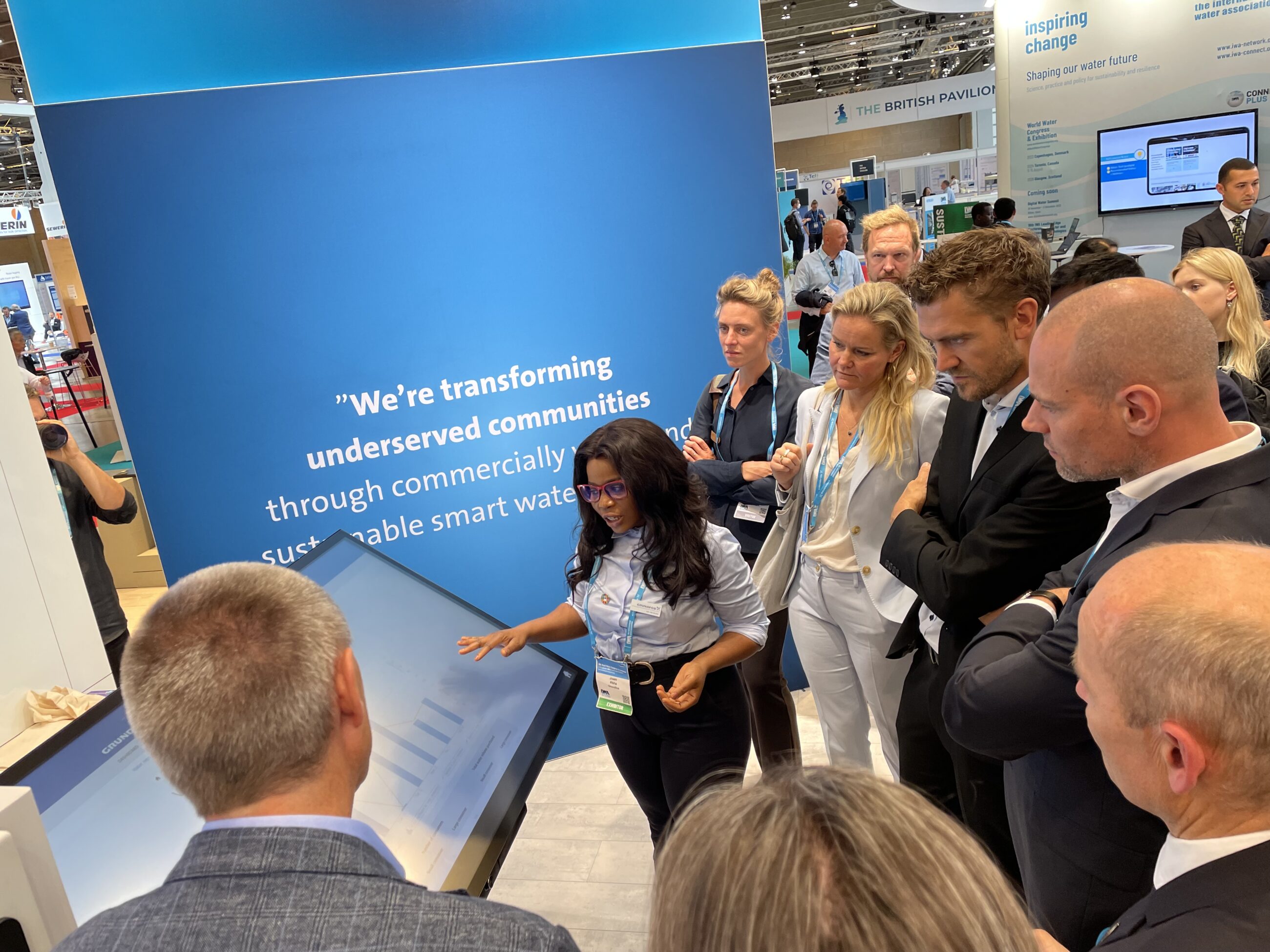
Why does Denmark attract so many international talents?

The international students participating in the study point to several reasons why Denmark is an attractive place to start their careers. The desire to work on something that makes a real difference is a central motivation among the students. Many describe a strong commitment to contributing to climate and environmental solutions, and they see the water sector as a field where daily work directly improves quality of life and addresses global challenges. This makes Denmark particularly appealing to students driven by a strong sense of purpose.

For others, the attraction lies in the high level of expertise and technologically advanced solutions that characterize the Danish water sector. They experience work in Denmark as offering a unique combination of innovation, complexity, and creative problem-solving, allowing room for both specialization and professional development. Denmark is perceived as a place where engineers and other specialists can explore new technologies while working closely with their professional passions.

In addition, many international candidates highlight the Danish working-life framework as a key reason for wanting to establish themselves here. Security, flexibility, work–life balance, and the opportunity to build a family life play a significant role. The combination of a high quality of life and a labour market that values well-being makes Denmark an attractive country to settle down

One of the students very clearly describes the appeal of Danish workplace culture as:

“An open environment where you can share your ideas and be productive, while still maintaining a good balance between work and personal life.”
International student participating in the study

What companies are looking for – and where barriers still exist

Companies participating in the study express a clear interest in recruiting more international employees. They emphasize that global profiles bring new perspectives, insights into foreign markets, and professional diversity, all of which can strengthen innovation and competitiveness. International employees are not seen as a compromise, but as a strategic resource.

Nevertheless, companies experience practical and cultural challenges that make recruitment more difficult in practice. Much recruitment takes place through existing networks, which can unintentionally make the sector hard to access for those without established connections. Language also plays an important role. Even though many companies operate globally, informal communication often takes place in Danish, which can make it harder for international employees to become a natural part of both social and professional communities.

Companies also point to uncertainty around residence regulations and the long-term availability of international employees. Even when candidates are highly qualified, companies may hesitate if they are unsure whether the employee will be able to stay in the country long term. At the same time, many companies call for better tools to handle pre-boarding and on-boarding; several highlights that support with housing, public registration, and introduction to company culture are often crucial for whether an international employee settles in successfully.

When perspectives mirror each other

When comparing the experiences of international students with the perspectives of Danish companies, an interesting pattern emerges. Both parties want the same thing, but they do not always operate within the same reality. International students seek clarity, access to networks, and visibility of opportunities. Companies want committed employees who are both able and willing to invest in the company and in Denmark.

Their expectations are, in fact, compatible. International candidates are highly motivated, but they often lack information and entry points. Companies are interested but lack frameworks that make the process easier. The challenge is therefore less about willingness and more about connection: how to make opportunities visible, lower barriers to entry, and create environments where international employees can thrive.

How the sector can turn interest into long-term careers

The studies point to several ways of strengthening both recruitment and retention. For international students, student jobs and internships are often crucial gateways into the labour market. They provide experience with Danish workplaces, help build networks, and make it easier to imagine a future in the sector. Without such entry points, many students struggle to see how they can move from education into employment.

Companies that invest in structured onboarding, buddy schemes, and early expectation alignment experience significantly better integration. International employees emphasise that good onboarding creates the calm and security needed to engage both professionally and socially. Support during pre-boarding – for example with housing, registration, or local practical matters – can make a substantial difference during the first months in Denmark.

Language also plays a central role. This is not about expecting everyone to speak Danish from day one, but about creating workplaces where international employees can participate while learning the language at a realistic pace. Companies that actively work with linguistic inclusion and cultural translation are better positioned to recruit – and retain – international talent.

An opportunity for both talent and companies

International students already in Denmark represent a significant talent pool for the Danish water sector. Many are highly motivated to contribute to climate and environmental solutions and see Denmark as an attractive place to build their careers. At the same time, companies recognize the value that international employees can bring in terms of new perspectives, international outlook, and professional diversity.

Yet the connection between these two groups does not necessarily happen automatically. More transparent entry points into the sector – such as student jobs, internships, stronger onboarding structures, and greater visibility of career opportunities – can help bring international graduates and Danish companies closer together at an earlier stage. If more of the international talent already present in Denmark finds its way into the water sector, it will not only help address the present and future labour shortages. It will also bring new perspectives, fresh ideas, and stronger solutions  – and ultimately, contribute to an even more innovative, resilient, and competitive water ecosystem that will further strengthening Denmark’s position as a global frontrunner within water technology in the future.

7 recommendations from the two studies:

How the water sector can attract and retain international talent

About the initiative

The project is part of the Danish Lighthouse for Water Technology and is realized with support from the European Social Fund Plus and the Danish Board of Business Development. The initiative is implemented in collaboration between Klimatorium, Ferskvandscenteret, DTU Sustain, Water Valley Denmark, and Business Hub Midtjylland.

Partners

You should consider reading

Job creation and just transition
Water in industries
Water management

Event

Water supply

+19

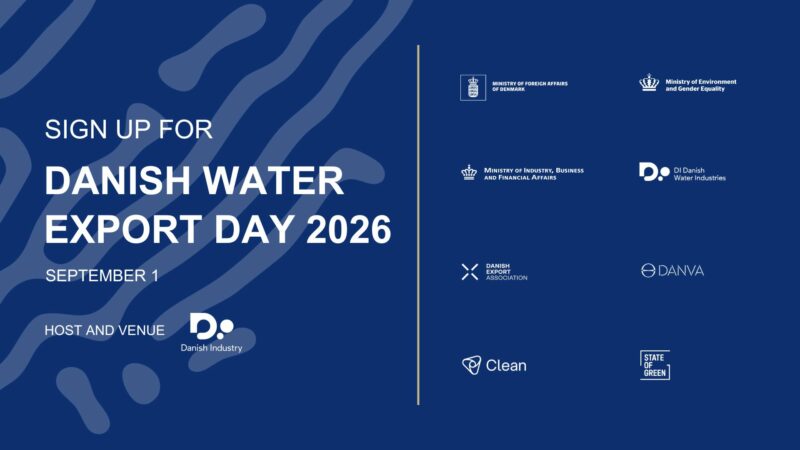
Danish Water Export Day 2026

3 June 2026
Water Export Day is being held this year on September 1st at Danish Industry, bringing together the Danish water industry with a focus on exports. Together, we will discuss how and what opportunities exist to strengthen the export of Danish water technology and know-how. The event will serve as a pl