Denmark at COP
Every year, the Denmark Pavilion is a hub of climate activities and high-level events at COP.
Learn more about Denmark at COP.
Discover Denmark at COP31News
Climate COP
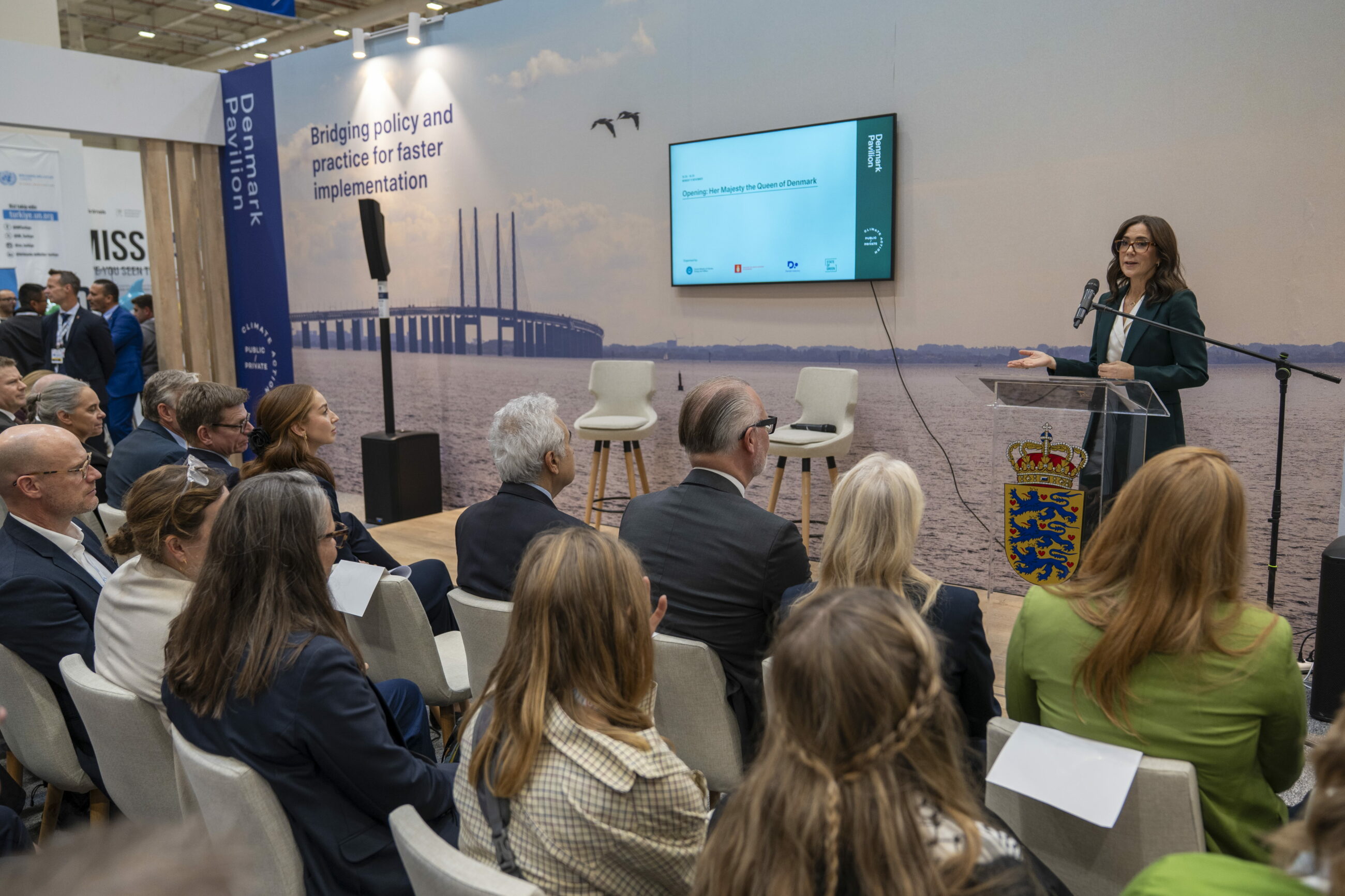
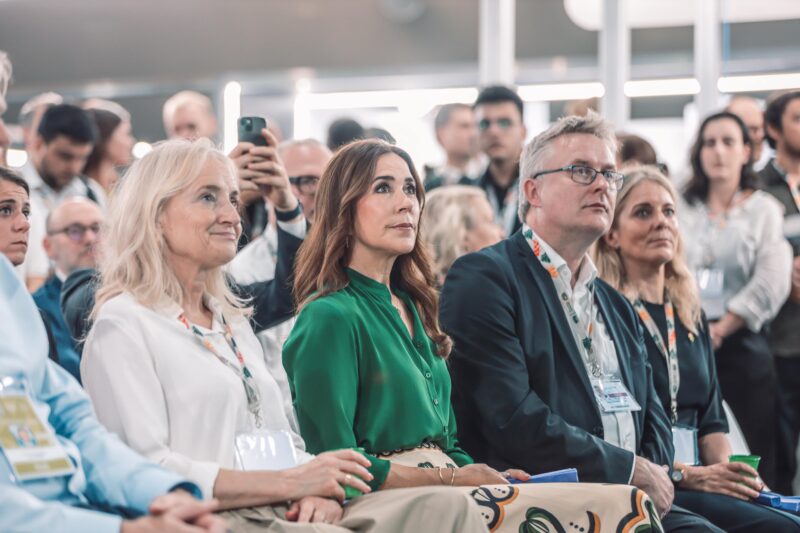
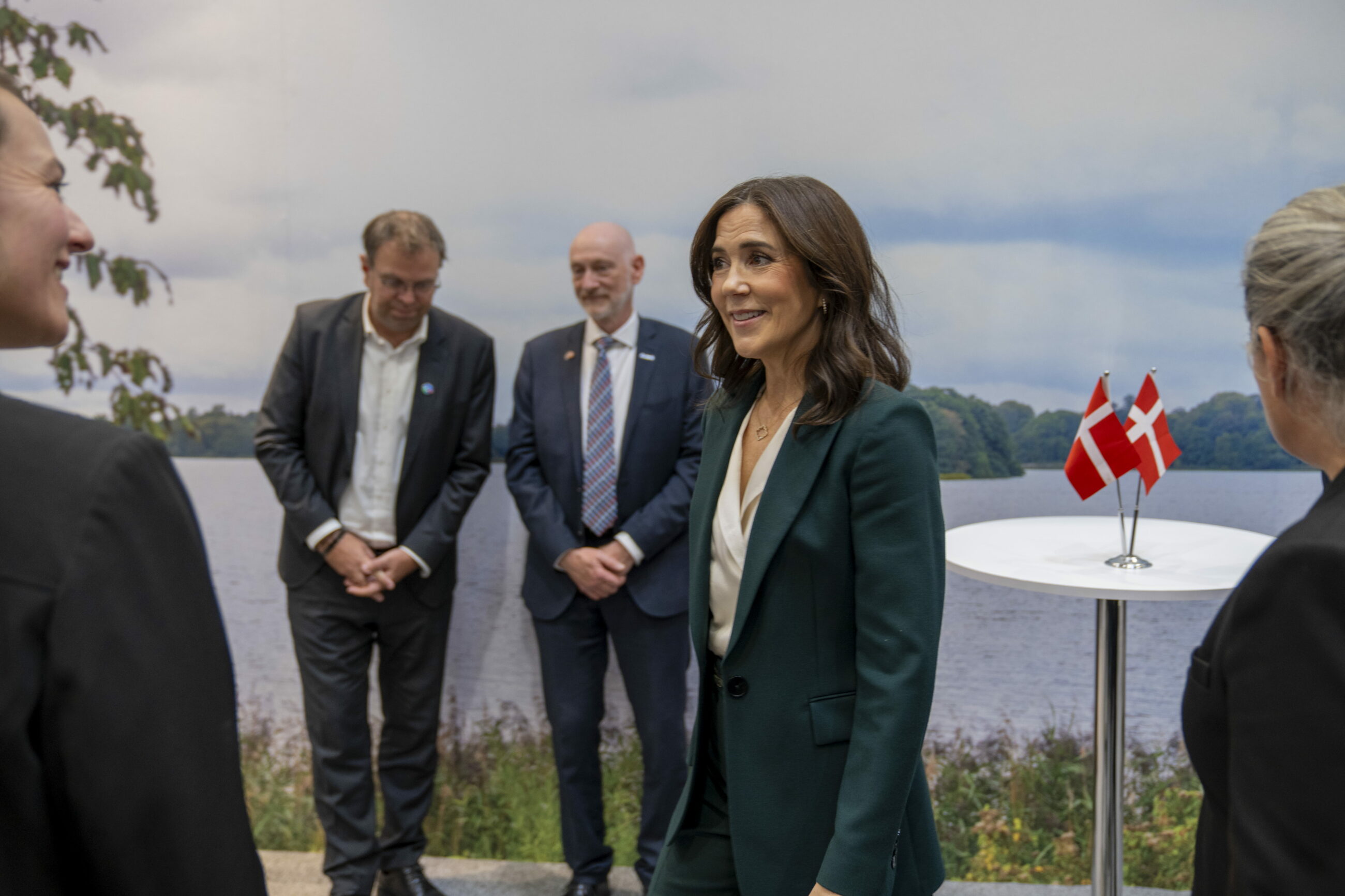
HM Queen Mary opening the Denmark Pavilion at COP31.

Every year, the Denmark Pavilion is a hub of climate activities and high-level events at COP.
Learn more about Denmark at COP.
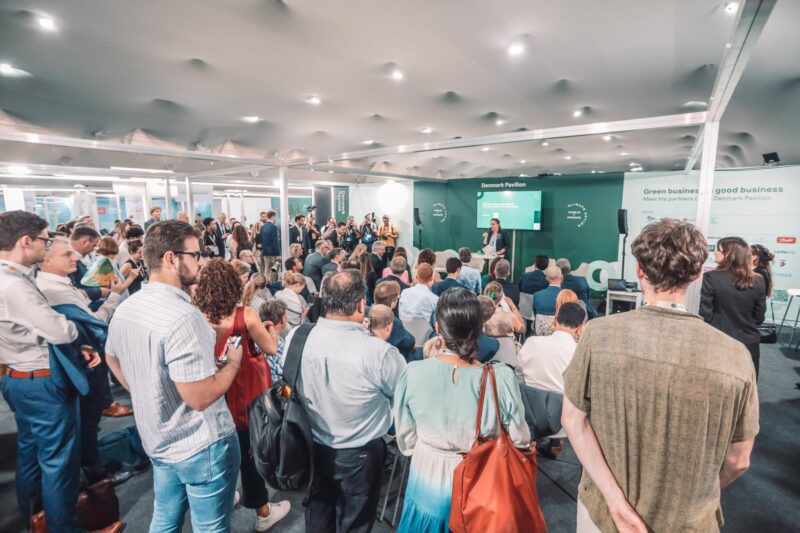
Discover Denmark at COP31After eleven days, over 40 events and contributions from more than 70 international speakers, the programme at the Denmark Pavilion at COP31 in Antalya has come to a close.
Together with more than 30 partners from government, business and civil society, we welcomed international speakers and participants to discuss everything from offshore wind and electrification to climate finance, methane and green shipping.
But beyond the packed programme, some of the most valuable exchanges happened between sessions, over coffee and in meetings that will hopefully lead to new collaborations.
State of Green was established in 2008, ahead of COP15 in Copenhagen, and has participated in every COP since. Ten years ago, five partners joined the Denmark Pavilion. This year, more than 30 came together to make it a shared platform for Danish and international climate cooperation.
Organised by the Ministry of Climate, Energy and Utilities, the Ministry of Foreign Affairs of Denmark, Danish Industry and State of Green, the pavilion also served as a home base for the Danish business delegation.
Her Majesty Queen Mary officially opened the pavilion on the first day. In her speech, she reflected on her visits to Vanuatu, Fiji and Bangladesh, reminding us that behind the statistics on climate change are people whose lives are already being affected.
Midway through the first week’s programme, partners and friends gathered for the annual Denmark reception. Here, State of Green’s Executive Director, Charlotte Gjedde, reflected on the value of COP beyond the formal negotiations:
“I and many of you in the room are not part of the negotiations, but part of the conversations outside of them. Here I see willingness. From everybody here, across sectors and borders.”
At the Denmark Pavilion, this was clear from days packed with panels and events, and from a drawer full of business cards and inquiries from around the world.



The message that kept returning throughout the programme was that many of the solutions needed to reduce emissions already exist. The challenge is putting them to work at the scale and speed required.
Electrification was another recurring theme, and it was on the agenda from the opening event. Queen Mary pointed to it as one way to lower emissions. IEA Executive Director Fatih Birol highlighted how it supports both energy security and climate goals, in a conversation with Denmark’s Minister for Climate, Energy and Utilities, Samira Nawa.
The following day, Doreen Harris, President and CEO of NYSERDA, described how cooperation between New York and Denmark is expanding into building electrification, thermal energy networks and industrial applications.
At the panel hosted by NKT, she discussed a problem many large cities share. They cannot always produce the clean power they need within city limits. The Champlain Hudson Power Express, bringing up to 1,250 MW of hydropower from Québec to New York City, is one example of how infrastructure can help bridge that gap.
And while technologies from wind and solar to biosolutions and energy efficiency are already available, scaling them requires investment, infrastructure and cooperation across sectors.
The conversation is increasingly about how to bring solutions, financing and decision-makers together to turn ambition into implementation.
From Vanuatu to Nepal, the consequences of climate change are already being felt.
Throughout the programme, the experiences and concerns shared by vulnerable countries, youth delegates and civil society served as important reminders of what is at stake and the urgency of acting.
One particularly moving moment came from Nepal’s delegation, which shared an account of the devastating floods in August. More than 1,500 people lost their lives when a glacier collapse sent water and debris rushing through the valley below. Their account was met with prolonged applause, a powerful reminder of the human consequences behind the climate discussions.
The COP process has its challenges, and not every discussion results in immediate action. But beyond the negotiations, it brings together people with different perspectives, experiences and resources who might otherwise never meet.
For State of Green, that is an important reason to be there. To share Danish experiences and solutions, but just as importantly, to listen and learn from others.
We leave Antalya with new perspectives, a long list of follow-ups and connections we hope to build on. The pavilion may have closed its doors, but many of the conversations are only just beginning.

This article is an extract from the State of Green newsletter.
Want to get stories and facts from Denmark’s green industries directly in your mailbox?
Sign up for the newsletter below.
Sign up to our newsletter