Skip to content

Perspective

Climate COP

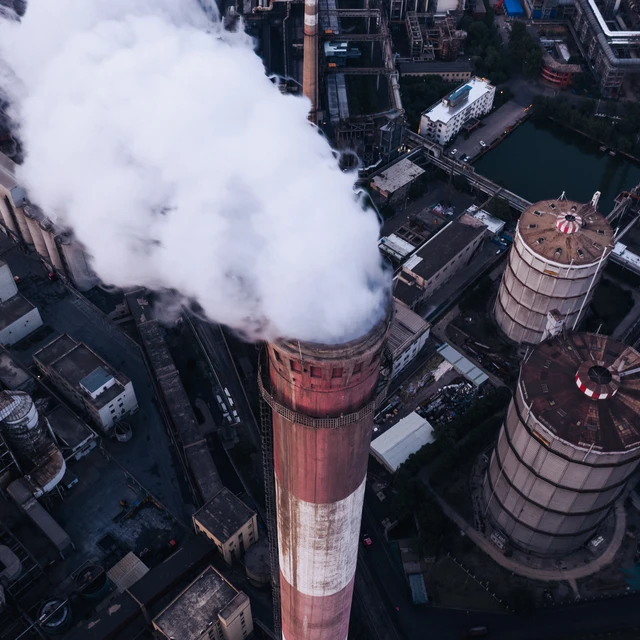
Air pollution from industry production

Carbon capture, storage and utilisation

+10

Denmark at COP30: Decarbonising the hard-to-abate industry sector

Decarbonising the industrial sector demands creative solutions and strong collaboration between the public and private sectors. As Denmark heads to COP30 in Brazil, it’s ready to demonstrate that decarbonising industries while maintaining a competitive edge is not only possible – it’s already happening.

Discover Denmark at COP30

In the month leading up to COP30 in Bélem, Brazil, we uncover some of the main themes for the partners at the Denmark Pavilion.

Learn more about the Danish efforts, ambitions and activities at COP30, and connect with future solution providers.

Discover Denmark at COP30

The decarbonisation of the hard-to-abate industry sector is essential for meeting the goals of the Paris Agreement.

The industry sector is responsible for a significant share of global energy consumption, emissions, and water use. At the same time, it faces mounting pressures from climate change, resource constraints, and shifting market demands. However, industry is also a key driver of economic growth and development. For this reason, its decarbonisation must unlock new opportunities for competitiveness and growth, paving the way for greener, more sustainable production methods.

20%

Denmark’s heaviest industrial emitters have reduced their CO2 emissions by more than 20% since 2020, in part driven by ambitious regulation on CO2 taxation.

Learn more about sustianable industries

Denmark’s push to decarbonise its industries

Denmark is committed to reducing its greenhouse gas emissions by 70% by 2030, compared to 1990 levels, and the industrial sector will be crucial to achieving this target. Through collaboration between the public and private sectors and the implementation of ambitious regulations, Denmark has created a framework that fosters both climate action and competitiveness.

A long-standing tradition of energy efficiency is central to the decarbonisation of Denmark’s industries. Since the 1970s oil crisis, Denmark has actively worked to reduce energy consumption, resulting in one of the world’s least energy-intensive industries. In today’s world of volatile energy prices and strained supply chains, energy efficiency also offers a clear business advantage.

The drive towards decarbonising Denmark’s industries is further supported by innovative solutions like carbon capture, utilisation, and storage (CCUS), as well as sector coupling. CCUS prevents carbon emissions from entering the atmosphere while repurposing carbon for climate-positive solutions such as Power-to-X, which can be used to produce green fuels. Sector coupling, on the other hand, offers a transformative approach to maximise the potential of renewable energy by integrating energy systems across sectors. This creates new levels of efficiency and resilience, leading the way toward a low-carbon, resource-efficient future.
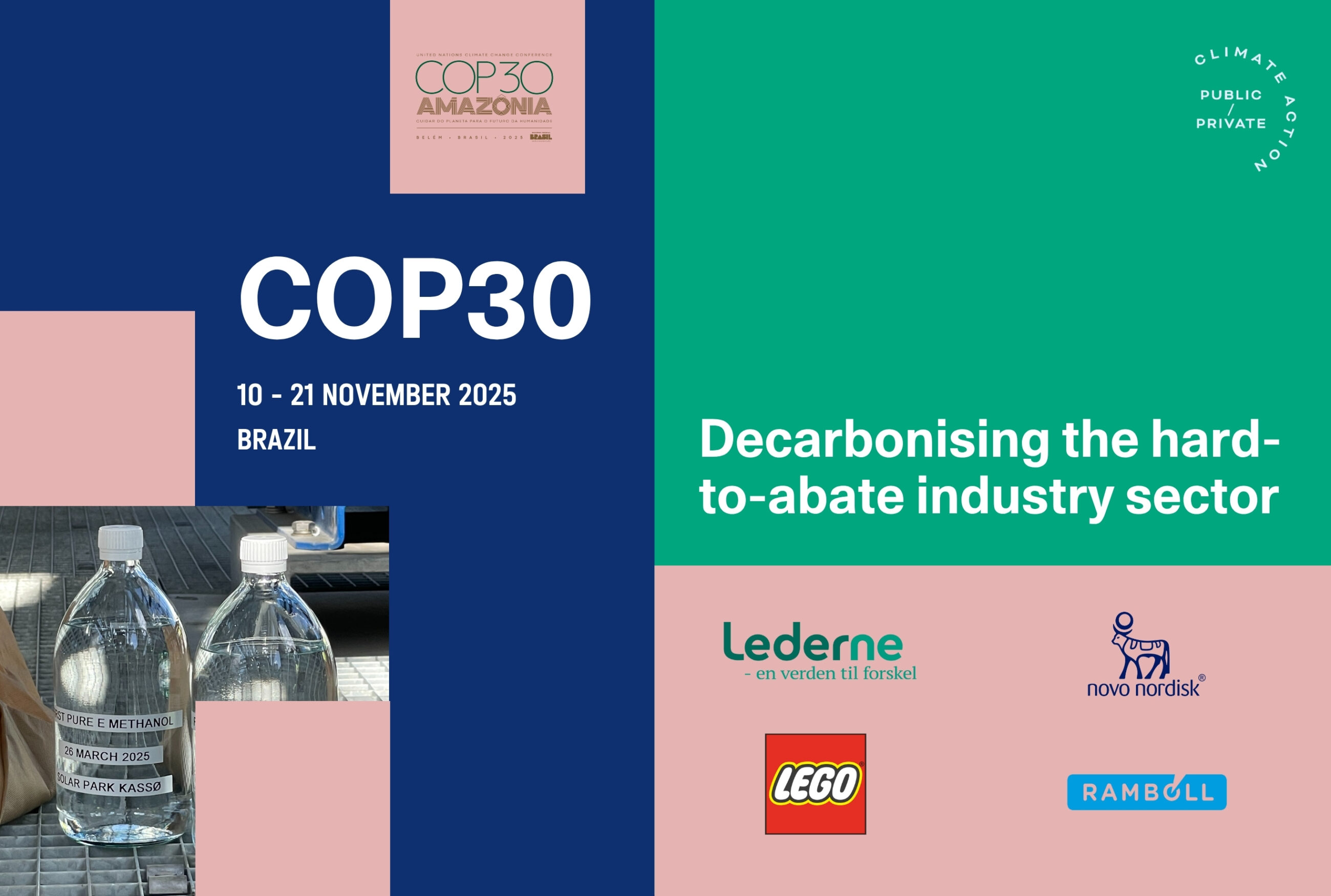
Capturing carbon

Denmark is on track to capture and store more than 2.9 million tonnes of CO2 annually, contributing to its goal of reaching net-negative emissions by 2050.

Learn more about carbon capture, utilisation and storage

Discover solutions from the Denmark Pavilion

Discover solution providers at COP30

Solution Provider

Air pollution from industry production

+68

Ramboll

30 January 2009
Ramboll is a leading international architecture, engineering, and consultancy company, owned by the Ramboll Foundation.

You should consider reading

Air pollution from industry production
Carbon capture, storage and utilisation
Circular business models
Circular value chains
Climate COP
Energy efficiency in industry
Green supply chains
Green value chains
Resource efficient production
Resource reuse and recycling
Sector coupling
Smart energy systems
Surplus heat from industry

Solution

Digitalisation

+7

Floating Offshore Wind Solution Suite

2 April 2026
A US engineering firm sought to commercialise a floating offshore wind technology, requiring a clear market strategy, product-market fit, and access to capital to enable entry into competitive global markets.

Solution

Building design

+20

Renewables Focus with Port Development

2 April 2026
A European municipality sought to define a clear vision for transforming an industrial area into a hub for renewable energy manufacturing, while aligning stakeholders including municipal staff and elected officials.