News
Biogas
Resource efficient production
Biogas paves the way for waste handling in Europe
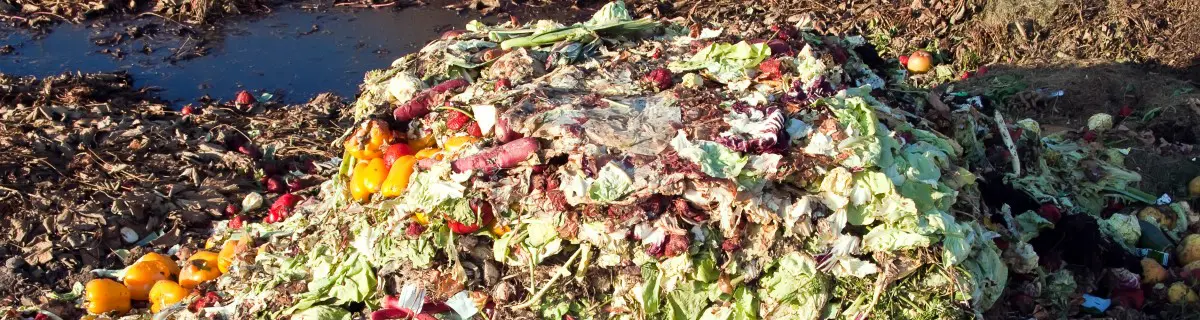
Food waste from households, supermarkets and industry should no longer end up on the landfill. The organic waste should be used for green energy production, while the nutrients in the waste should be reused as fertiliser in agriculture.
This is a trend in large parts of the world, where there is a growing wish to improve waste handling in both urban communities and businesses.
Large technological advances within biogas technology in recent years have helped pave the way for the exploitation of both energy and nutrients in food waste. Therefore, Xergi is currently involved in building biogas plants that transform food waste into energy and fertiliser.
This is the message from Ole Trudslev of Xergi, who has investigated the development on the international market for the treatment of food waste.
Clear focus area in Europe
"The global population in general is increasing, combined with a tendency for the rural population to move into the cities. This is creating some mega cities, which are experiencing a great need for the development of a sustainable handling of waste," explains Trudslev.
"In Europe, we are seeing strong developments, especially in the UK and in Sweden, and partly also in France, while a country such as Denmark is not as far ahead," he elaborates.
However, by the end of 2015, the Danish natural gas distribution companies HMN Naturgas, DONG Gas Distribution, NGF Nature Energy and E.ON will send around 76 million m3 of upgraded biogas into the natural gas grid, doubling the current production capacity of 32 million m3. And by the end of 2016, the total capacity will reach about 179 million m3. This corresponds to supplying approximately 100,000 single-family houses with heat, and will provide an annual CO2 saving of about 400,000 tonnes.
- Realted news: 21 million m3 Green Gas into Natural Gas Grid
In some places in Asia and USA as well, people have started source separation of household waste for treatment in biogas plants.
Strong focus in the industrial sector
Overall Xergi is experiencing an increasing flow of waste, which in recent years has been directed to biogas plants for treatment.
"There is first and foremost a growing recognition in industry and supermarkets that waste treatment is both desirable and worth paying for. The companies can make a business case, which is viable because it is possible to produce energy from the waste. This helps to drive this part of the market forward. But we are also seeing many municipalities that would like household waste separated at source in order to better exploit the resources," says Trudslev.
Biogas paving the way for the development
The development is supported by the fact that improvements are being made to both process technologies and biogas plants at a rapid pace.
"It is a relatively complex task to select the correct process technologies for the mix of waste that is available for the individual biogas plant. We are currently seeing a rapid improvement in these technologies. At the same time, we at Xergi have contributed both by developing more efficient biogas plants and new process technologies, so the technology developments pave the way for the potential to treat even more waste, at a reasonable cost," states Trudslev.
Xergi has already constructed three biogas plants, which treat food waste, namely Barkip in Scotland and Méta-Bio Energies and Labat in France.
- Related news: New biogas plant makes France more self-sufficient
Xergi is currently in the process of building two plants, Willen Biogas near London and Scandinavian Biogas Sofielund near Stockholm.
"I am in no doubt that this is just the beginning. We will be seeing many more waste-based biogas plants over the coming years," maintains Ole Trudslev.
Source: Xergi
You should consider reading
Solution
Bio-based circular solutions
+5
Carbon Capture at small-scale biogas plants
19 November 2026
Solution
Bio-based circular solutions
+8