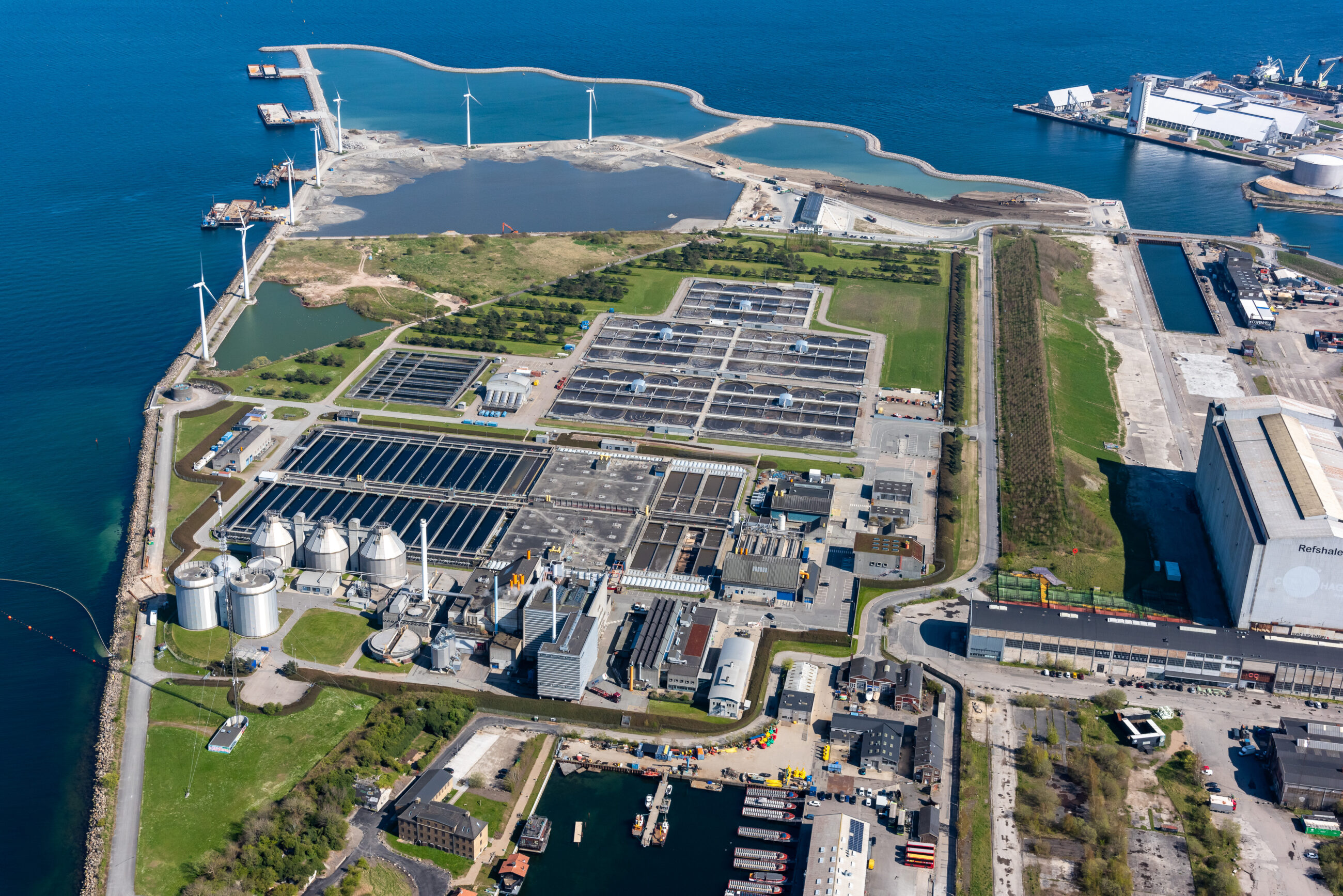
Copenhagen has reached a milestone in its efforts to make better use of local resources. The Danish capital can now meet its entire demand for city gas with biogas produced from wastewater and food waste collected in the city.
Developed by Greater Copenhagen Utility HOFOR in collaboration with wastewater utility BIOFOS, the solution connects waste management, wastewater treatment and energy production in a circular system. It marks the culmination of more than 15 years of work and makes Copenhagen the first city in the world to supply its entire city gas network with biogas from its own waste streams, according to HOFOR.
From everyday waste to local energy
The concept builds on resources generated in everyday life. Wastewater from toilets and food waste collected from households are processed to produce biogas, which is then used in Copenhagen’s city gas network.
The gas supplies more than 200,000 customers, including households, restaurants and businesses. By turning local waste streams into a source of energy, the solution creates value from resources that would otherwise require treatment or disposal.
The approach illustrates how infrastructure systems that are often managed separately can be connected to make better use of available resources. Rather than treating wastewater, organic waste and energy production as distinct challenges, the solution links them in a shared system.
Strengthening security of supply through homegrown energy
Beyond resource efficiency, local biogas production can also contribute to energy security. By meeting the city gas network’s demand with locally produced biogas, Copenhagen reduces its reliance on fossil natural gas and exposure to international gas markets.
This is particularly relevant at a time when energy security and resilient supply systems are high on the agenda in many countries. Homegrown energy cannot remove every dependency, but making better use of local resources can help strengthen security of supply and reduce vulnerability to external market developments.
For Copenhagen, the transition also builds on earlier efforts to transform its gas supply and reduce the climate impact of the city’s energy infrastructure.
A contribution to Copenhagen’s climate ambitions
The initiative supports Copenhagen’s wider climate efforts. Under the city’s Climate Strategy 2035, Copenhagen aims to become climate positive within its geographical boundaries by 2035, meaning that it will absorb more CO₂ than it emits. The strategy also sets targets for reducing the city’s global climate footprint and emissions associated with municipal procurement.
The locally produced biogas is one example of how changes to essential urban infrastructure can contribute to broader climate and resource objectives.
For other cities, Copenhagen’s experience offers a practical example of how locally available resources can become part of a more circular energy system. The approach will depend on local infrastructure, waste streams and energy needs, but it highlights an opportunity worth exploring: connecting existing systems to create new value from resources already available within a city.