Skip to content

Case

Bio-based circular solutions

Biogas

Carbon capture, storage and utilisation

+5

The electric farm that harvests energy and captures CO₂

17 March 2026

Solution provider

ProjectZero

ProjectZero is Sønderborg’s cross-sector climate partnership, uniting citizens, businesses, utilities and the municipality to achieve a CO₂-neutral energy system by 2029 - and to serve as a living blueprint for cities around the world.

More from ProjectZero

Want to see this solution first hand?

Add the case to your visit request and let us know that you are interested in visiting Denmark

Challenge

Agriculture accounts for a significant share of global greenhouse gas emissions. Reducing emissions while maintaining food production is therefore a major challenge for the sector.

At the same time, new policies are accelerating the need for change. Denmark will introduce a CO₂ tax on agriculture from 2030, increasing the pressure on farmers to reduce emissions and adopt more sustainable production methods.

This calls for new solutions that combine energy production, electrification and improved resource efficiency in modern farming.

:

Video of the case

Let Bjarne show you around his innovative farm.

Solution

At Gråsten Agricultural College in Southern Denmark, a working farm functions as a living laboratory for the green transition in agriculture.

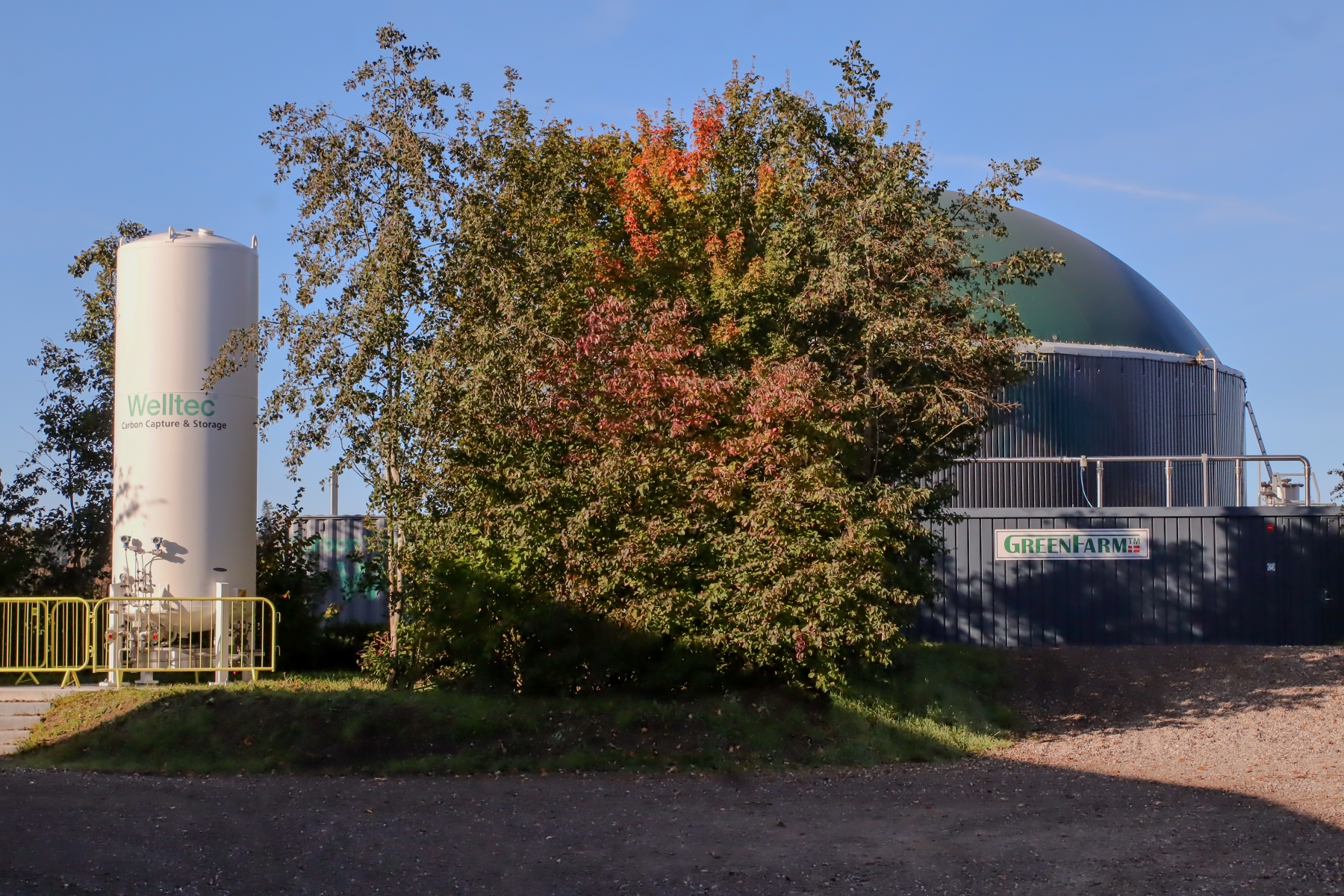
The farm integrates food production, renewable energy generation and education in a circular system. Solar panels on the roofs generate electricity that is stored in a battery system, while manure from cows and pigs is converted into electricity in the school’s biogas plant.

The biogas production also generates excess heat that is used to warm the school buildings. In addition, the farm has introduced small-scale carbon capture, storing CO₂ from biogas combustion as part of a research project exploring the potential for carbon capture in agriculture.

Electrification is another key element. Electric mini-loaders, feeding systems and autonomous robots have replaced many diesel-powered machines, reducing both fuel consumption and emissions.

Result

The integrated system significantly improves energy efficiency and reduces fossil fuel use on the farm.

Solar panels and the biogas plant together supply around 60 % of the school’s electricity consumption, supported by a 215 kW battery that stores energy and ensures flexible use.

Excess heat from the biogas plant already covers 16 % of the farm’s heating needs, reducing the need for traditional fuels. The school is planning to replace its remaining straw boiler with electric heat pumps in the coming years.

Electrification also delivers direct savings. The electric feeding system alone replaces tractor work equivalent to 40 litres of diesel per day.

Growing green farmers of tomorrow

Students are actively involved in the school’s energy production and gain hands-on experience with the biogas plant and other green initiatives on the farm. This way, they learn how to use local resources efficiently and integrate agricultural processes into a cohesive system.