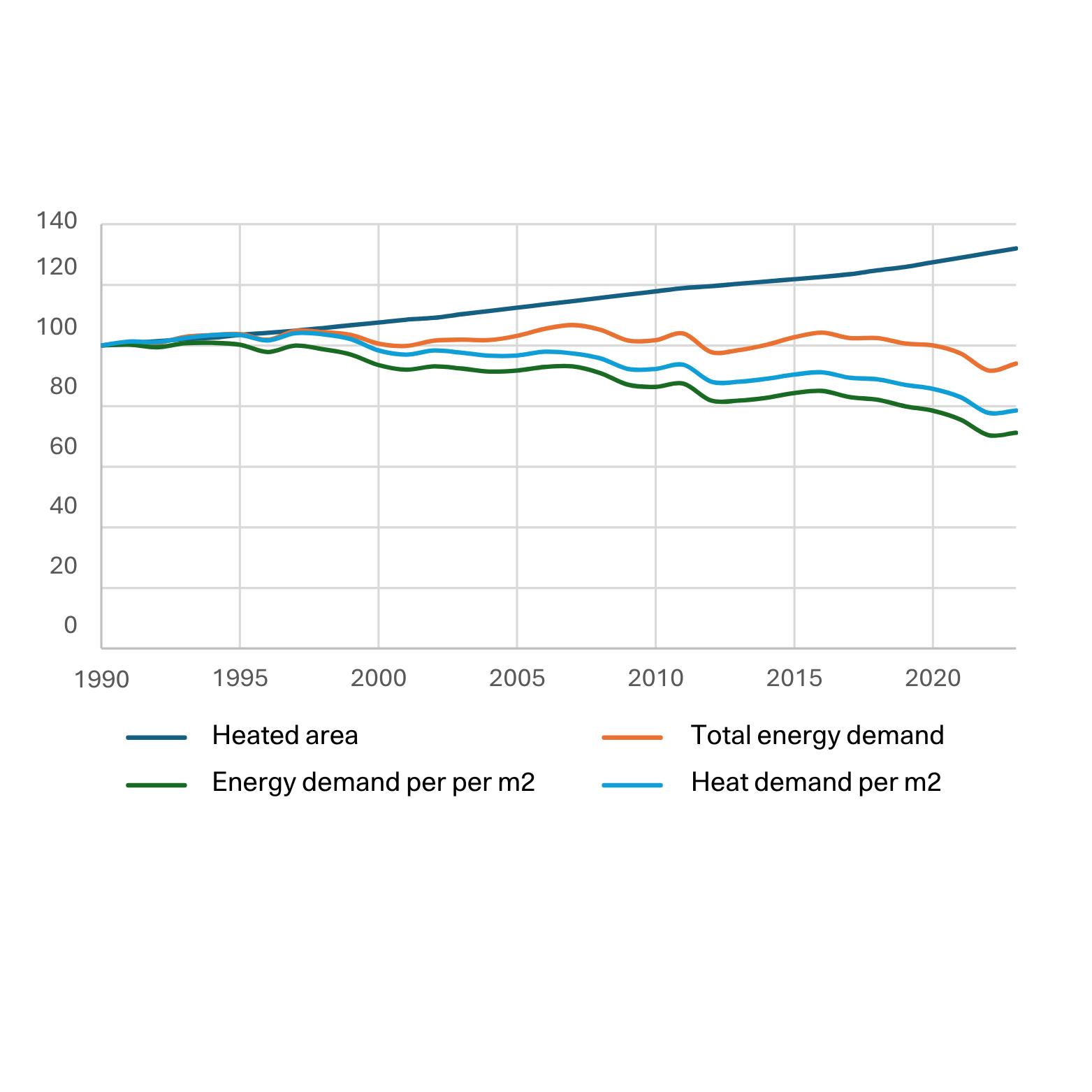
From 1990-2023, the energy consumption for heating of residential per m2 in Denmark was reduced by more than 20 percent and energy consumption per m2 was reduced by nearly 30 percent. This was achieved in large part through the strict energy efficiency requirements for new buildings and major renovations in the Danish Building Code. Moreover, despite an increased total building area, the total energy consumption of state-owned buildings was reduced by 14 percent from 2006-2020. The transition to renewable energy production has also visibly reduced CO2 emissions in these buildings. For example, CO2 emissions per kWh electricity has been reduced from 929 in 1990 to 96 grams CO2 in 2023.
Targeting energy efficiency
The EU Energy Renovation Wave and Danish targets for energy efficiency and CO2 reductions will accelerate improvements in the energy efficiency of buildings. The EU goal is to reduce greenhouse gas emissions by 55 percent in 2030 and achieve climate neutrality in 2050. The EU Commission also proposes to raise targets for improvements in energy efficiencies across all sectors. The Danish goal for CO2 reductions is 70 percent in 2030 and climate neutrality in 2050. In the coming years, a crucial focus will be on unlocking the remaining energy saving potential in Danish buildings.
A resourceful industry
The Danish construction industry possess much of the necessary skill and knowledge to support energy renovation in buildings both in and outside of Denmark. More than 40 percent of the industry’s production in Denmark targets international markets. The activity in the construction sector is currently at a high level: the annual turnover for renovation of existing buildings accounts for nearly 40 percent of the sector’s total activity. Crucially, the sector works closely with energy authorities on the design and implementation of requirements and other incentives for energy efficiency.