Currently, traditional wastewater plants focus on removing the phosphorous from the wastewater rather than recovering it. However, back in 2013, Aarhus Vand, the local water utility in Denmark’s second largest city, Aarhus, began experimenting with extracting phosphorous from wastewater by constructing a pilot-scale demonstration plant at Åby wastewater treatment facility. The phosphorous recovery plant converts the waste product struvite, which is found in the sludge from anaerobic digestion, into a phosphorous product named PhosphorCare, which is sold as fertiliser that can be used on crops instead of manure.
The success of the Åby pilot demonstration project led Aarhus Vand and the French company Suez to initiate a partnership to build a phosphorous recovery plant at Aarhus Vand’s largest wastewater treatment facilities, Marselisborg WWTP. Innovative wastewater treatment experts, entrepreneurs, producers, suppliers, and research institutions were invited to develop solutions to some of the technical challenges of the project.
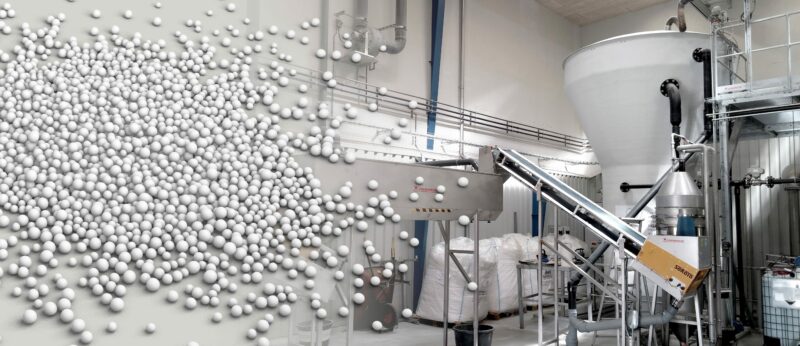
The resulting solution and recovery plant employs a fluidised bed technology to extract phosphorous from the wastewater, which is then is processed further into a struvite fertiliser product that can be sold commercially to be used on crops. Utilising this method allows for up to 20-30 % of the phosphorous present in the incoming wastewater to be extracted.
The commercially approved product is known as PhosphorCare™. The larger recovey plant located at Maselisborg WWTP was officially opened in 2019, and another smaller plant is operating at the Herning Vand utility.