Solution provider
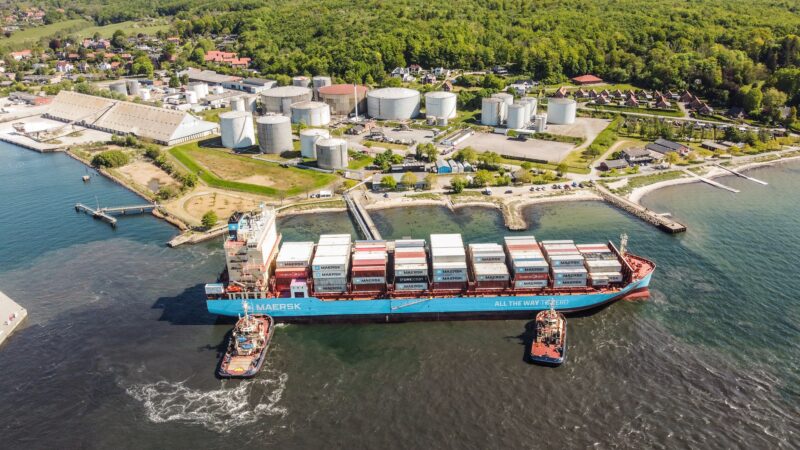
Maersk targets net-zero greenhouse gas emissions by 2040 across the full business and is investing in dual-fuel methanol vessels, new technologies and low-GHG fuels.
Case
E-fuels
Climate COP
Green Shipping
Maersk targets net-zero greenhouse gas emissions by 2040 across the full business and is investing in dual-fuel methanol vessels, new technologies and low-GHG fuels.
Add the case to your visit request and let us know that you are interested in visiting Denmark
Photo credit: Maersk
The transition to green fuels requires scalable supply, robust regulation and strong partnerships across the value chain. Bridging the cost gap between fossil fuels and low-emission alternatives is critical to accelerate uptake and demands firm regulatory support at global, regional and national levels. For Maersk, securing reliable access to reduced GHG emissions fuels is essential to operate our growing fleet of dual fuel vessels and to deliver on customer demand for green logistics solutions. At the same time, we must continue improving efficiency across our network to stay on track with our SBTi-validated 2030 and 2040 targets.
To match our fleet investments with actual emission reductions, Maersk is sourcing e-methanol from the Kassø facility in Aabenraa, Denmark. Developed by European Energy in partnership with Mitsui & Co., the plant produces around 42,000 tonnes of e-methanol annually. Located next to Northern Europe’s largest solar park, it combines renewable electricity, green hydrogen and biogenic CO₂ to deliver e-methanol with up to a 97% lower carbon footprint than fossil methanol. While modest in scale, Kassø represents one of the first commercial sources of certified e-methanol and an important step in building the supply chain for green fuels.

Deliveries from Kassø mark an important milestone in Maersk’s global efforts to source alternative fuels for our vessels. Access to commercial e-methanol volumes supports the launch of green corridors, strengthens our ECO Delivery product for customers, and demonstrates the operational readiness of methanol as a viable low-emission fuel for shipping. It is a first step – and we will continue to expand fuel sourcing as the future of shipping must include multiple fuel types operating alongside each other, with methanol playing a key role in the industry’s net-zero ambitions.

This case is part of the Denmark Pavillion at COP30 in Bélem, Brazil. Discover more projects, activities and connect with solution providers at the official Danish representation at the UN Climate Change Conference 2025.
Discover Denmark at COP30