Solution provider

Case
Power-to-x
Climate COP
Energy storage
+5
Add the case to your visit request and let us know that you are interested in visiting Denmark
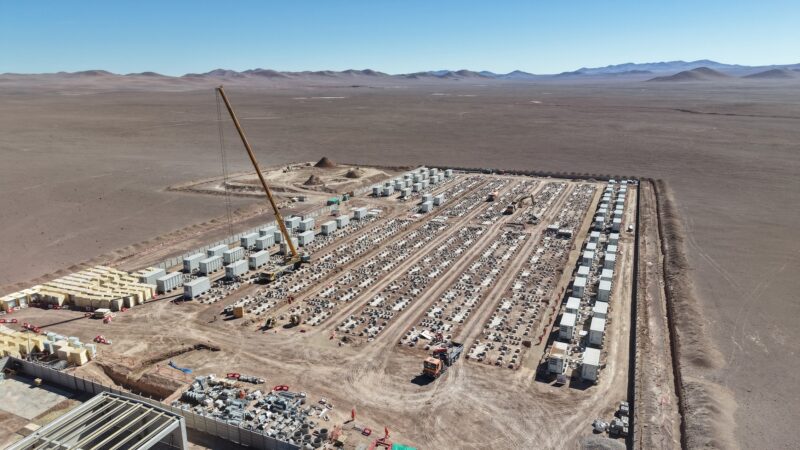
Photo credit: Copenhagen Infrastructure Partners
In 2024, 83 percent of new global power capacity came from renewable energy sources. While this signals a decisive move away from fossil fuels, it also reveals systemic challenges in integrating intermittent generation into grids not designed for flexibility.
One of the most pressing issues is curtailment – the reduction of renewable output due to grid constraints or oversupply. Curtailment leads to revenue loss for producers, increased risk for investors, operational complexity for system operators, and higher costs for consumers.
In Northern Chile, solar generation is rapidly increasing, driven by the region’s world-leading solar irradiance. However, daytime oversupply and limited grid flexibility have led to severe economic curtailment. At the same time, industrial energy demand, particularly from the expanding mining sector, is rising significantly, increasing pressure on the region’s electricity infrastructure.
To address these challenges, a large-scale battery energy storage system is under development in Northern Chile.
The project, named ARENA, will have an interconnection capacity of 220 MW and an energy storage capacity of 1,100 MWh—equivalent to five hours of full-power supply.
The standalone system is designed to absorb excess solar energy during periods of low demand and discharge it when needed, aligning generation with consumption.
By enhancing grid flexibility and reducing curtailment, the battery system will help ensure that renewable generation is used more efficiently and reliably. It is scheduled to begin operations in the first half of 2026.
The ARENA storage project is expected to significantly reduce economic curtailment in Northern Chile by enabling better integration of solar energy. This will allow renewable producers to deliver more clean electricity to the grid while reducing reliance on fossil-based backup systems.
The battery system will also support grid stability in a region facing growing industrial demand, particularly from mining. As such, the project contributes both to decarbonisation goals and to securing reliable energy for long-term economic growth.

This case is part of the Denmark Pavillion at COP30 in Bélem, Brazil. Discover more projects, activities and connect with solution providers at the official Danish representation at the UN Climate Change Conference 2025.
Discover Denmark at COP30