Solution provider

Case
Grid and infrastructure
Add the case to your visit request and let us know that you are interested in visiting Denmark
The Champlain Hudson Power Express will facilitate transmission of sustainable hydropower from Quebec in Canada to New York City in the US. The 1,250 MWs transmission line will become a substantial contributor to the City of New York’s ambitions of transforming its power generation and consumption to come predominantly from renewable sources. High voltage on- and offshore cables from NKT are key enablers for the project realization.
New York State has a clear goal for transitioning from fossil fuels to clean energy. By 2030, New York City aims to be powered by 70 percent renewable energy. However, since the renewable energy source is not readily available nearby, hydroelectric power must be transported all the way from Canada to consumers in New York City.
The Champlain Hudson Power Express is one of the largest infrastructure projects in the U.S., and the hydropower from Canada will provide 20% of New York City’s power.
Hydro power is a caseload replacement for gas and will support the development of intermittent renewables like on and offshore wind and solar. The route will utilize waterways, existing roads, and railroad rights of way to remain out of sight and avoid environmentally sensitive areas.
NKT is responsible for the engineering, manufacturing, and installation of the high-voltage 400kV DC (direct current) Champlain Hudson Power Express transmission line in the US.
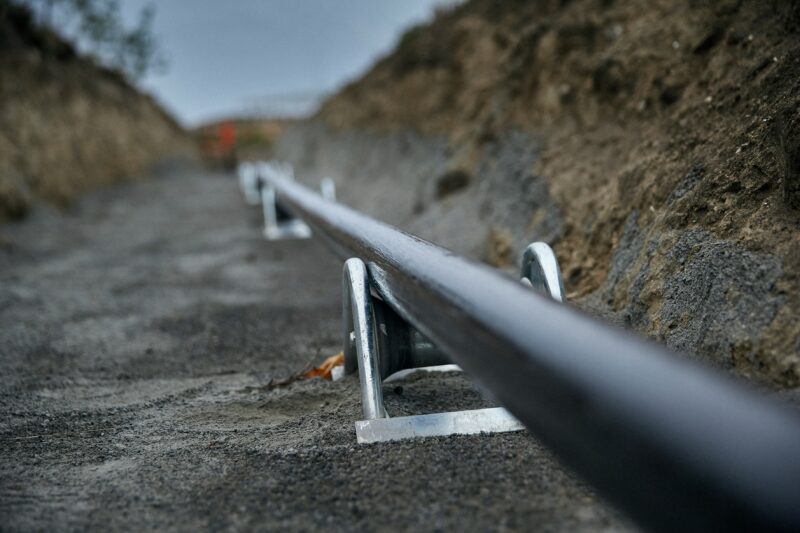
The transportation line runs around 550 km from the U.S.- Canadian border, south through Lake Champlain, along and under the Hudson River, and eventually ending at a converter station in Queens. The route will be 60% in waterways and 40% buried underground. The route has been carefully designed to minimize its impact on the environment. Burying the line keeps it out of sight and also protects it from extreme weather.
Additionally, NKT is supporting Hydro Quebec by constructing and installing an approximately 58km underwater and underground transmission line from the substation in Quebec to an interconnection point at the Canadian – U.S. border.
The project uses high-voltage direct current (HVDC) energy transmission cable technology that transmits power over long distances more efficiently than alternating current (AC) transmission. At the converter station in Queens, the HVDC power will be converted to AC power so it can be brought into New York City’s energy grid for local distribution.
High-capacity power lines are the backbone of the energy transition. The establishment of the Champlain Hudson Power Express is essential for enabling New York to achieve the goal of energy consumption predominantly from renewable sources.

This case is part of the Denmark Pavillion at COP30 in Bélem, Brazil. Discover more projects, activities and connect with solution providers at the official Danish representation at the UN Climate Change Conference 2025.
Discover Denmark at COP30