Skip to content

Case

Buildings

Building design

Building materials

+1

A second life for a landmark: Sustainable transformation of the University of Auckland’s social sciences building

27 February 2026

Solution provider

WindowMaster

WindowMaster develops, manufactures, and distributes facade automation for natural ventilation and smoke ventilation systems. Since 1990, our intelligent indoor climate solutions have improved indoor air quality and reduced energy consumption, ensuring healthy, high-performing buildings that support occupant wellbeing and safety.

More from WindowMaster

Want to see this solution first hand?

Add the case to your visit request and let us know that you are interested in visiting Denmark

Photo credit: WindowMaster

Challenge

The University of Auckland faced a complex challenge when planning the modernisation of its 50-year-old Social Sciences Building. As part of a broader commitment to sustainability, the University needed to upgrade the building to meet contemporary environmental and safety standards—without resorting to a resource-intensive demolition and new construction. Reducing carbon emissions, minimising waste, and safeguarding occupant wellbeing in a seismically active region were all key considerations in the design brief.

Solution

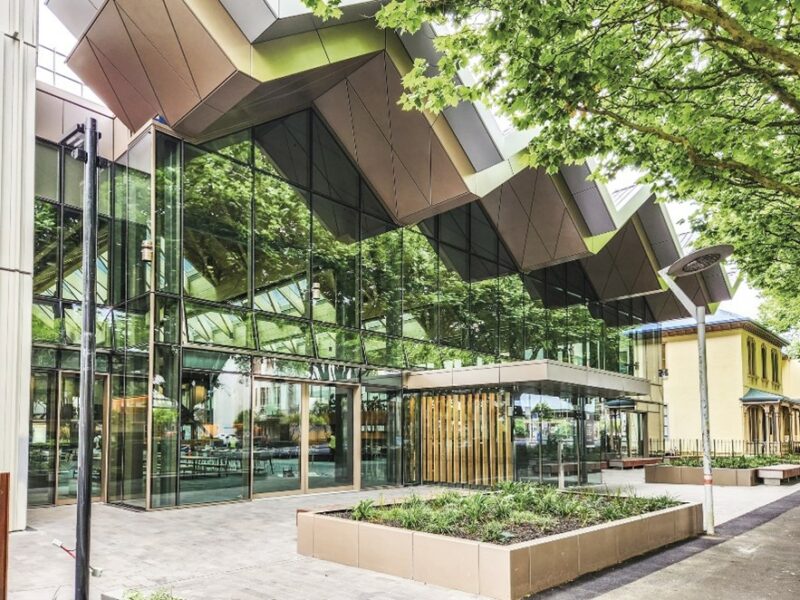
Rather than demolishing and rebuilding, the University chose to retain the existing structural framework of the building, significantly reducing construction waste and embodied carbon. This decision enabled the project to achieve a 6 Green Star Design rating from the New Zealand Green Building Council, placing the building in the ‘world leadership’ category for sustainability.

The refurbishment combined several environmental and safety features that address both operational efficiency and occupant wellbeing. High-performance solar glazing was installed to improve the building’s thermal performance while also allowing natural light to penetrate the interior. Low-emission paints were used to enhance indoor air quality, contributing to a healthier working environment for building users.

Water conservation was addressed through the installation of a rainwater harvesting system, which has contributed to a 75% reduction in water use compared to buildings of a similar scale. Renewable energy is generated on-site, supporting the University’s broader climate goals and reducing reliance on fossil-based energy sources.

To ensure the building’s long-term resilience, a lightweight curtain wall was added to enhance seismic safety. Internally, flexible and multi-use spaces were designed to support evolving academic needs, while timber partitioning was used to create a natural, calming atmosphere that aligns with the University’s design ethos.

The project also incorporated a full life cycle assessment, which revealed that the total emissions associated with the refurbished building were 60% lower than those of a comparable new build—underscoring the environmental benefits of a reuse-focused strategy.

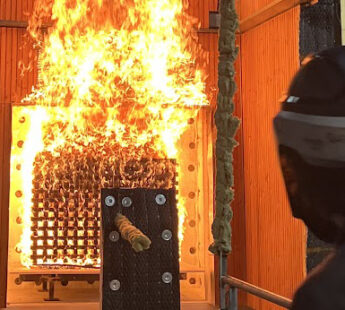
Fire safety and occupant protection were also key priorities. Danish company WindowMaster provided the building’s smoke and natural ventilation systems. Their FlexiSmoke™ 60A modular control panel allows for the management of multiple smoke zones and integrates seamlessly with the building’s ventilation strategy. For smaller zones, CompactSmoke™ panels ensure precise smoke control without requiring major alterations to the system.

WindowMaster’s chain actuators play a central role in enabling automated window opening for both daily ventilation and emergency smoke extraction. Larger windows are operated by the 600N 1A actuator, while smaller openings are supported by the 300N version. Together, these systems ensure rapid clearance of smoke and hot gases during emergencies, maintaining clear escape routes and enhancing evacuation safety.

Result

Through a comprehensive refurbishment strategy, the University of Auckland has extended the life of a legacy structure while significantly reducing its environmental footprint. The decision to reuse the original building framework led to a 60% reduction in lifecycle emissions compared to a new building. The incorporation of rainwater harvesting and efficient systems has resulted in 75% lower water consumption, while on-site renewable energy generation supports carbon neutrality goals.

Occupant comfort has been improved through natural ventilation and low-emission materials, while fire safety has been enhanced with intelligent smoke extraction systems that ensure clear and safe evacuation paths in the event of an emergency.

The Social Sciences Building now serves as a model for sustainable renovation in the education sector, showing how thoughtful design and technology integration can transform older buildings into safe, low-carbon environments that are fit for the future.

Denmark and Australia royal visit

Australia & Denmark: A partnership for a resilient tomorrow

Ramboll is part of the official state visit to Australia led by the Ministry of Foreign Affairs of Denmark.

Explore partnerships, trade and alliances and connect with partners from Denmark’s Official Visit to Australia 2026.

Discover the royal visit to Australia