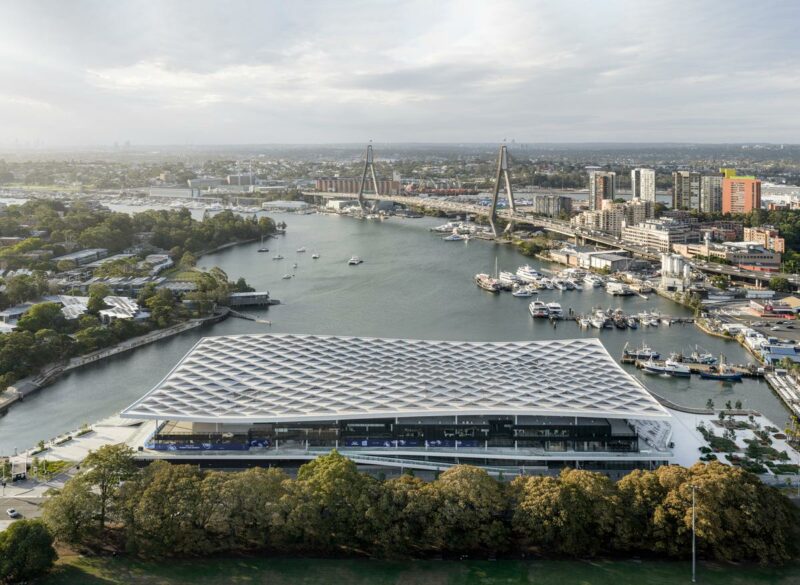
Sustainability is embedded throughout the design of the new Sydney Fish Market as an integral part of the form, not as add-on features. Every element performs multiple functions, delivering both environmental performance and an exceptional visitor experience.
The design achieves a 50% reduction in potable water usage through an integrated roof rainwater collection system and an on-site mechanical filtration system.
The roof’s south-facing cassettes, which allow indirect daylight into the market hall, reduce artificial lighting needs by 15%; seamlessly integrated solar panels generate 5% of the market’s energy without compromising architectural expression. Internally, the public circulation axis uses passive conditioning, such as canopy shading, natural ventilation and indirect daylight for the upper ground level.
These zones’ thermal environments create comfortable microclimates with minimal energy use. In addition, energy systems include absorption chillers that convert excess refrigeration heat into cooling, and the strategic use of leftover ice to pre-cool air for refrigerated areas. From the roof canopy’s design to the mechanical strategies, a 35% reduction in energy use is projected.
Beneath the upper ground, the public market hall forms the ground level, the industrial backbone of the new SFM operations, operating efficiently within its own climate-controlled environment.
The ground floor accommodates the essential wholesale infrastructure: delivery docks serving both land and sea, refrigerated processing areas, wholesale coolers and freezers, and a 14°C operations floor that utilises triple-glazed façade panels for visibility, and the heart of the operations: the auction hall.
This approach allows the retail floors above to maintain their open, naturally ventilated character while ensuring the efficiency and performance required of a high-volume industrial facility are maintained.