News
Resource efficient production
Waste management
New Report: Danes Recycle More Waste
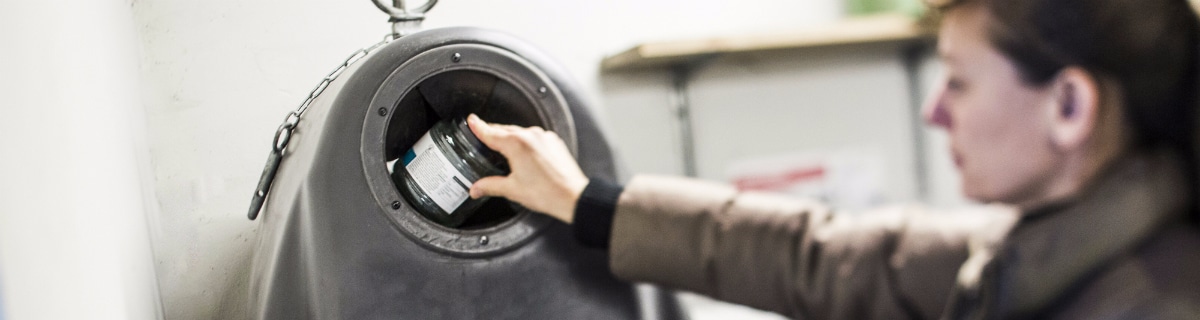
Denmark is well on the way to reaching the national Resource Plan's target of recycling 50% of household waste in 2022. Waste recycling has increased from 27% in 2013 to 33% in 2015, comprising of the seven waste materials included in the national plan. This is evident from the Danish Environmental Agency’s newly published waste statistics with figures from 2015.
The total recycling in Denmark has grown from 67% in 2013 to 69% in 2015. This pleases the Danish Minister of Environment & Food, Esben Lunde Larsen:
- I am engaged in getting the maximum value out of our resources, as it benefits both the environment and the economy. A more circular economy is part of the basis for future growth and prosperity, which the Danish government has also emphasised in its 2025-plan. Increased and more efficient recycling is an important part of the circular economy and fortunately, we are on the right track, says the Minister.
We need to move forward
Nevertheless, there is still room for improvement according to Esben Lunde Larsen:
- We must go much further in order to reach the full potential of a circular economy. Which is why, we have to recycle even more both as citizens and as businesses. However, we must also reconsider the way we design, produce and consume. It is an extensive process which is why, the Danish government has established an Advisory Board for Circular Economy, which has just submitted their recommendations to the Danish government on how to strengthen the transformation to a more circular economy in Denmark, says Esben Lunde Larsen.
Facts: Main Results in the Waste Statistics 2015
- Denmark’s recycling has increased from 67% to 69% during the period between 2013 and 2015. In addition, in the same period incineration has decreased by 2 percentage points.
- Recycling of household waste has increased from 40% in 2013 to 46% in 2015.
- For the seven waste materials (organic waste, paper, cardboard, glass, metal, plastic and wood waste), recycling has increased from 27 % in 2013 to 33 % in 2015. These waste materials are included in the Resource Plan’s target for the recycling of 50% of all household waste in 2022.
- In the total incineration at Danish incineration plants, the import of waste for incineration has increased from 5% in 2013 to 11% in 2015
- Simultaneously, the amount of construction waste has also increased by 14 percentage points.
- Download white paper: "Circular Economy: Denmark as a circular economy solution hub"
You should consider reading
Solution
Circular business models
+15
ExoMare
5 January 2026

Solution
Bio-based circular solutions
+13