News
Resource efficient production
Waste management
Recycling is a hit with the business community
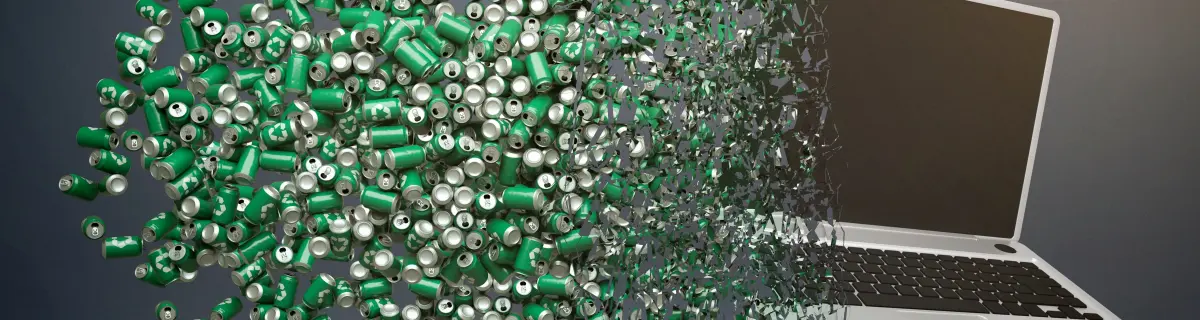
It almost sounds too good to be true: future-proof your business and help the environment.
But this is the basic idea in what is one of the hottest topics in the environmental debate and something many businesses have thrown themselves into: the circular economy.
In brief, the circular economy means that businesses reuse their waste in different ways or sell it on to others who are able to utilise it. Carlsberg has decided to develop a 100% degradable fibre bottle which can be reused as cardboard and which – if it should happen to end up in the countryside – will not harm the environment.
- Participate on a State of Green Waste & Resources Tour
Packaging accounts for almost 50% of the beer giant’s costs so if it wants to be able to continue to offer beer at a reasonable price around the world, the company has to keep costs down.
“When we look at how to future-proof our business, we have to take into account the battle for resources and the environment. We can do this by looking at how best to reuse our materials,” says Carlsberg’s Sustainability Director Simon Boas Hoffmeyer who spoke at a conference co-hosted by the Confederation of Danish Industry at the Black Diamond in Copenhagen on Tuesday.
- Related news: Each brick saves 500g CO2
The construction industry is also focusing on recycling. For example, concrete elements can be reused when a building is demolished. This is a method called ‘design for separation’.
“Firstly, the construction industry uses a large part of the world’s resources. Secondly, seen from a business point of view, we avoid having to pay a high price for having the concrete crushed and instead use the elements as they are in new projects,” explains Sales Executive John Sommer from MT Højgaard.
EU kick-starts development
The business community can be made to act as role model for the rest of Europe. According to Maltese Karmenu Vella, member of the European Commission for the Environment, Maritime Affairs and Fisheries, this is precisely the right strategy if Europe is to be competitive in times when resources are scarce.
- Solution: From waste to insulation
“Growth and the environment are not diametrically opposed. On the contrary, they are each other’s prerequisites and as legislators we have to help to ensure that businesses see that it makes commercial sense to reuse waste,” he explained and referred to the EU’s action plan in this area which will be launching in December.
The Confederation of Danish Industry has focused on the circular economy in its latest environmental policy.
Source: The Confederation of Danish Industry
You should consider reading
Solution
Circular business models
+15