Next stop: Green business
“Next stop: Green business” is a miniseries within the Sound of Green podcast universe, where we explore Danish perspectives on the challenges of the global green transition.
Discover the podcastPerspective
Green value chains
Digitalisation
Energy efficiency in industry
+2
“Don’t hesitate to go through this journey. You will not regret it. And when you climb this mountain, you will feel so proud about yourself — because you will have rediscovered how we can do manufacturing today in 2025.”
Corentin Neuville, Plant Manager, Schneider Electric, Ringsted
In Denmark, energy-efficient manufacturing is more than just a goal — it’s a reality. At Schneider Electric’s CO₂-neutral plant in Ringsted, sustainability is embedded in every facet of production, from lighting systems to waste management. As one of the world’s most sustainable companies, Schneider Electric has redefined what it means to run a low-emission, high-efficiency factory.
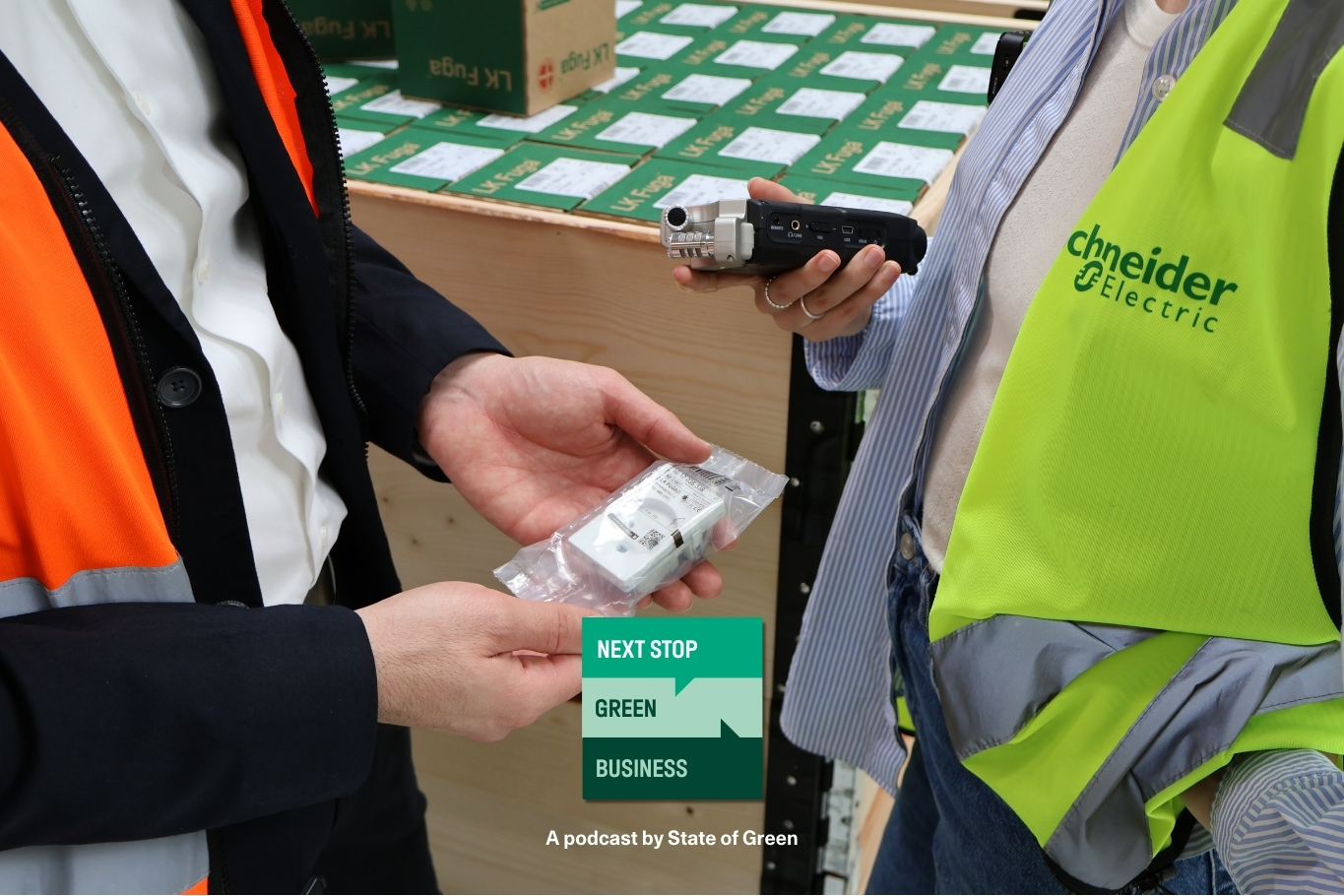
In this episode of Next stop: Green business, we visit Schneider Electric’s Ringsted facility, where they produce the LK FUGA electricity sockets that can be found in buildings across Denmark. The factory’s success in integrating sustainability into everyday operations is a testament to the power of collaboration, innovation, and a shared commitment to a greener future.
“Next stop: Green business” is a miniseries within the Sound of Green podcast universe, where we explore Danish perspectives on the challenges of the global green transition.
Discover the podcastWhat does the world’s most sustainable company look like behind the scenes? According to Schneider Electric, it looks a lot like a regular factory — but with a few key differences.
At their plant in Ringsted, Denmark, which produces the iconic LK FUGA electricity sockets found in nearly every Danish building, sustainability is built into every switch, socket, and process. The factory was officially certified CO₂ neutral in 2022 and has become a showcase for what intelligent, low-emission production can look like.
“When I started working here 20 years ago, a zero CO₂ factory would have been hard to imagine, but now it’s our reality”
Corentin Neuville, Plant Manager, Schneider Electric Ringsted
That reality didn’t require radical reinvention — just a different mindset. Turning off machines over the weekend, upgrading lighting systems with smart sensors, and coordinating heating start-ups a few hours before shifts begin are small steps with big results. And all of them build on Schneider’s integration of digital energy management tools.
Lighting alone used to account for 30% of the factory’s energy use. Today, automated LED systems adapt to daylight and movement, helping reduce unnecessary consumption without compromising operations.
And it doesn’t stop there. Each workstation has its own waste sorting system tailored to the materials handled — part of a culture where sustainability is treated as a skill, not an afterthought.
“Even though it comes more naturally in Denmark, it still takes effort,” says Neuville. “Sorting waste is now part of employee onboarding — just like health and safety.”

Schneider Electric is a global leader in energy management and automation. In Denmark, the company produces the iconic LK FUGA sockets at its CO₂-neutral smart factory in Ringsted, which combines energy efficiency, digitalisation and circular practices. In 2025, Schneider Electric was named the world’s most sustainable company by TIME Magazine for the second year in a row.
Discover solutions from Schneider ElectricDespite being part of a global group, Schneider Electric credits much of the Ringsted factory’s success to Denmark’s unique culture of cross-sector collaboration.
“Public institutions, universities, and companies here work hand in hand,” Neuville explains. “There’s a shared mindset — that we can’t keep manufacturing the way we used to.”
When it came time to decarbonise energy consumption — which stood at 3.5 GWh per year — the team found inspiration not through isolation, but cooperation. By engaging with other companies, keeping up with new solutions on the market, and asking the right questions, they avoided the need for costly, complex on-site infrastructure.
“The investment turned out to be much lower than we expected,” says Neuville. “It’s not about going off-grid — it’s about being smart and asking how you can share the journey.”
And this mindset is what the team wants others to take away most.


Next stop: Green business is part of State of Green’s podcast universe and offers short, accessible episodes of no more than 15 minutes. Each episode focuses on one company’s green transition journey, recorded on-site to capture both atmosphere and authentic voices.
The podcast blends interviews, real-time conversations and on-site impressions, all shaped around a recurring set of questions that invite honest reflection and personal insights. Besides Schneider Electric, the podcast series includes episodes with companies such as Danfoss, Grundfos, ROCKWOOL, PensionDanmark, FLS, NKT, VELUX and Hempel. New episodes will drop throughout the remainder of 2025.
The miniseries is available on Spotify, Apple Podcast and stateofgreen.com.