Skip to content

Case

Wind turbine installation

Green Shipping

Offshore wind

Hybrid power cuts emissions on wind farm installation vessels

27 August 2025
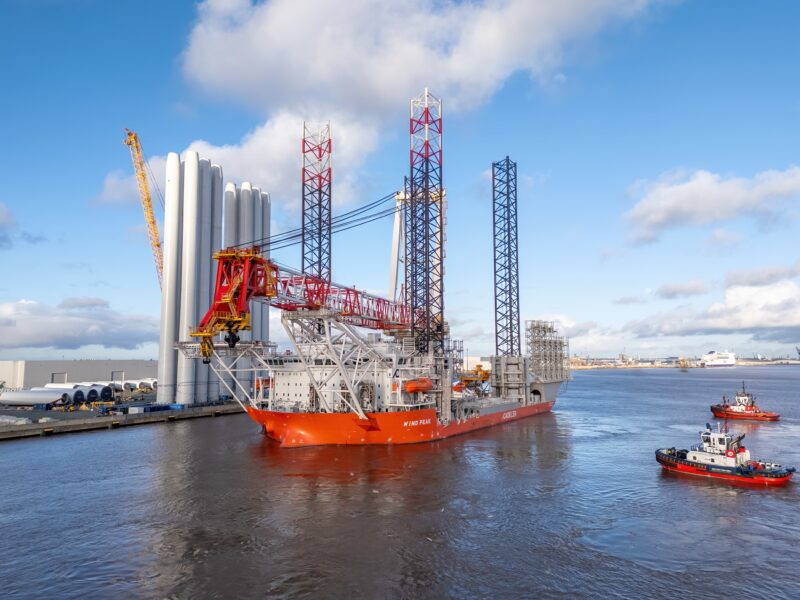
Wind farm installation vessel by Cadeler

Solution provider

Cadeler

Cadeler is a global leader in offshore wind farm installation, maintenance, and decommissioning. With the world’s largest and fastest growing fleet of jack-up installation vessels, it supports the transition to renewable energy.

More from Cadeler

Want to see this solution first hand?

Add the case to your visit request and let us know that you are interested in visiting Denmark

Photo credit: Cadeler

Challenge

CADELER are working with the installation and service of offshore wind farms and have set a strong commitment to drive decarbonisation of the offshore wind value chain. Given the rise in regulatory pressures, measures that reduce onboard emissions are not just beneficial for the planet but can be seen as investments in themselves. 

In operations where there are many heavy lifts in challenging conditions, vessel design must keep a constant focus on safety.   

This often results in power generator configurations and operation patterns with less efficient engine use and higher fuel consumption per KWh produced, all to maintain the necessary safety margin for available power. This ultimately results in excessive vessel emissions.  

When focusing on energy optimisation of the offshore wind farm installation vessels, it was important for CADELER to design a power conversion solution that minimised emissions, while maintaining a high safety margin. 

Solution

CADELER have used recent years’ development in hybrid-electric solutions to design the latest generation of their ships with an optimised power conversion system, which lowers onboard emissions:  

Shore power connection: 
CADELER has equipped all new vessels with shore power capability, enabling direct electrification during port stays. This reduces well-to-wake emissions, especially as grid electricity becomes increasingly renewable. 

Battery-hybrid system combined with differentiated engine size: 
A battery-hybrid setup provides optimal power conversion through dynamic load balancing and operational support. It replaces the traditional spinning reserve, while still safeguarding against blackouts during rapid load spikes. 

Regenerative power from jacking system feeds into batteries​: 
WTG installation vessels perform frequent jacking, allowing them to capture and store part of this energy by feeding it back into the batteries. 

All the above have as much as possible been automized to run at optimal configuration, while not putting extra load on the crew 
Result

With the increased focus on optimizing power conversion, CADELER has seen a significant improvement, comparable to older vessels.  

By using shore power connection, annual fuel consumption and emissions is expected to decrease by up to 15% annually. Optimising engine load can further reduce fuel use by up to 10%. Additionally, onboard energy consumers have been systematically assessed and improved wherever possible. 

With the additional required CAPEX, CADELER wants to demonstrate commitment to both clients and ports for the green investment and show their commitment of a 2035 net zero fleet.  

Green shipping publication

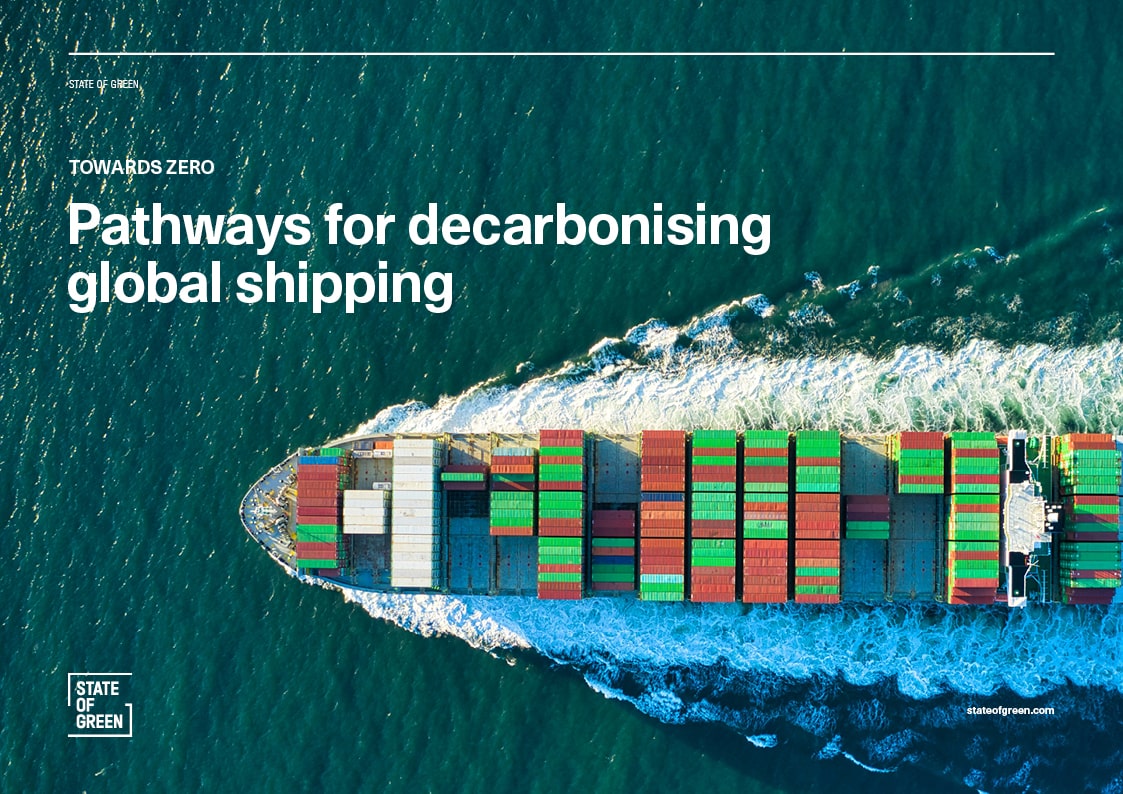
Publication: 'Towards Zero: Pathways towards decarbonising global shipping'

Building on longstanding maritime traditions, Denmark is committed to accelerating the global transition towards climate-neutral shipping and finding ways to overcome regulatory, financial, technological, and political barriers. Dive into Denmark’s push to decarbonise global shipping by exploring this white paper.

Discover the publication

Denmark at COP30

This case is part of the Denmark Pavillion at COP30 in Bélem, Brazil. Discover more projects, activities and connect with solution providers at the official Danish representation at the UN Climate Change Conference 2025.

Discover Denmark at COP30