1/1
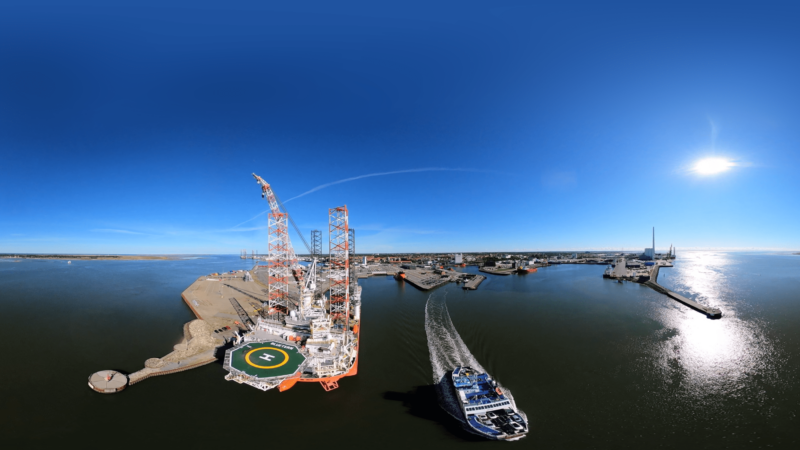
View of Port of Esbjerg
Image credits: Port of Esbjerg
News
Hydrogen infrastructure
Partnerships
Power-to-x
+1
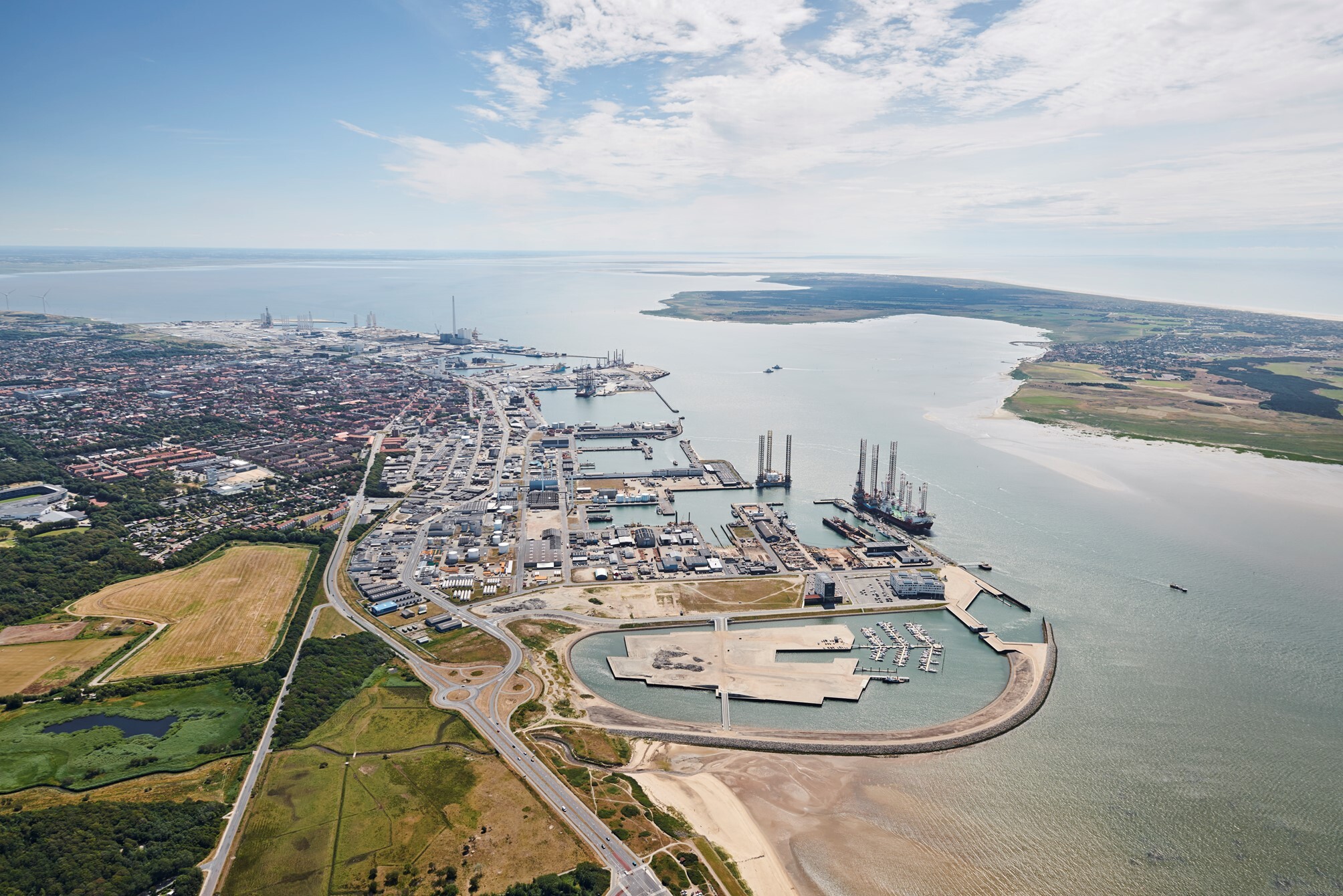
Photo credit: Port of Esbjerg
Denmark has taken another step towards establishing a cross-border hydrogen connection with Germany.
Under a new additional political agreement, the Danish state will assume a larger share of the financial risk associated with the Danish Hydrogen Backbone 1, connecting hydrogen production in western Denmark with customers in Germany.
The agreement increases the state reserve for operational support by approximately EUR 750 million, bringing total operational support to around EUR 2.2 billion from 2030–2059. This is in order to keep pipeline tariffs affordable for future users.
One of the main changes concerns the commitments hydrogen producers must make before the pipeline moves forward.
Producers still need to make capacity bookings totaling at least 0.5 GW by December 2026, but it is now non-binding. Meanwhile, the minimum binding capacity booking is reduced to 0.1 GW and has a deadline of 31 December 2027.
The state will meanwhile cover up to approximately EUR 280 million in potential stranded costs for Energinet, Denmark’s transmission system operator, until 1 January 2028. This allows Energinet to continue developing the infrastructure while final capacity commitments are secured.

The Danish Hydrogen Backbone 1 is planned to connect western Denmark with the Danish-German border, giving Danish hydrogen pipeline access to industrial demand in Germany.
The agreement comes as Danish hydrogen projects are moving closer to commercialisation. Earlier this year five Danish projects have received commitments for almost EUR 1.6 billion in support from Germany and the EU.
Energinet continues to work towards commissioning the Danish Hydrogen Backbone 1 by the end of 2030.
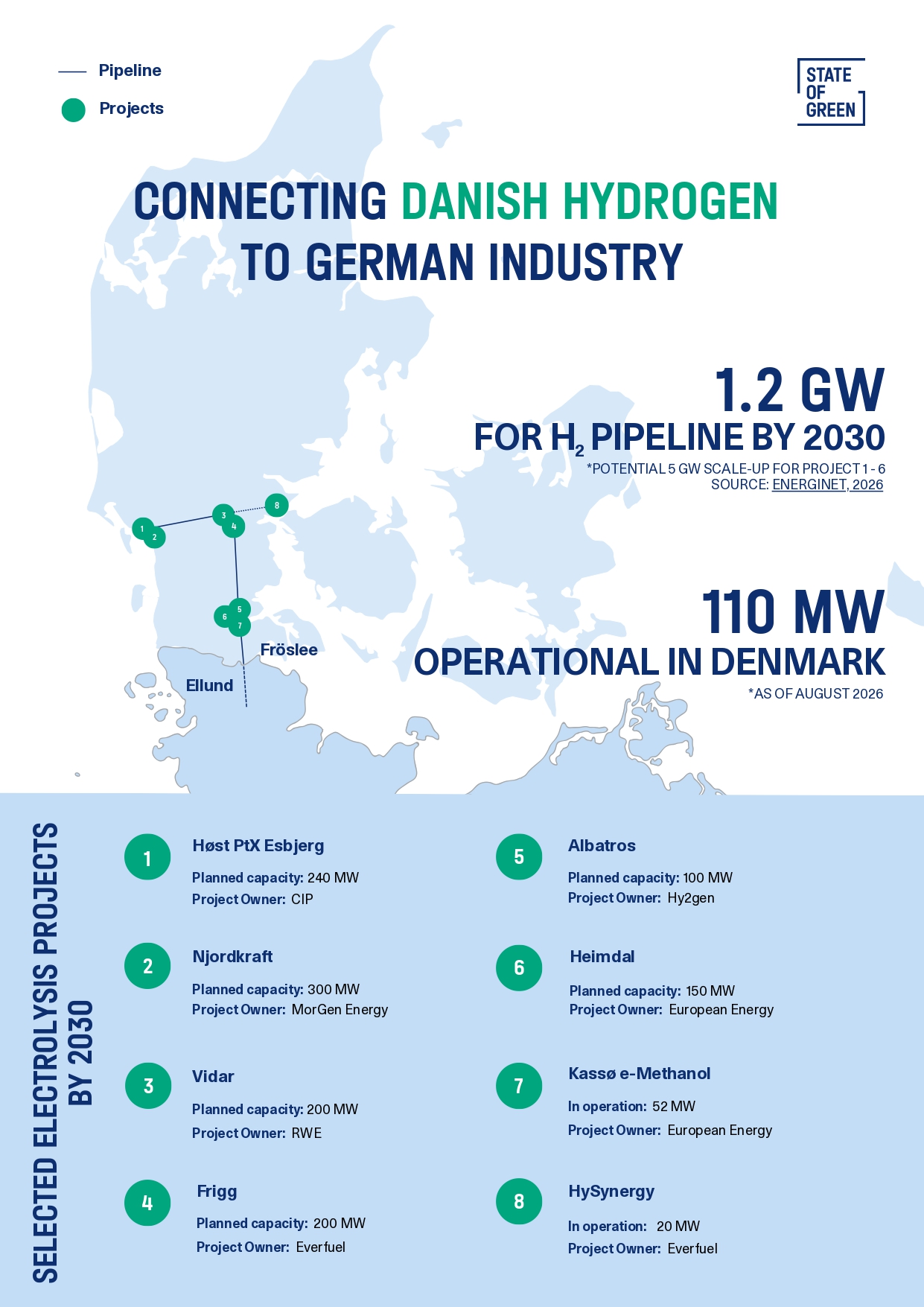
State of Green’s new information sheet provides an overview of key Denmark-Germany hydrogen milestones, planned pipeline and selected Danish electrolysis projects.
Download the information sheet to explore Denmark’s emerging hydrogen infrastructure.
Download