Solution provider

City of Aarhus is the second largest city in Denmark. Together with companies, citizens and organisations we are pursuing our ambitous climate goals!
Case
Buildings
Energy efficiency in buildings
Smart buildings
+1
City of Aarhus is the second largest city in Denmark. Together with companies, citizens and organisations we are pursuing our ambitous climate goals!
Add the case to your visit request and let us know that you are interested in visiting Denmark
HISTORY
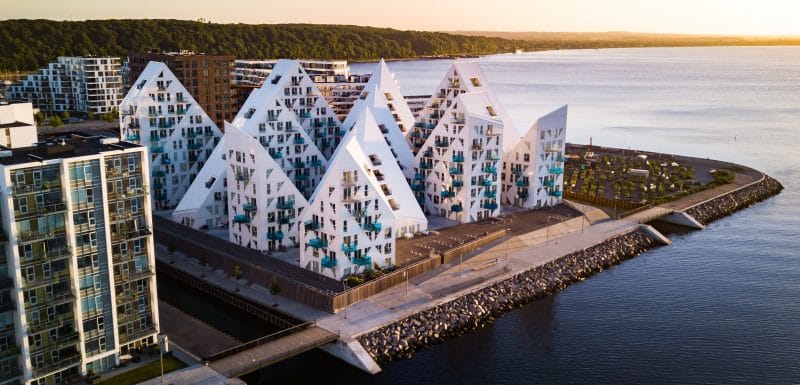
The area has previously been used by the Port of Aarhus, which is a company owned by the Municipality. The planning process of the area began in 1997 when the city council adopted the master plan for the expansion of the Port of Aarhus (the industrial harbour) towards the east. In 1999, the municipality initiated an open city plan idea contest. Based on the winning proposal and public debate, the strategy for the transformation was adopted in the city council in 2003. In 2007, the City of Aarhus took over the first areas and in 2012, the first buildings were ready for citizens to move in.
VISION FOR THE AREA
The vision of the area has been to create coherence between the city and bay. Furthermore, it has been a priority to secure a mixed demography. Thus, it became a requirement that at least 25% of the residentials in the area, will be “social housing”, ensuring a solely cost-related and thereby comparatively low rent.
SUSTAINABLE BUILDINGS
Sustainable aspects have played a big role in the construction of several building in Aarhus Ø. “Havnehusene” are e.g. equipped with photovoltaics, geothermal energy for heating and a big variety of energy- and water saving devices indoors, making them very effective.
The nearby “Pakhusene” even received golden standard in the DGNB certification due to their many smart functions, e.g. local sourcing of building materials, good bike parking possibilities and sustainable energy production on-site.
Several other buildings on Aarhus Ø have other sustainable qualities that are worth visiting when taking a tour around the area.
FACTS: